

Restoring a stained glass teapot and its fine-mesh infuser to pristine clarity requires understanding the chemical bond between organic tea compounds and tap water minerals.
The Chemistry Behind Stubborn Tea Stains
Tea contains highly complex organic compounds known as polyphenols, specifically tannins. When brewed, these tannins react with the dissolved calcium and magnesium ions present in tap water. This reaction forms an insoluble, dark-colored compound known as calcium-tannate. Over time, this substance precipitates out of the liquid and adheres to the microscopic pores of the borosilicate glass and the tight weave of the stainless steel or plastic infuser mesh.
Because these stains are bound by calcium, simple dishwashing soap and gentle scrubbing are often ineffective. To break the bonds, you must target both the mineral lattice and the organic pigment. This is achieved by systematically altering the pH of the cleaning environment using safe, household-grade chemical agents.
Phase One: Breaking the Mineral Lattice with Acid
The first step in restoring the teapot is dissolving the calcium base that anchors the tea stains. Citric acid is highly effective for this process due to its chelating properties, which allow it to bind with metal ions and render them soluble.
- Preparation: Fill the glass teapot with hot water (approximately 80°C to 90°C). High temperature accelerates the chemical reaction rates significantly.
- Acidification: Add two tablespoons of citric acid powder directly to the hot water and stir until completely dissolved. Alternatively, standard white vinegar (acetic acid) can be used in a 1:1 ratio with hot water, though citric acid is odorless and more concentrated.
- Exposure Time: Let the solution sit for 20 to 30 minutes. You will observe the dark brown layer beginning to flake or fade as the calcium skeleton dissolves, releasing the trapped organic pigments into the solution.
Phase Two: Oxidizing Organic Residues in the Infuser
The fine-mesh infuser presents a mechanical challenge because the tiny openings trap organic residues via capillary action. To clean these hard-to-reach areas without damaging the delicate mesh, you must employ an alkaline oxidation process.
Sodium bicarbonate (baking soda) or sodium percarbonate (oxygen bleach powder) are ideal for this task. When dissolved in hot water, these compounds release active oxygen and create a mildly alkaline environment. This process breaks down the complex polymer chains of the tea pigments into smaller, water-soluble molecules.
- Soaking: Place the infuser basket inside a small deep bowl. Sprinkle one tablespoon of sodium bicarbonate or active oxygen bleach directly onto the mesh.
- Activation: Pour boiling water over the mesh. The mixture will effervesce vigorously; the mechanical action of the rising gas bubbles helps dislodge loosened particles from the fine weave of the basket.
- Brush Technique: After a 15-minute soak, use a soft-bristled brush (such as an old toothbrush or a dedicated pastry brush) to gently sweep the exterior and interior surfaces of the mesh. Avoid metallic scrubbers, which can warp the fine wires or scratch glass surfaces, creating new microscopic crevices for future stains to grip.
Phase Three: Final Polish and Prevention
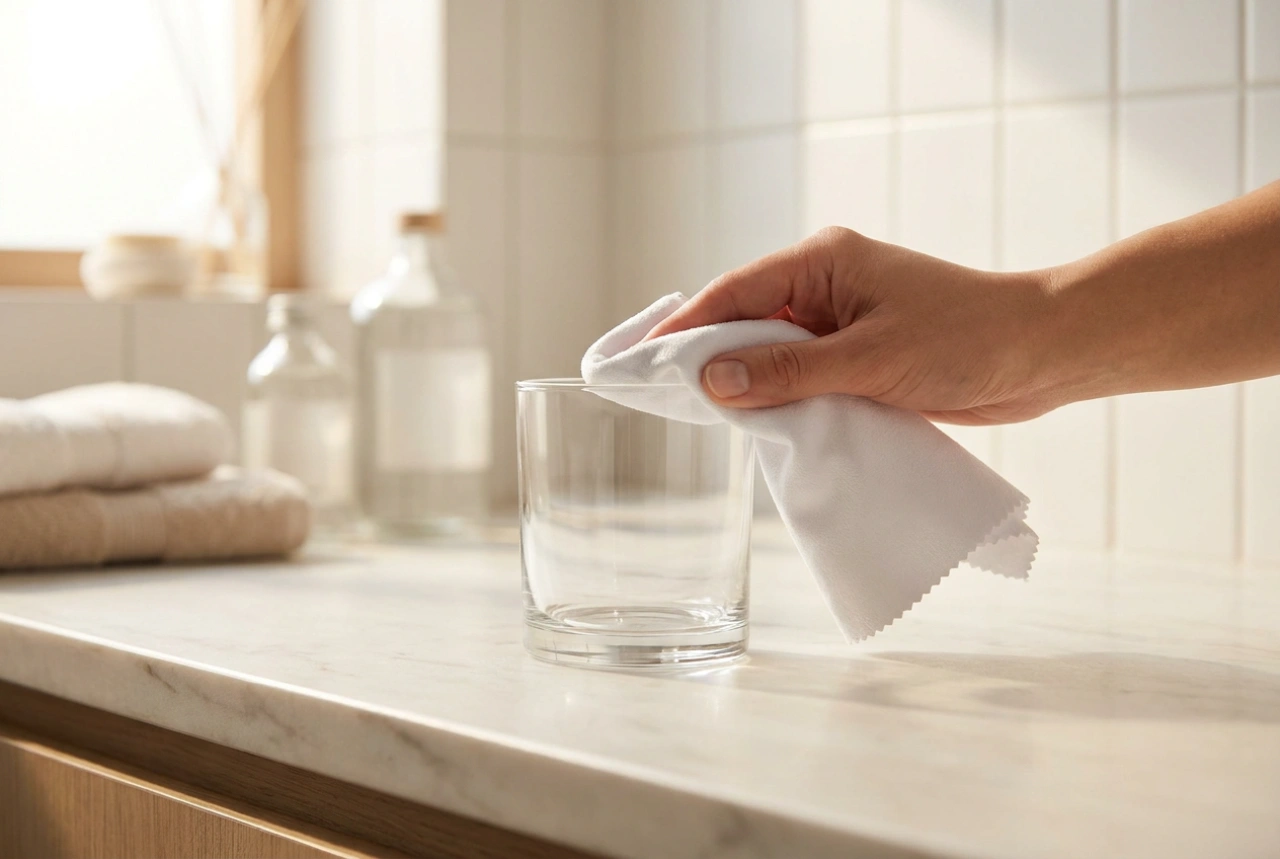
Once the chemical treatments have dissolved the stains, rinse all components thoroughly with warm water. Any remaining alkaline or acidic residue will affect the flavor of your next brew. To achieve a streak-free, crystal-clear finish, wipe the exterior of the glass teapot with a clean microfiber cloth. Microfiber absorbs water rapidly and prevents the formation of new, unsightly water spots caused by evaporation.
To prevent rapid re-staining, rinse the teapot and infuser immediately after use. Leaving damp tea leaves in the basket for hours allows the tannins to oxidize and cure onto the surfaces, making subsequent cleaning cycles far more difficult.