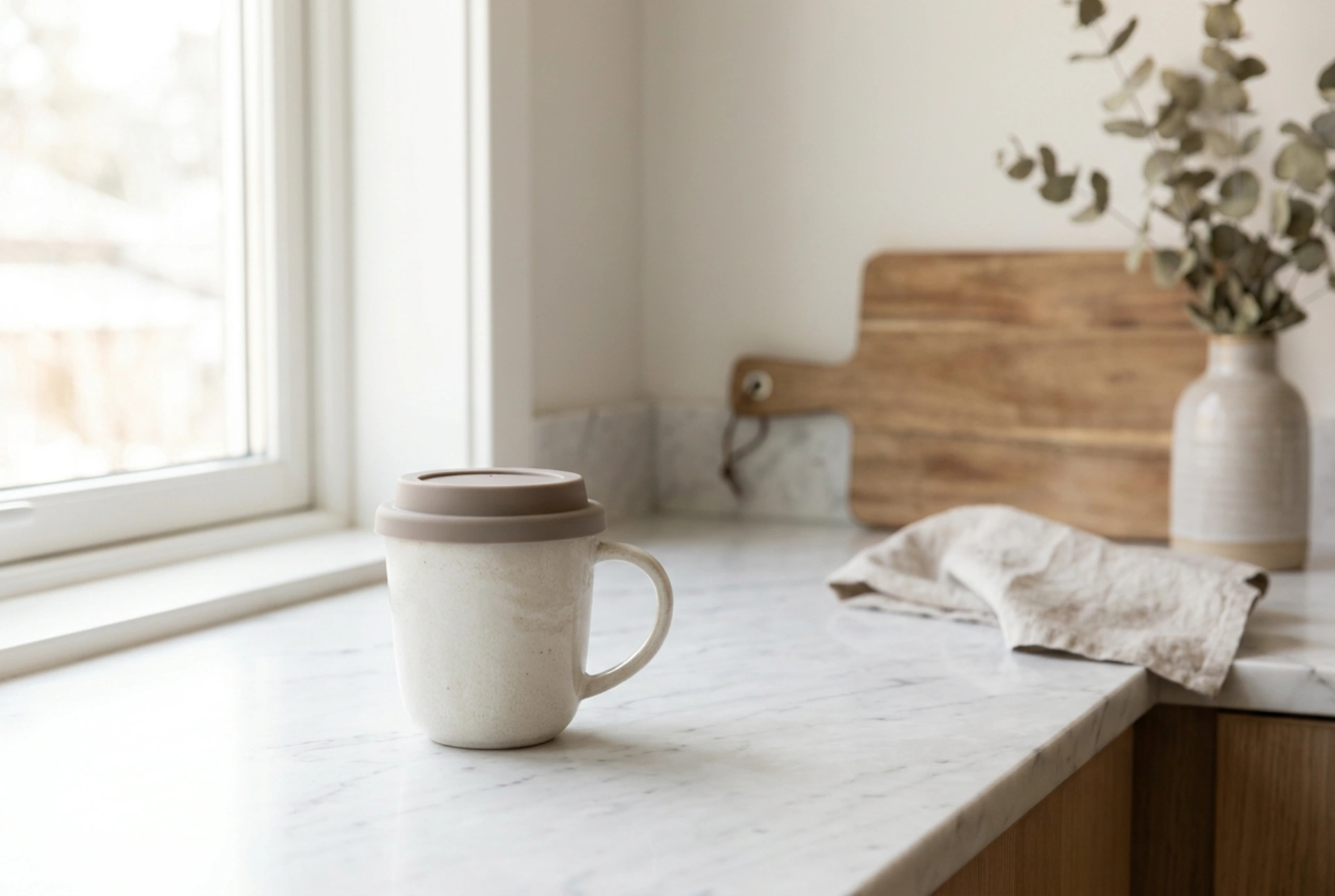


Keeping a ceramic travel mug and its silicone lid in pristine condition requires understanding how these two distinct materials interact with heat, oils, and organic pigments. While ceramic is durable and non-porous when glazed, silicone is a highly flexible polymer that easily traps hydrophobic oils and volatile odour compounds.
Understanding the Materials: Glazed Clay vs. Polymer Matrix
Ceramic mugs are made from fired clay sealed with a liquid glass glaze. This glaze creates a smooth, non-porous barrier that prevents liquids from seeping into the clay. However, this surface is susceptible to micro-scratches from abrasive cleaners, which can eventually trap dark pigments. Silicone, conversely, is a synthetic elastomer composed of a silicon-oxygen backbone. While highly heat-resistant, its molecular structure is lipophilic (oil-attracting). This chemical property is the reason why coffee oils and essential oils from tea readily bind to the silicone lid and resist standard washing, often leaving a persistent stale smell.
Eradicating Tea and Coffee Stains from the Ceramic Base
Tannins and polyphenols in coffee and tea carry a weak electrical charge that causes them to cling to any tiny imperfections in the ceramic glaze. To lift these stains without damaging the glossy finish, you must avoid coarse scouring pads and instead use a mild, alkaline abrasive like sodium bicarbonate (baking soda).
- The Paste Method: Mix three parts baking soda with one part warm water to form a thick, gritty paste.
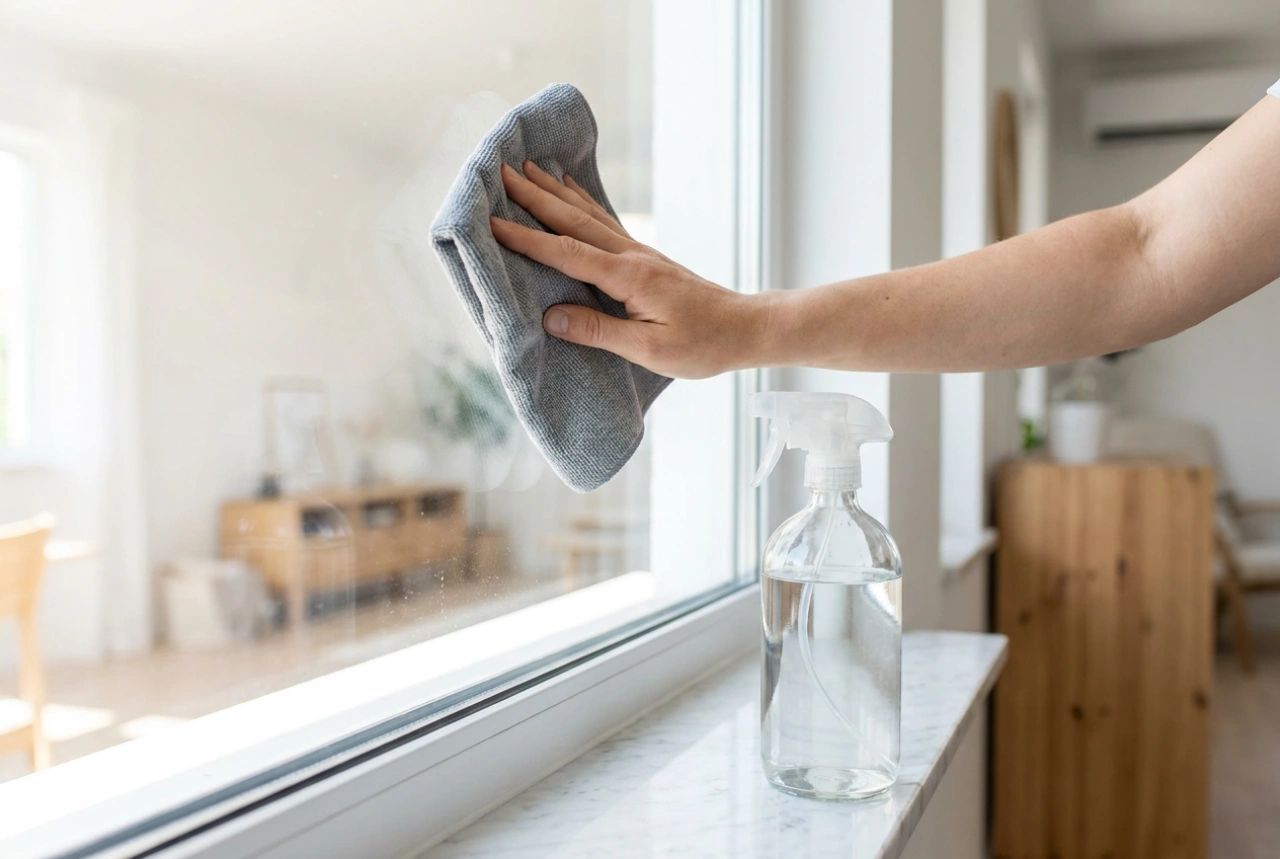
- Application: Use a soft microfiber cloth or a non-abrasive sponge to rub the paste in circular motions over the stained areas. The baking soda acts as a mechanical polish that is softer than the ceramic glaze, meaning it removes the stains without leaving micro-scratches.
- Chemical Reaction: Baking soda is mildly alkaline (pH around 8.1). This alkalinity helps hydrolyse and break down the acidic organic compounds in the coffee and tea stains, making them soluble and easy to rinse away with warm water.
Deep-Cleaning the Silicone Lid: Neutralising Trapped Odours
Since silicone behaves like a dense sponge for organic molecules, washing it with highly scented dish soaps can backfire, as the polymer will absorb the synthetic perfume and transfer it to your next drink. To truly clean the lid, you must extract the trapped oils.
The Oxygen Bleach Soak
Avoid chlorine bleach, which can degrade the silicone polymer chains over time. Instead, use sodium percarbonate (oxygen bleach). Dissolve one tablespoon of oxygen bleach powder in a bowl of hot water (approximately 60°C). Submerge the silicone lid entirely and let it soak for 30 minutes. The active oxygen bubbles penetrate the silicone surface, chemically breaking down and lifting the trapped hydrophobic oils.
The Thermal Desorption Method
If stubborn odours persist, you can use physics to release them. Wash the silicone lid thoroughly to remove any surface grease, then place it on a clean baking sheet. Heat it in a preheated oven at 120°C for 20 to 30 minutes. The gentle heat causes the silicone polymer matrix to expand slightly, allowing the trapped volatile compounds responsible for the bad smell to evaporate into the air. Ensure the lid is made of 100% food-grade silicone without any embedded plastic parts before attempting this.
A Reliable Maintenance Routine
To prevent mold and bacteria from colonising the seal between the ceramic and the silicone, always disassemble the lid completely after every use. Wash both parts immediately in warm, soapy water using an unscented detergent. Allow both components to dry completely in a well-ventilated area before reassembling or storing them in a cupboard. Storing a damp mug with the lid tightly closed creates a humid environment ideal for microbial growth.