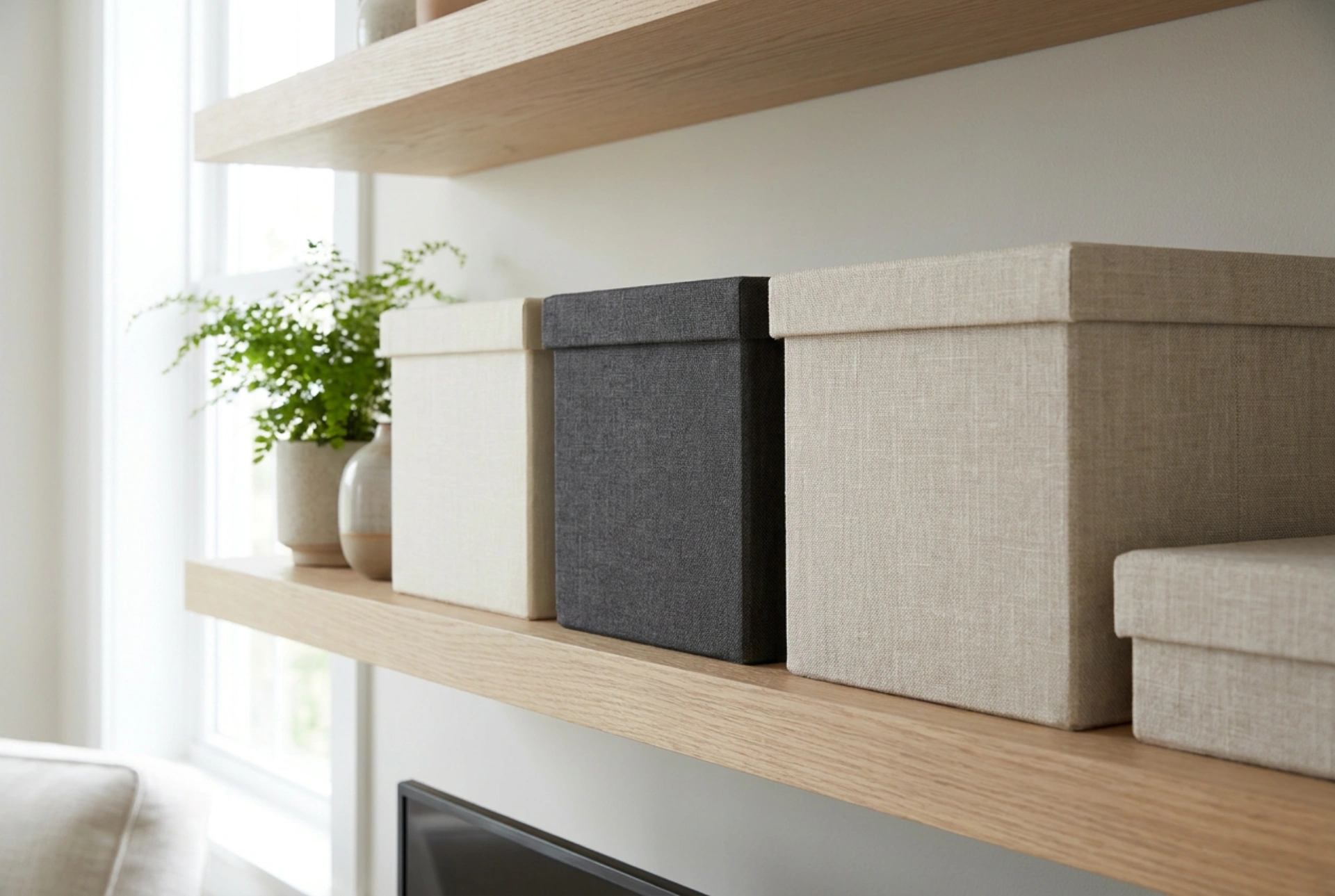


Using decorative storage boxes on open shelves is more than an aesthetic choice; it is a systematic approach to managing dust, UV exposure, and the cognitive load caused by visual clutter. By enclosing diverse household objects inside uniform, chemically stable containers, you protect sensitive materials while establishing physical order.
The Physics of Visual Harmony: Reducing Cognitive Friction
Open shelving often becomes a repository for mismatched items, creating high visual noise. Human cognitive processing naturally seeks patterns; when forced to interpret varied shapes, colors, and textures, the brain experiences subtle but constant visual friction. Decorative boxes act as visual filters, standardizing the external surfaces visible to the eye.
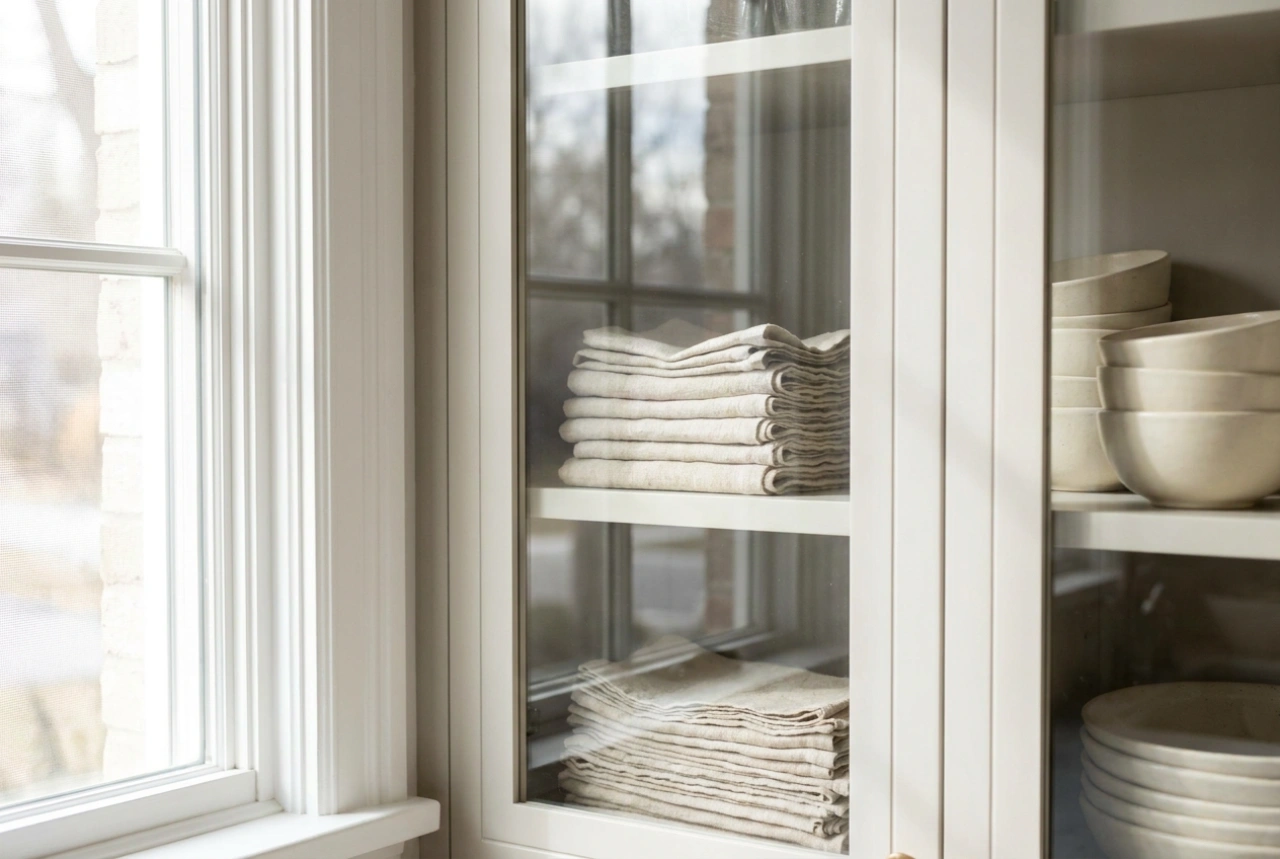
To achieve physical and visual equilibrium, utilize the principle of repetition. When boxes of identical dimensions or matching tonal values are aligned horizontally or stacked vertically, they create structural anchor points. This design technique tricks the eye into perceiving a single, unified plane rather than dozens of individual items. Experts recommend a balance where approximately one-third of the shelf space remains empty, allowing light to pass through and preventing the shelf from feeling structurally overwhelmed.
Material Science: Selecting the Right Protective Barrier
Different storage box materials interact with their contents and the surrounding room environment in distinct physical and chemical ways. Choosing the wrong container can lead to trapped moisture, fiber degradation, or chemical off-gassing.
- Fabric-Covered Boxes: Typically constructed with a non-woven polyester or cotton canvas over a cardboard core. These boxes are highly breathable, making them excellent for natural textiles, paper, and items that require air circulation to prevent mustiness. However, the textured surface can trap airborne dust particles, meaning they require regular vacuuming with a soft brush attachment.
- Acid-Free Cardboard: Crucial for storing photographs, archival documents, and delicate heirlooms. Standard industrial cardboard contains lignin, which breaks down over time to produce acidic compounds that yellow paper and degrade organic fibers. Acid-free, buffered cardboard maintains a neutral pH, protecting delicate materials from chemical decay.
- Polymer-Based Boxes: While highly durable and impermeable to water, non-breathable plastic boxes can trap residual moisture inside, leading to mold growth if sealed in humid conditions. Additionally, synthetic plastics generate static electricity, which actively attracts fine dust particles to the exterior of the box, requiring anti-static wiping.
Structural Mechanics and Weight Distribution
Proper box organization must respect the laws of physics and material limits to prevent shelf sagging and ensure safety. Every shelving unit has a maximum load capacity, which is typically concentrated at the center of the span. Placing heavy objects in the middle of a shelf increases the bending moment, leading to structural deformation over time.
To optimize shelf mechanics, place the heaviest items in low-profile boxes on the lowest shelves, positioning them closer to the vertical supports where the load is transferred directly to the floor. High shelves should host light, low-density items. Furthermore, when packing individual decorative boxes, place the heaviest items at the bottom of the container. This lowers the box's center of gravity, preventing tipping during retrieval and reducing the physical strain on your wrists when pulling the box from an elevated position.
Microclimate Management and Dust Protection
Open shelves are constantly exposed to dust, which consists of dead skin cells, fabric fibers, and outdoor particulates. When dust settles on objects, it can attract microscopic pests and absorb ambient moisture, initiating localized chemical degradation. Decorative boxes with snug-fitting lids act as physical barriers, isolating stored items from these airborne contaminants.
To maintain a stable microclimate within your storage boxes, avoid placing shelves in direct sunlight or adjacent to heating vents. Rapid temperature fluctuations cause air inside the boxes to expand and contract, drawing in humid ambient air that can condense on cool surfaces inside. Utilizing silica gel packets inside sealed polymer or heavy cardboard boxes can help absorb excess moisture, preserving metal, paper, and textile items in optimal condition.