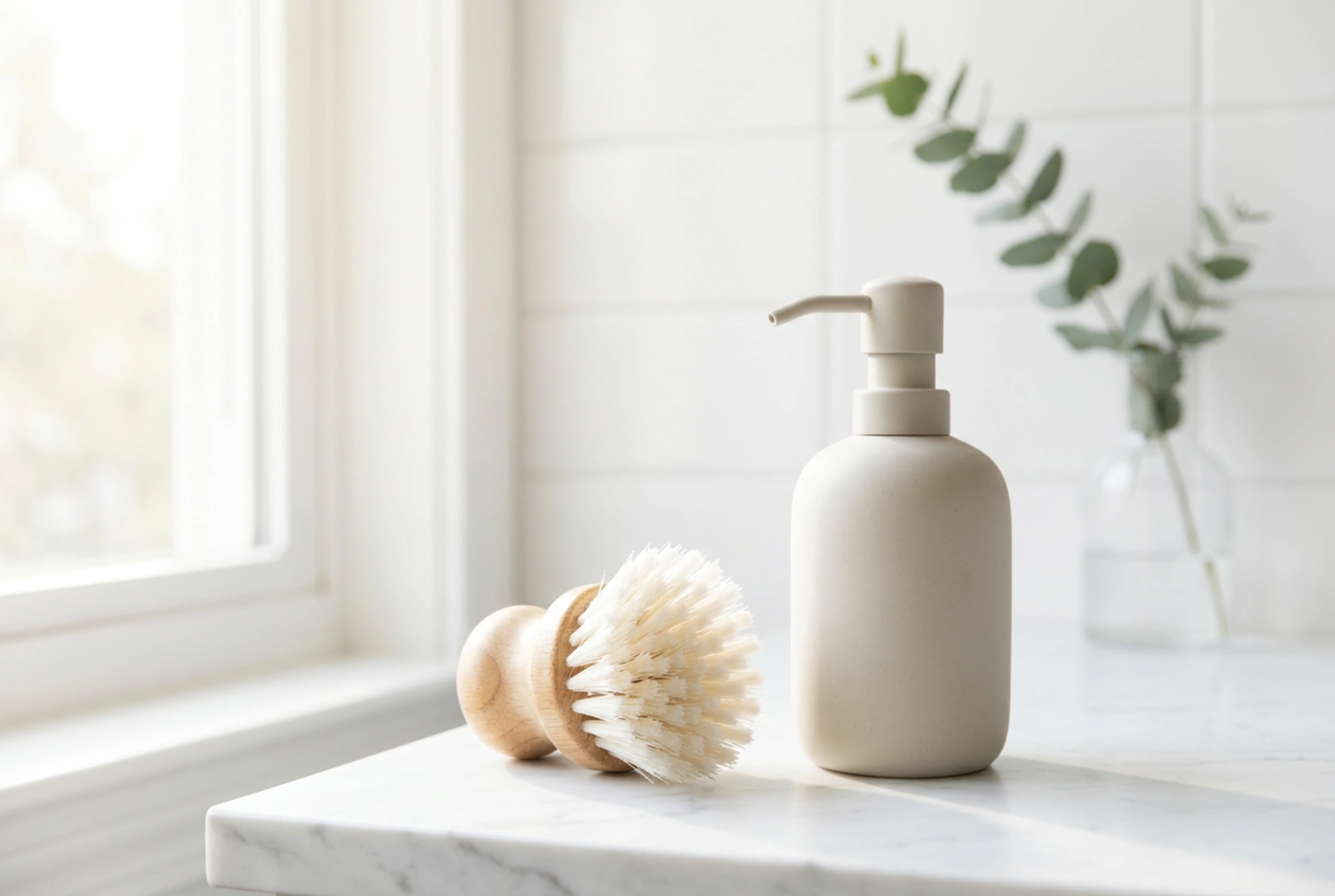


Dishwashing brushes are highly efficient tools for mechanical food removal, yet their dense bristles and damp storage environments turn them into breeding grounds for microbial biofilms. Understanding the material science of bristles and the chemistry of sanitization is key to maintaining a hygienic kitchen without damaging your cleaning tools.
The Material Science of Brush Bristles
To clean a dish brush effectively, you must first understand what it is made of. Modern dish brushes generally fall into two categories: synthetic nylon and natural plant or animal fibers, such as tampico, union fiber, or wild boar hair. Nylon is a synthetic polyamide polymer. It is highly hydrophobic, meaning it does not absorb water into its molecular structure. This makes it naturally resistant to mold, but its synthetic fibers can easily melt or lose their physical structural memory if exposed to temperatures above 70°C. Using boiling water on nylon can cause the bristles to splay permanently, rendering the brush useless.
Natural fibers, on the other hand, are hydrophilic. They absorb water, swell, and take significantly longer to dry. This swelling and shrinking cycle can weaken the wooden head holding the bristles, leading to cracks and fiber shedding over time. Wood is an organic, anisotropic material, meaning it expands and contracts differently along different grain directions. When wood remains saturated, cellulose fibers weaken, allowing fungal spores to take root. Therefore, natural brushes require gentler chemical treatments and strict drying protocols compared to their synthetic counterparts.
The Chemistry of Grease and Biofilm Elimination
Food residues contain lipids, proteins, and starches that stick to bristles. Over time, bacteria feed on these organic compounds, creating a protective matrix called a biofilm. Simple rinsing with cold water is insufficient to break down this matrix because lipids are non-polar and hydrophobic, meaning they repel water. To clean the brush, you must deploy specific chemical reactions:
- Surfactant Emulsification: Warm water (around 45°C) liquefies animal and vegetable fats, while surfactants (dish detergent molecules) surround the fat droplets, allowing them to be rinsed away.
- Oxidative Disinfection: Active oxygen bleach (sodium percarbonate dissolved in warm water) releases hydrogen peroxide. This oxidizes the cell membranes of bacteria and destroys the organic binders holding biofilms together, without degrading synthetic nylon or natural wood fibers.
- Acidic Descaling: Diluted acetic acid (white vinegar) helps dissolve calcium carbonate deposits that accumulate at the base of the bristles, especially in hard water regions. However, acids should not be mixed with alkaline detergents, as they neutralize each other.
Step-by-Step Weekly Deep-Cleaning Protocol
To ensure your dish brush remains sanitary, execute this maintenance routine at least once a week. This process targets both organic soils and bacterial buildup.
First, perform a mechanical flush. Run the brush under hot tap water (not boiling) and use a clean wide-tooth comb or your fingers to remove trapped food particles from the core of the bristles. Next, apply a concentrated surfactant. Squeeze a few drops of high-surfactant dish soap directly into the bristles, massaging it deeply to emulsify embedded grease.
For the disinfection step, prepare a warm bath. Dissolve one tablespoon of sodium percarbonate (oxygen bleach) in half a liter of warm water (approx. 50°C). Submerge only the bristle portion of the brush into the solution. If the brush has a wooden head, avoid submerging the wood entirely, as prolonged exposure to alkaline water can strip natural oils and cause warping. Let it soak for 10 to 15 minutes. Finally, rinse the brush thoroughly under cold running water to remove chemical residues and restore bristle stiffness.
The Physics of Storage: Avoiding Capillary Trap
Where and how you store your brush between uses dictates its lifespan and hygiene. When a wet brush is placed bristle-side up in a cup, gravity pulls water down into the base where the bristles are anchored. In wooden brushes, this creates a constant zone of high humidity that rots the wood and loosens the metal staples holding the bristle bundles. To prevent this, always store your brush hanging bristle-down, or rest it horizontally on a dry, slotted surface that permits full 360-degree air circulation. This utilizes gravity to pull moisture away from the base, allowing the bristles to dry rapidly through evaporation, preventing bacterial colonization.