

Cleaning a double-door refrigerator with an integrated ice maker requires a systematic approach to prevent bacterial growth and maintain the mechanical integrity of the dispensing system. By understanding the chemistry of low-temperature sanitation and the mechanics of water lines, you can safely disinfect all compartments without damaging sensitive components.
The Chemistry of Cold-Storage Sanitation
In a cold environment, chemical reactions slow down significantly, which means standard cleaning agents may not perform as expected. To clean the interior walls and drawers of a refrigerator, you must rely on agents that work efficiently at lower temperatures or temporarily raise the ambient temperature by turning off the appliance. A dilute solution of sodium bicarbonate (baking soda) in lukewarm water is highly effective for this task. Sodium bicarbonate is a mild amphoteric salt that neutralizes acidic food odours—such as butyric acid from dairy products—by converting them into non-volatile sodium salts that no longer off-gas into the air.
Avoid using chlorine bleach on the internal plastic liners. Plastics like polystyrene and ABS, commonly used in refrigerator interiors, can undergo polymer degradation when exposed to strong oxidizers. This leads to micro-cracking, yellowing, and an increased susceptibility to retaining future odours. Instead, use mild surfactants (like simple dishwashing liquid) to emulsify lipid-based spills, allowing them to be wiped away without stripping the plastic of its protective finishes.
Decontaminating the Ice Maker and Water Dispenser
The ice maker and its associated water lines are prime locations for the development of biofilm—a resilient layer of microorganisms bound together by extracellular polymeric substances. Because you should never alter the physical plumbing of the appliance yourself, chemical purging is the safest way to address this. Food-grade citric acid or diluted acetic acid (white vinegar) is ideal for descaling and sanitizing these passages.
To clean the ice maker safely, follow a strict order of operations. First, switch off the ice-making function to stop the mechanical cycle. Empty the ice storage bin and wash it with warm, soapy water. To clean the dispenser nozzle, use a small, soft brush dipped in a 5% citric acid solution. The acid breaks down the calcium carbonate deposits (scale) that trap organic matter and feed bacterial growth. Once the components are wiped clean, run several cycles of water through the dispenser, and discard the first three batches of ice produced after restarting the system to ensure no chemical residue remains in the freezing molds.
Preserving Door Gaskets and Magnetic Seals
The flexible magnetic gaskets on double doors maintain the internal microclimate by preventing warm, humid air from entering. The folds of these gaskets are prone to collecting moisture via capillary action, creating a dark, damp habitat ideal for mold. Cleaning these delicate elastomers requires gentleness to prevent tears that would compromise the vacuum seal.
Use a dilute solution of oxygen bleach (sodium percarbonate dissolved in warm water). Unlike chlorine bleach, oxygen bleach releases hydrogen peroxide, which oxidizes mold spores and organic debris without drying out the synthetic rubber or PVC. Dip a clean microfiber cloth into the solution, wrap it over a flat, blunt tool like a silicone spatula, and slide it gently through the gasket folds. Avoid using abrasive scrubbing pads or sharp metal tools, which can create micro-tears. After cleaning, dry the gaskets thoroughly with a clean cloth to prevent immediate moisture re-accumulation.
Handling Glass Shelves and Stainless Steel Surfaces
When cleaning internal glass shelving, the primary risk is thermal shock. Glass is a poor thermal conductor; if a cold glass shelf is exposed to hot water, the rapid, uneven thermal expansion can cause the glass to crack or shatter. Always allow removable glass shelves to acclimatize to room temperature before washing them. Wash them with a mild surfactant and warm water, rinsing thoroughly to remove any soap film that could attract future dust.
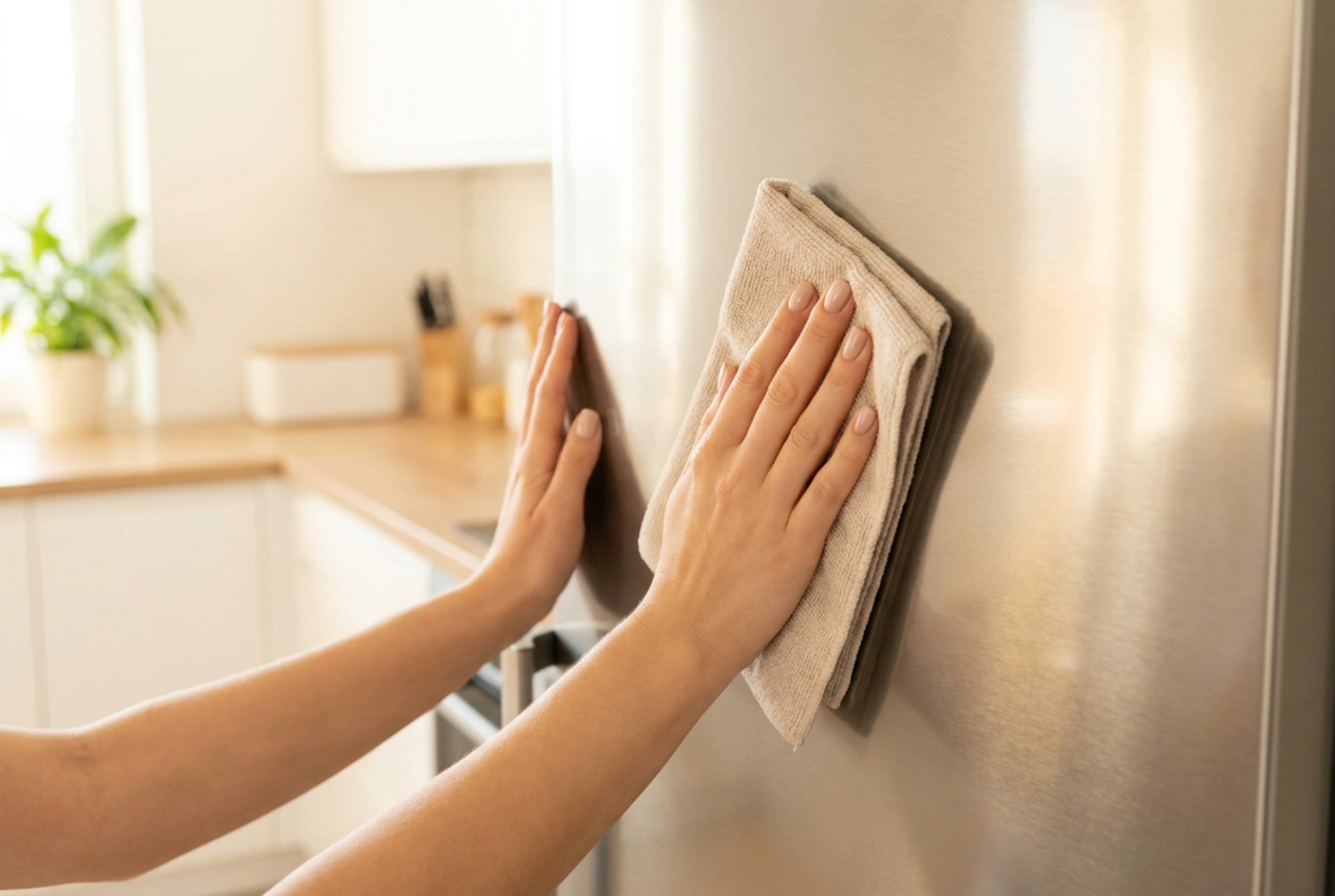
For the exterior stainless steel panels of double-door refrigerators, the goal is to remove fingerprints and lipid smudges without scratching the surface. Stainless steel has a brushed direction, or grain. Always wipe parallel to this grain using a damp microfiber cloth and a mild detergent. To finish, wipe the surface with a dry, lint-free cloth. This mechanical action removes water droplets before they can evaporate and leave behind mineral deposits, ensuring a streak-free finish without the use of harsh, abrasive polishes.