

Maintaining a pristine, streak-free exterior on a black coffee machine requires understanding the physical properties of modern appliance casings and how they interact with oils, minerals, and cleaning agents. Standard wiping often leaves behind unsightly cloudy residue, which is actually a combination of smeared lipids and microscopic mineral deposits.
The Science of Smudges on Black Surfaces
Black casings—whether made of matte polycarbonate, brushed anodised aluminium, or high-gloss ABS plastic—are highly susceptible to visible contamination. Every touch transfers sebum, a natural oil produced by human skin. Sebum is a complex mixture of triglycerides, wax esters, squalene, and free fatty acids. Because black surfaces absorb most visible light, any substance that scatters light, such as an uneven layer of oil, stands out in stark contrast.
Furthermore, using standard tap water for cleaning introduces dissolved minerals, primarily calcium carbonate and magnesium. As the water evaporates, these minerals remain behind as a fine white crystalline structure. On a white or chrome appliance, these micro-deposits are barely visible; on a dark black background, they create a cloudy, dull appearance commonly referred to as streaking.
Choosing the Right Cleaning Solvents
To clean a black casing without leaving streaks, you must use fluids that dissolve lipids without damaging the polymer structure of the machine's casing. Avoid harsh chemical solvents, such as ammonia-based glass cleaners or acetone, which can cause micro-fissures in plastics and strip the protective anodised layer off metals.
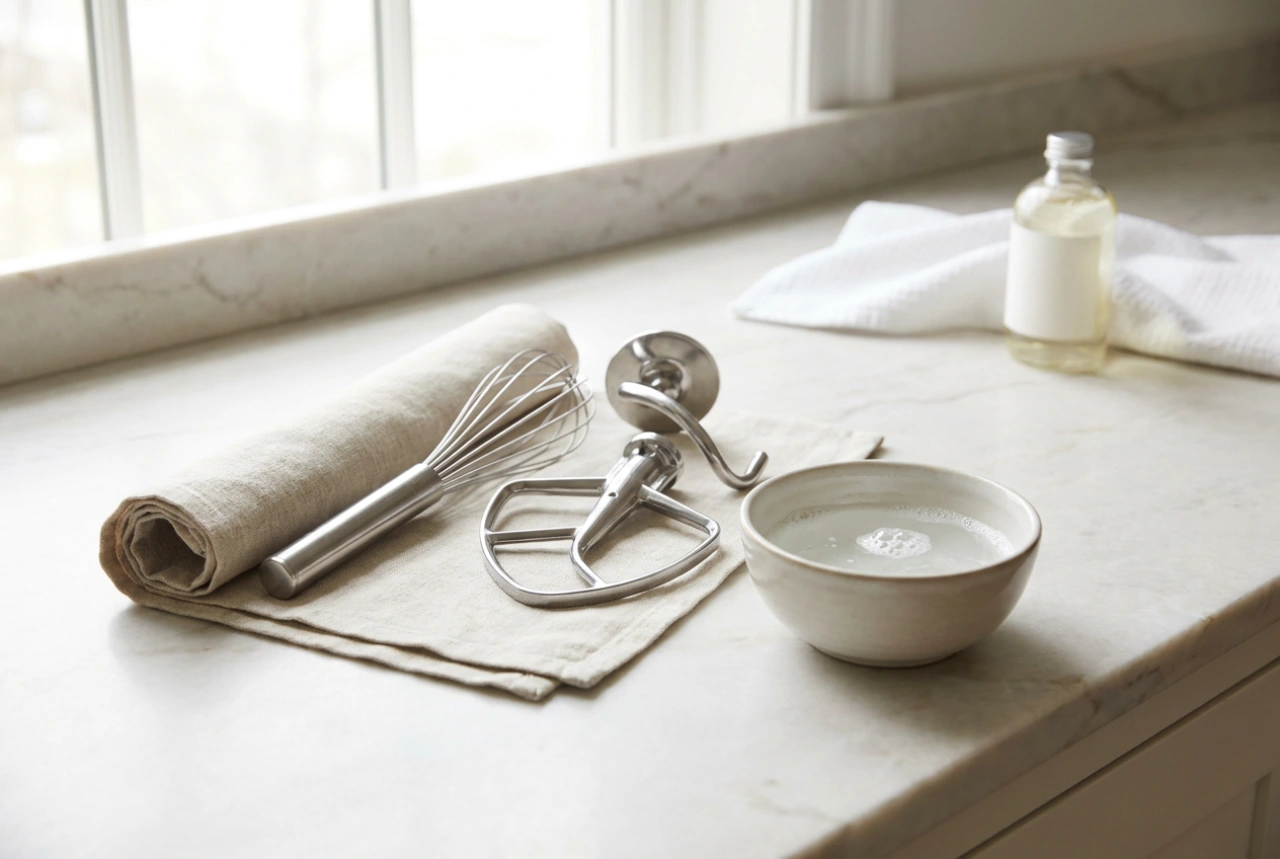
- Distilled or Demineralised Water: Lacking dissolved minerals, distilled water acts as a hungry solvent, absorbing surface dust and light residues without leaving any mineral solids behind upon evaporation.
- Isopropyl Alcohol (IPA): A 50% dilution of isopropyl alcohol in distilled water is highly effective. It breaks down lipid chains quickly and possesses a high vapour pressure, meaning it evaporates rapidly before streaks can form.
- Mild Non-Ionic Surfactants: A single drop of pH-neutral, additive-free dishwashing liquid in warm distilled water lowers the surface tension of the water, allowing it to wet the surface evenly and lift greasy residues into suspension.
Step-by-Step Streak-Free Technique
Achieving a flawless finish relies heavily on the physical mechanics of your cleaning process. Following a specific order of operations prevents abrasive particles from scratching the delicate black finish.
Step 1: Dry Dust Removal
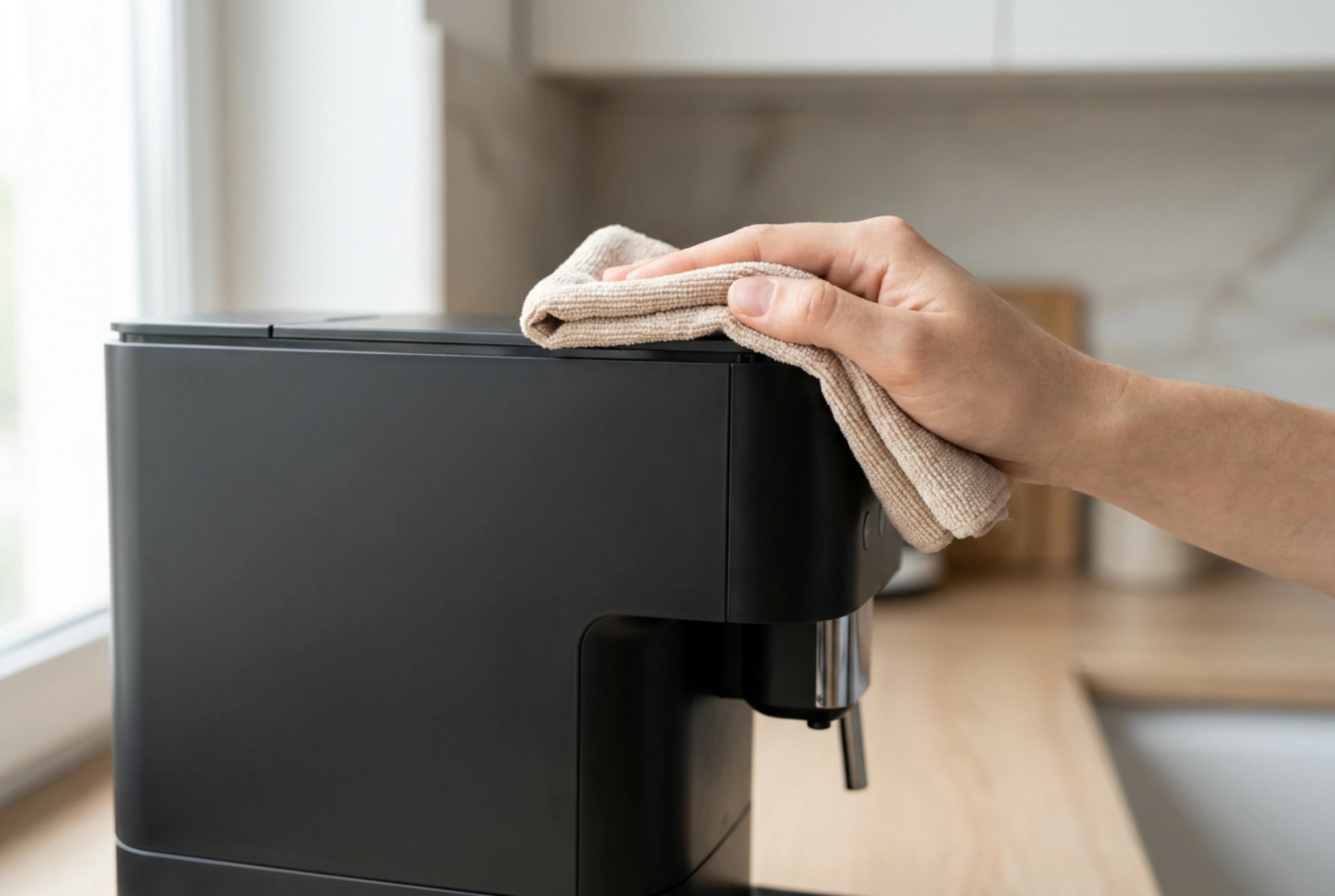
Never wipe a dry, dusty coffee machine with a damp cloth immediately. Dust particles often contain silica, which acts as a mild abrasive. Dragging them across the surface under pressure will cause microscopic scratches that permanently dull the gloss or matte finish. Use a clean, dry, ultra-soft microfibre cloth or a soft-bristled brush to gently sweep away loose dust without applying downward pressure.
Step 2: Controlled Moisture Application
Spray your chosen cleaning solution—ideally a 1:1 mix of isopropyl alcohol and distilled water—directly onto a clean microfibre cloth, never directly onto the appliance. Direct spraying allows liquid to penetrate seams, switches, and sensitive electronic displays, risking internal electrical issues. The cloth should feel slightly damp, not wet.
Step 3: Unidirectional Wiping and Buffing
Wipe the surface using light, linear strokes. Circular motions tend to concentrate residue in the centre of the swirl, creating visible circular halos when light hits the surface. If the casing is brushed metal, always wipe in the direction of the grain. Immediately follow the damp wipe with a second, dry, high-density microfibre cloth to buff the surface. This rapid physical removal of the remaining moisture prevents any dissolved residues from settling back down as the liquid evaporates.
Preventing Static and Future Smudges
Wiping synthetic plastics generates triboelectric friction, which charges the surface statically. This static charge acts as a magnet for airborne dust, undoing your cleaning efforts within minutes. To mitigate this, ensure your final buffing cloth is made of high-quality woven polyester and polyamide microfibre, which minimises charge transfer. Avoid using paper towels; their wood-pulp fibres are highly abrasive and shed micro-lint, leaving behind tiny white particles that spoil the dark finish.