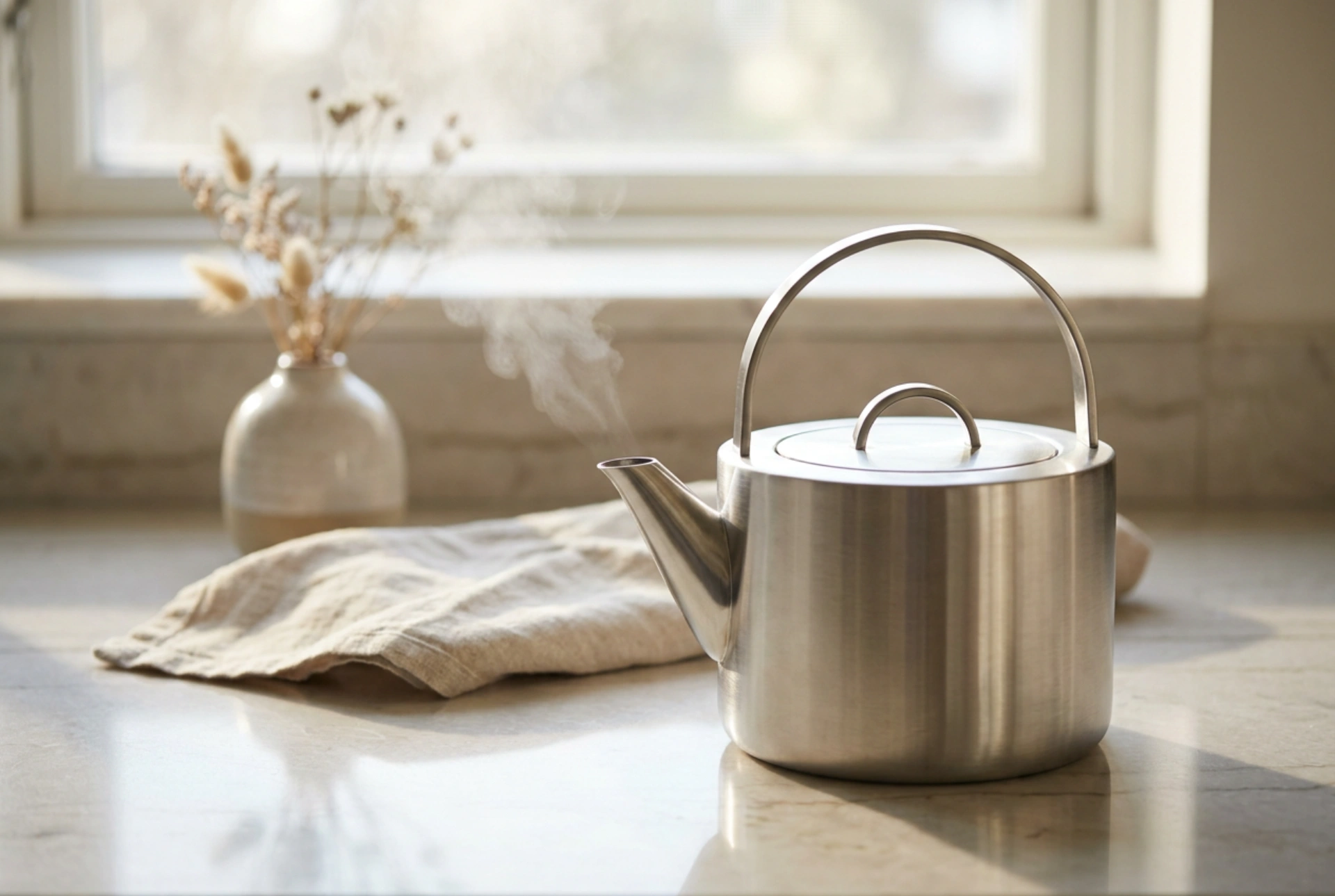


Maintaining a gas stovetop kettle requires understanding how heat transfer, mineral precipitation, and gas combustion affect metallic and enamelled surfaces. By managing thermal reactions and using basic chemistry, you can keep your kettle free of internal scale and external burn marks.
The Chemistry of Limescale and Thermal Precipitation
Hard water contains high concentrations of dissolved calcium and magnesium hydrogen carbonate ions. When water is heated, these soluble ions undergo thermal decomposition, transforming into insoluble calcium carbonate. This solid compound precipitates out of the water and adheres to the hot inner surfaces of the kettle, forming a hard, white layer known as limescale.
Limescale is a poor conductor of heat. As the layer thickens, it acts as a thermal insulator, drastically reducing the heat transfer efficiency from the gas flame to the water inside. This forces you to use more gas to reach boiling point, exposing the outer metal to high heat for longer periods. To minimise this precipitate formation, never leave water standing in the kettle after boiling. Pour out any unused water immediately and rinse the interior with cold water. The sudden temperature drop and flushing action prevent mineral crystals from bonding to the metal grain as the surface cools.
Preventing External Soot and Carbon Deposits
The unsightly dark residues and burn marks on the exterior of a gas kettle are usually caused by incomplete gas combustion. When a gas hob burner is partially clogged with grease or cooking debris, the oxygen-to-gas ratio is disrupted. This causes a yellow flame rather than a clean, blue one. A yellow flame indicates unburnt carbon particles, which immediately deposit onto the cooler metal base of the kettle as soot.
To prevent this soot accumulation, keep your cooktop burners clean and free from obstructions. Ensure the flame is always solid blue. Additionally, adjust the burner size so that the flames do not extend beyond the base of the kettle. When flames wrap around the sides of the vessel, they scorch the metal, causing rapid oxidation and permanently discolouring enamel or stainless steel. Furthermore, any microscopic grease splatters from nearby cooking will instantly bake onto the hot metal, forming a tough, polymerised grease layer that is highly resistant to standard washing.
Safe Descaling Using Mild Organic Acids
Mechanical scrubbing with steel wool or abrasive powders should be avoided at all costs. These methods create microscopic scratches on the metal or enamel surface, providing a perfect anchor point for future mineral deposits to cling to. Instead, use chemical dissolution with mild organic acids such as citric acid.
- Citric Acid Method: Fill the kettle halfway with water and add two tablespoons of citric acid powder. Heat the mixture until it reaches a gentle simmer, then turn off the heat. The elevated temperature accelerates the chemical reaction between the citric acid and the calcium carbonate, converting the scale into highly soluble calcium citrate. Let it sit for 15 to 20 minutes before pouring the solution out and rinsing thoroughly.
- Acetic Acid Alternative: If citric acid is unavailable, a 1:1 solution of water and white vinegar (acetic acid) can be used. However, citric acid is generally preferred because it is odourless and does not leave a lingering aroma that can affect subsequent boils.
Restoring and Protecting the Outer Surface
Stainless steel kettles often develop a rainbow-coloured heat tint on the base. This is a natural physical phenomenon where high temperatures increase the thickness of the steel’s protective chromium oxide layer. To restore the original finish, use a mild, non-scratching alkaline compound like sodium bicarbonate (baking soda). Mix the powder with a small amount of water to form a thick paste. Apply the paste with a soft microfibre cloth, rubbing gently in the direction of the metal's brushed grain. The mild alkalinity and fine particle size of the sodium bicarbonate will lift heat stains and grease without scratching the metal. Always finish by drying the kettle thoroughly with a dry linen cloth to prevent atmospheric moisture from leaving unsightly water spots.