

Glass tea pitchers and stainless steel infusers quickly accumulate stubborn brown stains due to polymerised tea tannins and mineral deposits. Restoring their crystal-clear transparency requires understanding the chemistry of tea residues and using the correct temperature and cleaning agents.
The Chemistry of Tea Stains
Tea contains high concentrations of polyphenols, specifically tannins. When brewed, these organic compounds oxidise in the presence of dissolved oxygen and polymerise, forming a highly stable, water-insoluble film on the surface of both glass and metal. This film is not merely a surface deposit; it chemically binds with calcium and magnesium ions present in hard tap water. This reaction creates an organo-metallic matrix that is highly resistant to standard, neutral pH dishwashing liquids. To break this bond, you must alter the pH and use oxidising agents that can cleave the polymer chains.
The Role of Active Oxygen and Alkalinity
The most effective way to dismantle the tannin-mineral matrix without scratching the delicate glass surface is through a combination of alkalinity and oxidation. Sodium percarbonate, often referred to as oxygen bleach, is ideal for this task. When dissolved in hot water—ideally between 60°C and 80°C—sodium percarbonate decomposes into sodium carbonate (washing soda) and hydrogen peroxide.
The sodium carbonate raises the pH of the solution, making it highly alkaline. This alkalinity hydrolyses the organic components of the stain, weakening their adhesion to the glass. Simultaneously, the hydrogen peroxide releases active oxygen species that oxidise the chromophores (the colour-producing parts of the tannin molecules). Once oxidised, the molecules lose their colour and become highly water-soluble, allowing them to be rinsed away effortlessly without aggressive scrubbing.
Clearing the Stainless Steel Infuser
Stainless steel tea infusers feature an incredibly fine mesh that easily traps both microscopic tea leaf particles and mineral scale. Over time, these pores clog, restricting water flow and altering the flavour profile of subsequent brews. Because the clogging agent is often a combination of organic tannins and inorganic calcium carbonate (limescale), a dual-action approach is required.
- Acidic dissolution: To dissolve the inorganic limescale holding the tannins in place, use an organic acid such as citric acid. Dissolving one tablespoon of citric acid in hot water creates a low pH environment that breaks down calcium carbonate into soluble calcium citrate and carbon dioxide gas.
- Mechanical agitation: Avoid metal scourers, which can damage the fine wire mesh or scratch the protective chromium oxide layer of the stainless steel, leading to eventual corrosion. Instead, use a soft-bristled brush. Brush from the inside out to push the dislodged particles out of the mesh pores rather than jamming them deeper.
Step-by-Step Restoration Procedure
Follow this precise sequence of operations to restore your glassware and infuser to pristine condition:
- Step 1: Preparation: Remove the infuser from the pitcher and rinse both components under warm running water to remove loose debris.
- Step 2: Oxygen Soak: Place the glass pitcher on a stable surface. Add one tablespoon of sodium percarbonate inside. Pour in hot water (70°C) until the pitcher is full. Place the stainless steel infuser inside the pitcher so it is fully submerged. Let the mixture effervesce for 15 to 20 minutes. You will observe gas bubbles lifting the brown film from the surfaces.
- Step 3: Acid Rinse (Optional for heavy scaling): If the infuser mesh still shows greyish mineral deposits, submerge it in a separate bowl containing a solution of hot water and one tablespoon of citric acid for 10 minutes.
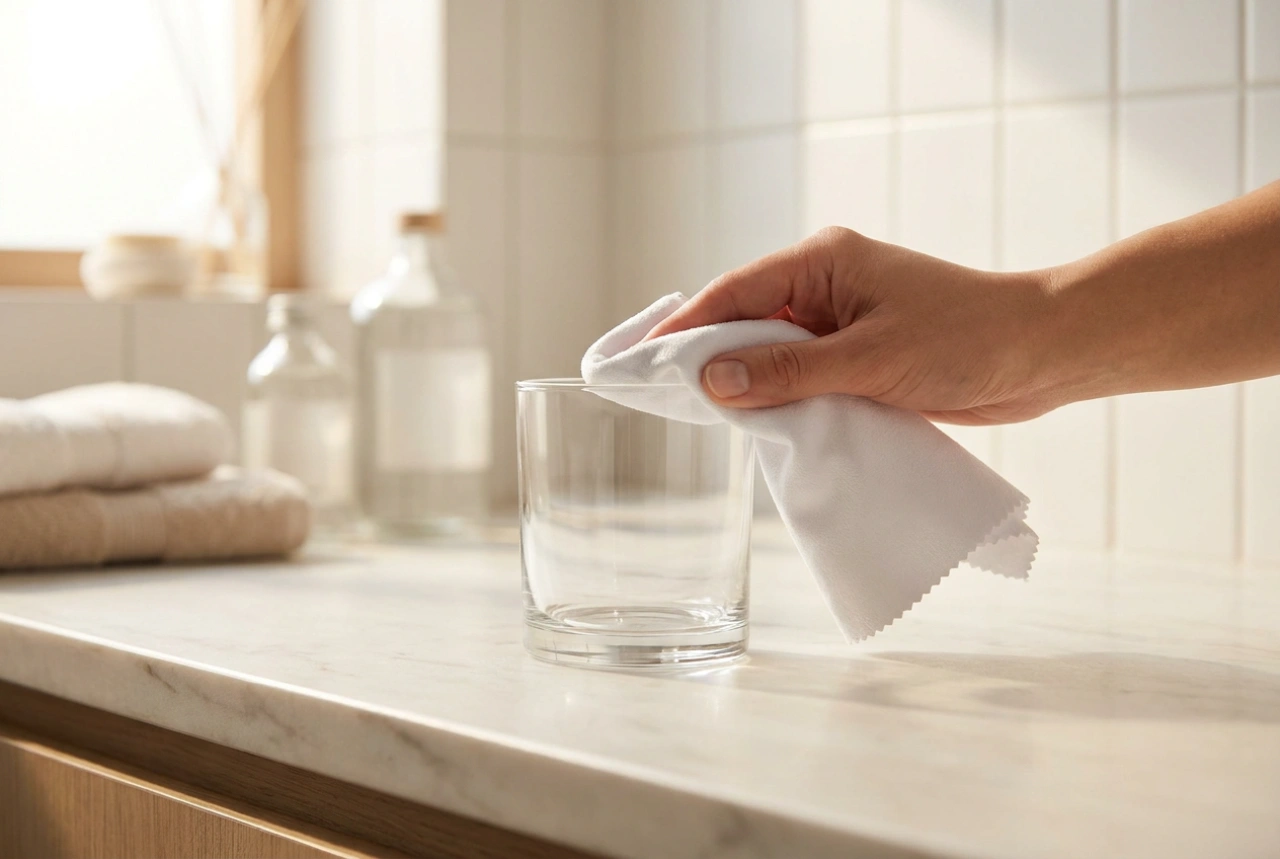
- Step 4: Gentle Agitation: Use a soft microfiber cloth or a silicone bottle brush to wipe the interior of the glass pitcher. Use a soft-bristled brush to gently clean the infuser mesh.
- Step 5: Final Rinse and Dry: Rinse both items thoroughly with warm water, followed by a final rinse with demineralised water to prevent new mineral spots from forming as they dry. Wipe dry with a lint-free microfiber cloth.