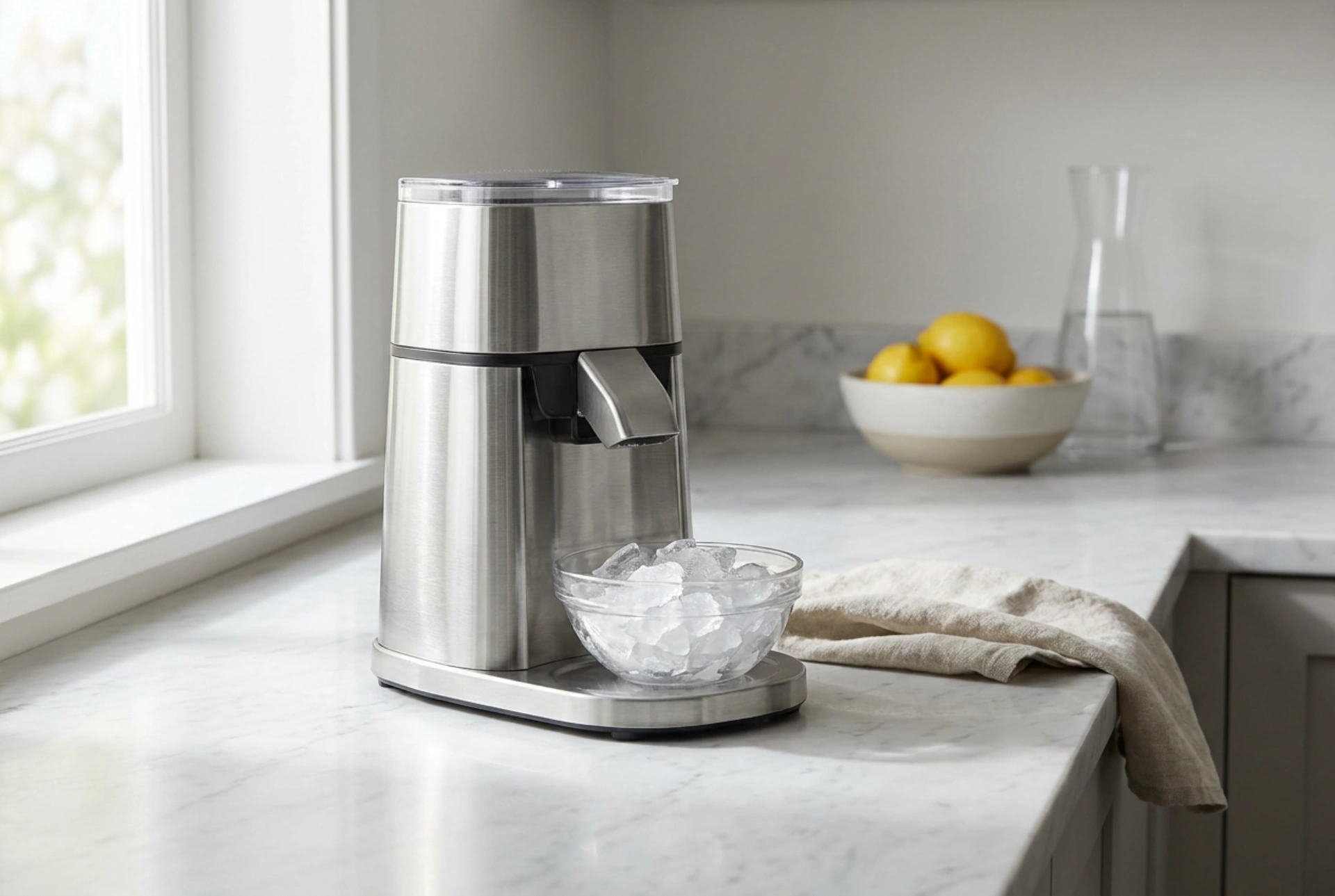


Maintaining an ice crushing machine involves managing mechanical friction, preventing mineral scale, and eliminating microbial biofilm. Understanding the physical forces at play and the chemistry of sanitisation ensures both the longevity of the appliance and the hygiene of the crushed ice.
Thermodynamic and Mechanical Principles of Ice Crushing
Ice is a crystalline structure whose hardness varies significantly with temperature. Ice taken directly from a deep freeze (typically around -18°C) is highly brittle and extremely hard. Attempting to crush ice at this temperature subjects the stainless steel blades and drive motor to intense mechanical resistance. This resistance accelerates blade dulling and increases the risk of motor burnout or gear stripping.
To mitigate this, practice ice tempering. Allowing the ice to rest at room temperature for a few minutes until its surface achieves a slightly wet, glossy appearance (nearing 0°C) reduces its structural resistance. The blades can then easily cleave through the crystals, shifting the process from high-impact fracturing to efficient shearing. This simple thermodynamic adjustment extends the operational life of the cutting mechanism by reducing mechanical strain.
Operating Protocols for Device Longevity and Safety
Safety during operation relies on preventing mechanical overload and physical contact with the cutting elements. Never force ice cubes down the chute using hands or utensils that are not specifically designed pushers; metal spoons or wooden tamps can splinter or damage the internal stainless steel blades if they slip into the chamber.
Feed the machine gradually. Overloading the hopper creates a packed mass of ice that can jam the rotation mechanism. If the motor stalls, immediately cut the power supply to prevent thermal overload in the motor windings. Unplug the device before attempting to clear any blockages, utilizing silicone or plastic tongs rather than bare hands to navigate the sharp blades.
The Chemistry of Cleaning: Scale and Biofilm Removal
Ice crushers operate in a damp environment, making them highly susceptible to two main threats: mineral scale (calcium carbonate) and bacterial biofilm. Water contains dissolved minerals that precipitate out as water evaporates, leaving a hard white residue on blades and plastic components. This scale acts as a porous anchor where bacteria and mould can thrive.
- Descaling: Use a mild organic acid, such as a citric acid solution (2 tablespoons of citric acid powder dissolved in 500ml of warm water). Citric acid chemically binds to calcium ions, converting insoluble calcium carbonate into highly soluble calcium citrate, which easily rinses away without corroding stainless steel components.
- Sanitising: To eradicate bacteria, yeasts, and moulds, use a diluted solution of oxygen-based bleach (sodium percarbonate) or a highly diluted chlorine-based sanitiser. Oxygen bleach releases active oxygen, which oxidises organic matter, breaking down cellular walls of microbes without leaving toxic chemical residues.
Decontamination and Rinse Cycles
Begin cleaning by unplugging the unit. If the model permits disassembly, remove the hopper, ice collection bin, and blades. If the blades are fixed, manual cleaning requires extreme caution. Apply the descaling solution with a soft nylon brush to dissolve mineral deposits on the blades. Avoid abrasive scouring pads, as they create micro-scratches on stainless steel and food-grade plastics, providing microscopic crevices where bacteria can colonise.
After descaling, apply the sanitising solution, ensuring a contact time of at least two to five minutes to allow the oxidising agents to completely neutralise any cellular pathogens. Rinse all components thoroughly with clean, purified water to remove any chemical traces that could alter the taste of subsequent ice batches.
Prevention of Oxidation and Mould During Storage
Moisture is the primary enemy of stored ice crushers. Even high-grade stainless steel can undergo localized oxidation (pitting corrosion) if left in contact with stagnant, chlorinated water over long periods. Residual moisture in sealed compartments also creates a microclimate ideal for anaerobic bacterial growth.
Once rinsed, dry every component thoroughly with a clean, lint-free microfibre cloth. Leave the hopper lid and discharge chute open for several hours to allow complete ambient air drying. Store the unit in a dry, well-ventilated location. By enforcing this strict drying phase, you prevent electrochemical corrosion of the metallic alloys and ensure the machine remains sterile and ready for safe operation during its next use.