

Maintaining the pristine surface of a popcorn maker's interior bowl requires a delicate balance of thermal management and targeted chemical dissolution. Scrubbing with abrasive tools permanently damages the non-stick or polished metal lining, creating microscopic crevices where oil and starch will bind even more tightly in the future.
The Science of Popcorn Residue: Why It Sticks
To clean a popcorn bowl effectively without mechanical abrasion, we must understand what we are fighting. The residue left behind consists of two primary components: polymerised fats and gelatinised starches. During the popping process, oil is subjected to high temperatures, causing its triglyceride molecules to break down and polymerise into a tough, varnish-like hydrophobic film. Simultaneously, moisture escaping from the corn kernels dissolves starches, which then dry and bake onto the bowl's surface as a hard, carbohydrate-based glue.
Removing this dual-layered residue requires breaking the chemical bonds of the polymerised oil and hydrating the hardened starch. Forceful scraping with metal or rough nylon pads will only shear the protective coating of the bowl, leading to degradation of its non-stick properties or scratching polished stainless steel.
The Risk of Thermal Shock and Abrasives
Two common mistakes run the risk of ruining a popcorn maker: quenching and scratching. Quenching occurs when cold water is introduced to a hot metal bowl. The rapid temperature drop causes differential thermal contraction, which can warp the metal chassis or cause non-stick coatings to delaminate from the substrate. Always allow the appliance to cool naturally to a lukewarm state before starting the cleaning process.
Similarly, abrasive cleansers containing hard minerals (like silica or calcium carbonate) act as sandpaper. Even soft-looking scouring pads can contain abrasive synthetic fibres. Once a surface is micro-scratched, food particles find anchor points, making subsequent cleaning cycles progressively more difficult. The goal is to let chemistry do the heavy lifting instead of physical force.
Step-by-Step Passive Dissolution Method
For safe, scratch-free maintenance, use the following sequence of steps designed to loosen soil through moisture, heat retention, and gentle surfactants:
- Step 1: The Steam Blanket. While the bowl is still slightly warm (but safe to touch), place a clean microfiber cloth saturated with warm water inside. Close the lid or cover the bowl. The residual heat will convert the moisture in the cloth into gentle steam, softening the hardened starch binders over a ten-minute period.
- Step 2: Surfactant Application. Remove the cloth and apply a few drops of a gentle, pH-neutral liquid dish detergent (anionic surfactants) directly to a damp, non-abrasive cellulose sponge. Surfactants work by reducing water surface tension, allowing the solution to penetrate and emulsify the polymerised oil layer.
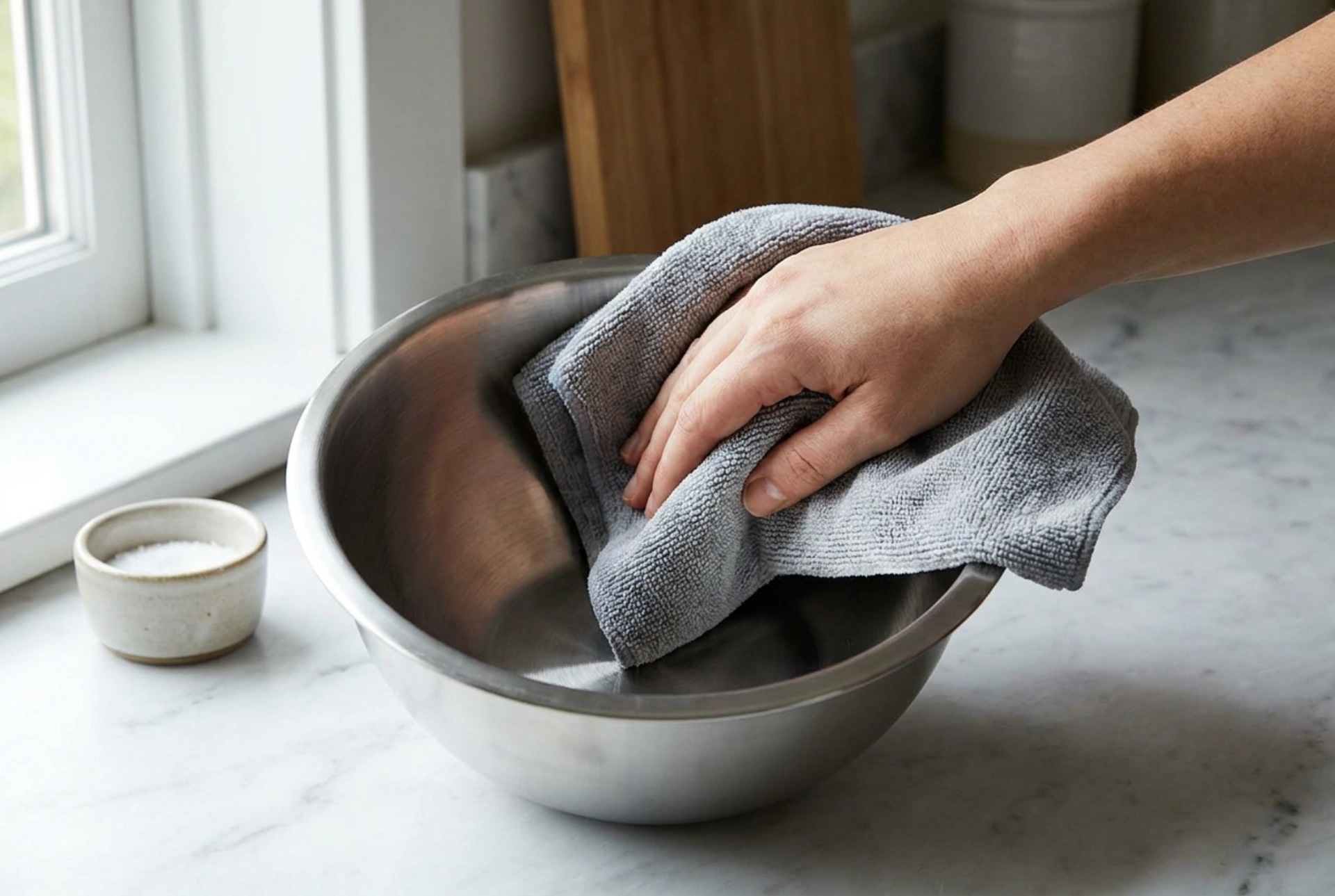
- Step 3: Gentle Agitation. Wipe the interior surfaces in soft, circular motions. The cellulose sponge or a high-density microfiber cloth provides enough friction to lift loosened debris without exerting high pressure on the delicate substrate.
- Step 4: Acidic Rinse for Stubborn Film. If a hazy film remains, it is likely a combination of mineral deposits from the water and stubborn oil polymers. Apply a mild, highly diluted solution of citric acid or white vinegar (acetic acid) to a fresh cloth and wipe. The mild acid breaks down the mineral-lipid complexes.
Drying and Preventing Future Buildup
Once clean, rinse the bowl thoroughly with a damp cloth dipped in clean water to remove all surfactant and acid residues. Any remaining detergent can burn during the next use, producing unpleasant smoke and off-flavours. Dry the surface immediately using a dry, clean microfiber cloth. Leaving the bowl to air-dry can cause mineral spotting and, in the case of some metal alloys, microscopic oxidation.
To make future cleanups easier, consider using oils with higher smoke points, which polymerise less rapidly under heat, and always clean the appliance shortly after use before the residues have time to fully cure and harden.