

Maintaining a pristine, streak-free induction cooktop requires a precise balance of temperature control, chemical selection, and mechanical technique to avoid micro-scratches on the glass-ceramic surface. By understanding the physical and chemical interactions at play, you can preserve the reflective optical finish of your appliance indefinitely.
The Material Science of Glass-Ceramic Hobs
Induction cooktops are topped with a specialised glass-ceramic material. This engineered solid combines the thermal shock resistance of ceramics with the smooth, non-porous aesthetic of glass. While highly resilient to vertical pressure and rapid temperature changes, glass-ceramic has a moderate score on the Mohs hardness scale. This makes it vulnerable to abrasive wear from everyday materials. Silica particles (ordinary dust), salt crystals, and coarse sponges can easily shear the surface, creating micro-scratches. Once scratched, these microscopic grooves catch light, dulling the reflective quality and trapping grease, making subsequent cleans far more difficult. Therefore, your primary objective is to dissolve and lift soils chemically rather than scrub them mechanically.
Understanding Cleaner Chemistry and Streaking
Streaks are not dirt; they are residues. They consist of suspended grease, hard water minerals (calcium and magnesium carbonates), and surfactant molecules left behind by improper cleaning products. Generic washing-up liquids often contain high concentrations of sodium chloride (used as a thickener) and non-volatile surfactants designed to cling to plates. When applied to a non-porous hob, these ingredients do not evaporate; they dry into a cloudy, microscopic film. Specialised glass-ceramic cleaners utilise volatile organic compounds, such as isopropyl alcohol, alongside low-residue anionic surfactants. These formulas reduce the surface tension of water, allowing the liquid to spread evenly, dissolve lipid-based soils, and evaporate rapidly before water spots can form. Always opt for dedicated formulas or dilute alcohol solutions rather than heavy detergents.
The Step-by-Step Cleaning Protocol
To clean your cooktop safely, you must follow a strict order of operations based on temperature and mechanical movement.
- Cooling Phase: Never apply cleaning agents to a hot hob. High temperatures cause the liquid carrier (water or alcohol) in the cleaner to evaporate instantly. This forces the active chemical ingredients to bake onto the surface, leaving stubborn, rainbow-like chemical streaks that are difficult to buff out. Wait until the hot hob indicator is completely off.
- Dry Particle Removal: Before applying any liquid, use a dry, high-pile microfibre cloth to gently sweep away loose crumbs, salt, or dust. Skipping this step means you will drag these hard particles across the glass under wet friction, causing immediate scratching.
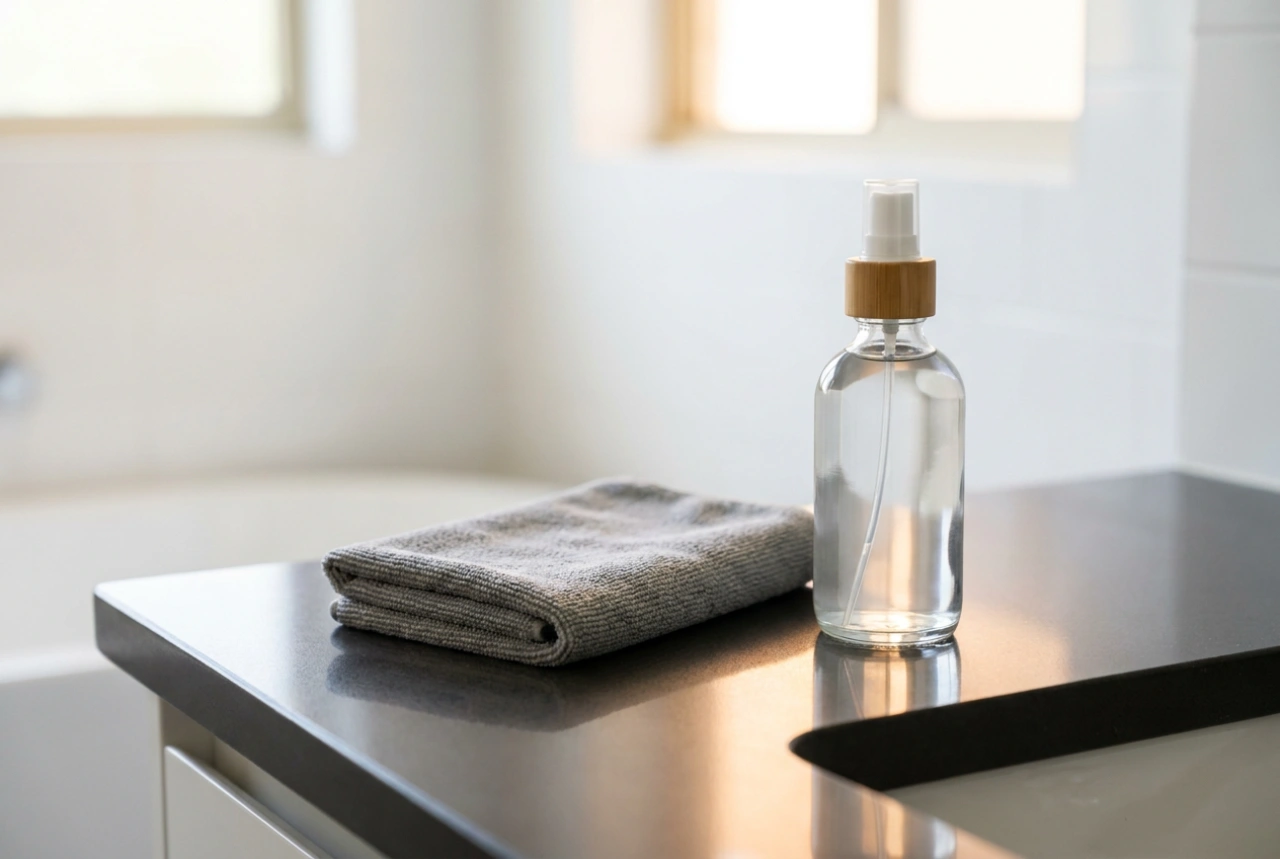
- Product Application: Spray a light, even mist of glass-ceramic cleaner across the surface. Avoid oversaturating, as excess product is harder to emulsify and wipe away, leading to film buildup.
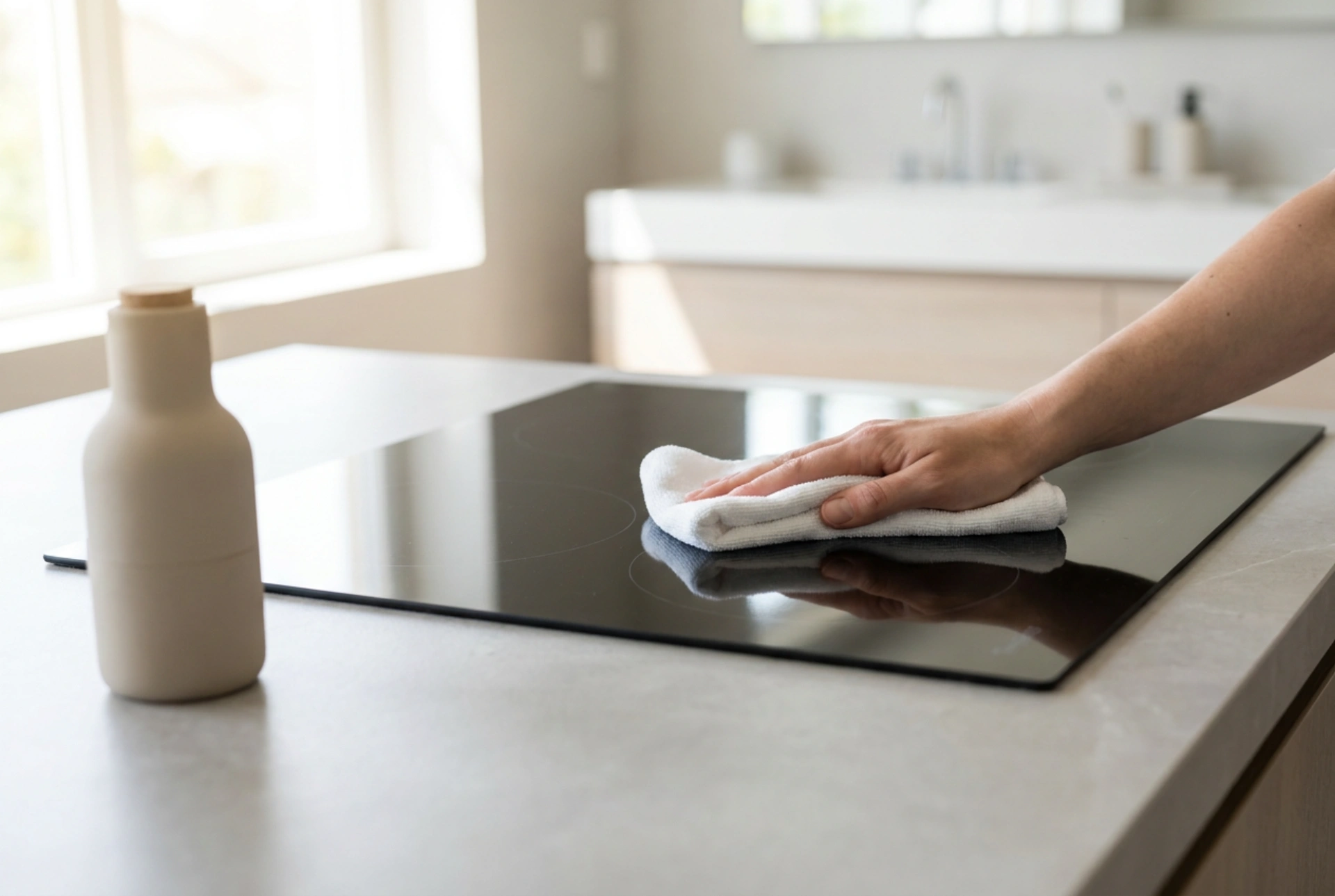
- Structured Wiping: Use a clean, damp, low-pile microfibre cloth. Wipe in an overlapping "S" pattern rather than circular motions. Circular wiping redistributes dissolved grease back into the centre of the wipe zone. The "S" pattern ensures you drag contaminants off the edge of the glass.
Handling Burnt-On Residues Safely
When starches or sugars spill onto a hot induction surface, they undergo pyrolysis, forming carbonised, hard crusts. Sugar is particularly dangerous because, at high temperatures, it can undergo a chemical bonding process with the silicate structure of the glass-ceramic, causing physical pitting if forced off dry. To remove these safely, apply a warm, damp cloth to the residue for five minutes to soften the carbon bonds. Next, use a specialised glass scraper fitted with a fresh, sharp metal blade. Hold the scraper at a strict 45-degree angle to the glass. This angle maximises the shear force against the residue while ensuring the metal blade slides harmlessly over the microscopic peaks of the glass-ceramic. Apply firm, steady forward pressure; never tilt the blade sideways or use a nicked blade, as this will gouge the surface.
The Final Polish and Buffing
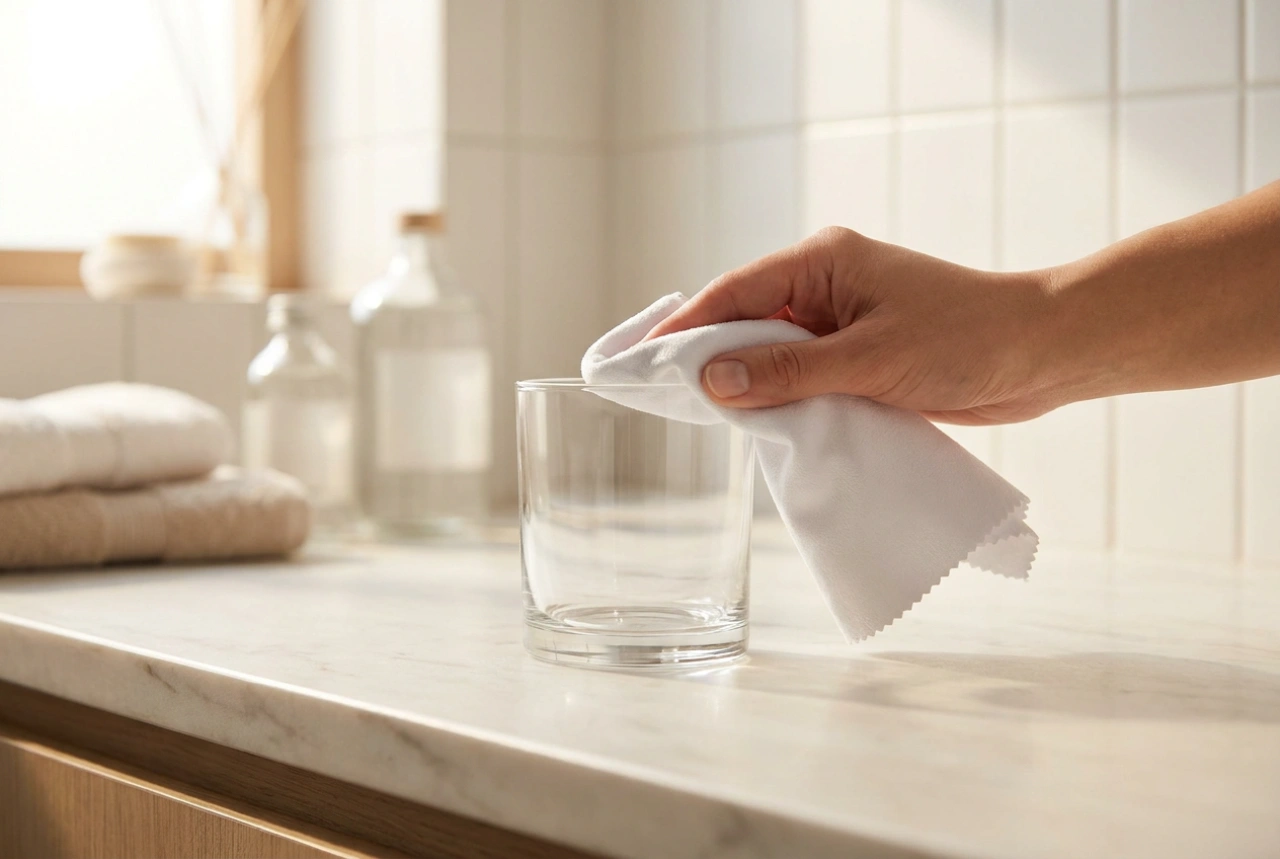
The final step is crucial for achieving an optical mirror finish. Once the wet cleaning phase is complete, a microscopic layer of moisture and dissolved surfactant remains. To remove this, immediately buff the dry surface with a high-density, dry microfibre cloth (ideally 300 GSM or higher with a suede-like weave). Buff in tight, circular motions during this dry phase. The high density of the microfibre generates mild friction, electrostatic charge, and heat, which lifts the final molecular layer of oil and moisture, leaving the glass perfectly clear and highly reflective.