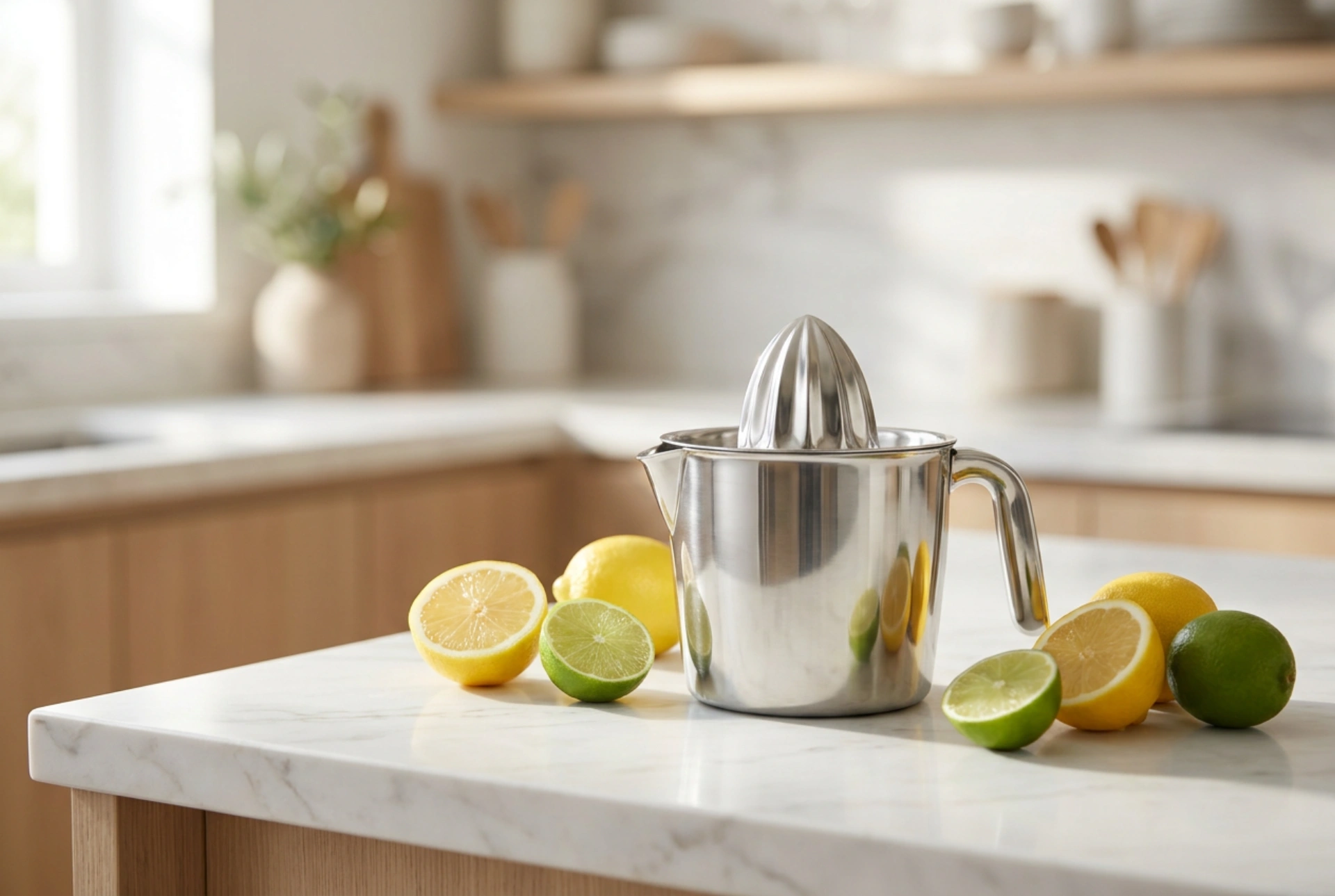


Cleaning a manual citrus juicer immediately after use prevents fruit pulp and sticky sugars from hardening into a stubborn, cement-like residue. By understanding the chemical makeup of citrus juice, you can keep your kitchen tools perfectly hygienic with minimal effort.
The Chemistry of Citrus Residue
To clean a manual juicer effectively, it helps to understand why citrus residue is so exceptionally sticky. Citrus fruits contain high concentrations of pectin, a structural heteropolysaccharide found in the cell walls of plants. When you extract juice, pectin is released along with simple sugars like fructose and glucose, citric acid, and essential oils such as limonene from the peel.
As moisture evaporates, these pectin molecules cross-link with the sugars and acids, forming a dense, sticky gel matrix. This matrix acts like a natural adhesive, locking pulp fibres, seeds, and oils onto the ridges and drainage slots of your juicer. Once this mixture dehydrates completely, it becomes highly resistant to water alone, creating a breeding ground for microscopic mold in the hard-to-reach crevices.
The Power of the Immediate Warm Rinse
The most efficient cleaning strategy is to intervene before the dehydration and cross-linking of pectin can occur. Water is an excellent solvent for the sugars and uncomplexed pectin found in fresh juice. Rinsing the juicer under warm running water at approximately 40°C to 50°C immediately after use dissolves the sugars and flushes away the loose pulp before it dries.
At this temperature, the kinetic energy of the water molecules quickly disrupts the weak bonds forming between the pulp and the juicer's surface. A quick pass with a soft sponge under running water at this stage removes almost all residue, entirely eliminating the need for aggressive scrubbing later on.
Deconstructing Dried-On Pulp with Physics and Chemistry
If you cannot rinse the juicer immediately and the pulp has dried, you must break down the hardened pectin matrix. Avoid using steel wool or highly abrasive scouring pads, which can scratch the surface of your kitchenware and create microscopic grooves where future residues can cling even more securely.
- Thermal Shock and Hydration: Submerge the juicer in a bowl of warm water for ten to fifteen minutes. The heat expands the material of the juicer slightly and rehydrates the dried pectin, loosening the structural bonds of the matrix.
- Surfactant Action: Add a few drops of mild, fragrance-free dishwashing liquid to the soaking water. Surfactants lower the surface tension of the water, allowing it to penetrate the dense fibre clogs in the drainage holes.
- Alkaline Neutralisation: For stubborn, oily residues left by the peel, apply a paste made of sodium bicarbonate (baking soda) and water. Because citric acid is highly acidic, the mild alkalinity of sodium bicarbonate neutralises the acid and helps emulsify the sticky limonene oils.
- Mechanical Action: Use a soft-bristled utility brush to gently scrub the ridges. Always brush along the direction of the grooves and through the drainage holes from both sides to dislodge trapped particles.
Material-Specific Care Guidelines
Different materials react uniquely to acids, heat, and cleaning agents. Adjusting your approach based on what your manual juicer is made of ensures its longevity:
Ceramic and Glass: These materials are highly non-porous and chemically inert. They do not react with citric acid or absorb odours. They can easily withstand hotter water temperatures and mild alkaline cleaners, making them the most durable options.
Plastics: Plastic juicers are susceptible to chemical stress cracking and can absorb pigments and essential oils over time, leading to cloudiness. Avoid washing them in extremely hot water or using harsh chemicals. Hand-wash with lukewarm water and mild soap immediately after use to prevent staining.
Metals: While stainless steel is highly resistant, prolonged exposure to acidic citrus juice can eventually break down its protective passive chromium oxide layer, leading to localized corrosion. Always rinse metal juicers immediately and dry them thoroughly with a soft cloth to prevent water spots.