

Maintaining correct indoor humidity levels prevents structural deterioration and respiratory discomfort by balancing airborne moisture across changing seasons. Achieving this balance does not require complex machinery; instead, it relies on fundamental thermodynamics, airflow dynamics, and material properties.
The Science of Relative Humidity
Relative humidity (RH) is the ratio of current water vapour in the air to the maximum amount the air can hold at a specific temperature. Warm air has a higher thermal capacity and molecular spacing, meaning it can hold significantly more moisture than cold air. When warm, moisture-laden indoor air comes into contact with cold surfaces like window panes or external walls, it cools rapidly. If the temperature drops below the dew point, the air can no longer hold the water vapour, leading to condensation.
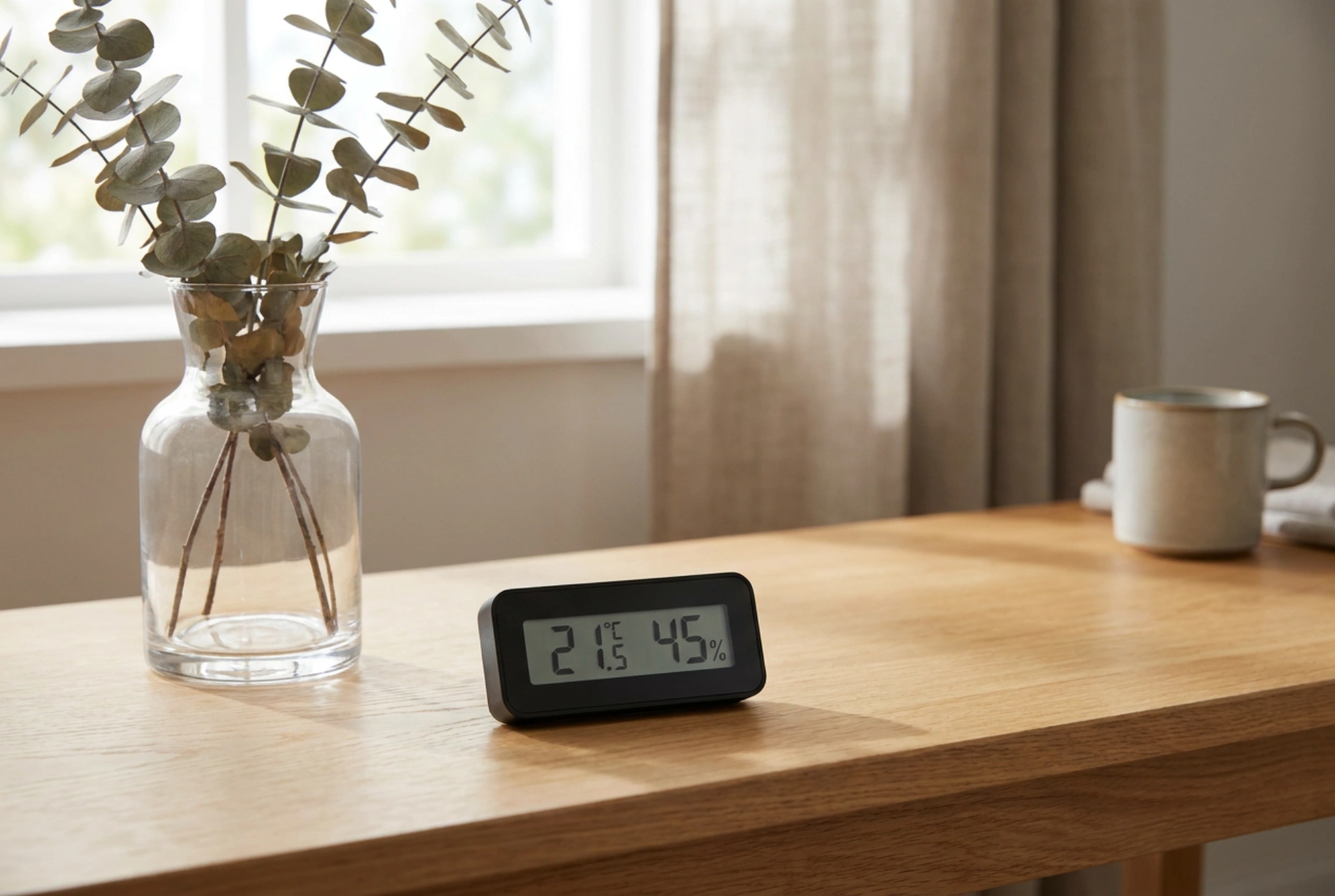
To preserve structural integrity and prevent organic growth, indoor relative humidity should remain between 40% and 60%. When RH drops below 40%, organic materials like timber contract, leading to microscopic cracks in floorboards and furniture, while dust particles remain suspended longer. Conversely, when RH exceeds 60%, porous surfaces absorb excess water molecules, creating an environment where mould spores can germinate and feed on cellulose substrates.
Strategic Ventilation: The Physics of Air Exchange
Controlling humidity requires a deliberate approach to ventilation, guided by the differences between indoor and outdoor temperatures. A common mistake is leaving windows tilted open for extended periods. This practice cools the surrounding masonry, creating cold bridges that invite condensation, while failing to provide a rapid exchange of air.
- Shock Ventilation: Open opposite windows fully for five to ten minutes. This creates a pressure differential that rapidly expels stale, humid air and replaces it with fresh, drier air. Because the walls and furniture retain their heat, the new air warms up quickly, restoring thermal comfort with minimal energy loss.
- Seasonal Timing: In summer, ventilate during the early morning or late evening when outdoor temperatures are at their lowest. Introducing warm afternoon air into a cooler home can cause an immediate rise in relative humidity as the air cools inside. In winter, even if it is raining outside, cold outdoor air contains very little absolute moisture; when brought inside and heated, its relative humidity drops significantly, helping to dry out damp rooms.
Controlling Moisture Sources in Daily Routines
Human activities—such as cooking, showering, and drying laundry—release litres of water vapour into the domestic environment daily. Managing these sources at the point of origin prevents moisture from migrating to colder rooms.
When cooking, always keep lids on pans to contain steam, and use extractor fans to draw moisture out immediately. Keep internal doors closed during and after showering to isolate the high-humidity zone, allowing the moisture to escape through designated exhaust vents rather than dispersing into adjacent bedrooms. If drying laundry indoors is unavoidable, place the drying rack in a well-ventilated room with a closed door, and utilise passive moisture absorbers. Chemical desiccants containing anhydrous calcium chloride are highly effective; they absorb water molecules from the air, chemically binding them into a liquid brine solution.
Hygroscopic Buffering and Material Science
Uncoated, natural materials within the home act as passive humidity regulators through a process called hygroscopic buffering. Materials such as untreated timber, clay plasters, and natural textiles possess open molecular structures that allow them to adsorb water molecules from the air when relative humidity is high. When the surrounding air becomes dry, these materials release their stored moisture back into the room via desorption.
To maximize this natural buffering effect, minimize the use of vapor-impermeable sealants or oil-based paints on interior wooden features. Utilizing clay-based paints or natural wax finishes allows these surfaces to breathe, mitigating sudden spikes in humidity and creating a more stable, self-regulating indoor microclimate.