

Cleaning a slow juicer immediately after use prevents fruit sugars, fibrous pulp, and sticky pectins from hardening into a stubborn, cement-like crust. Understanding the chemistry of juicing residues allows you to maintain the machine's efficiency and prevent permanent staining of the components.
The Chemistry of Juicer Residue: Why Delaying Causes Trouble
Fruit and vegetable juices contain a complex mixture of water, soluble sugars, insoluble cellulose fibers, and pectins. Pectin is a structural heteropolysaccharide found in plant cell walls. When hydrated in fresh juice, it remains suspended. However, as water evaporates from the left-over pulp, pectin acts as a natural adhesive, bonding cellulose fibers firmly to the plastic and metal surfaces of the machine. Once dried, this matrix becomes highly resistant to simple rinsing. Additionally, natural pigments such as carotenoids from carrots or anthocyanins from berries can chemically bond with the porous polymer surfaces of the juicer housings, leading to permanent discolouration if not promptly dissolved and washed away.
The Rinsing Protocol: Temperature and Timing
The initial rinse is the most critical step in the cleaning sequence and should occur within minutes of finishing. Use warm, but not boiling, water. Water above 60 degrees Celsius can cook remaining starch and protein residues onto the stainless steel micro-mesh, making them harder to remove. Warm water decreases the viscosity of sugars and dissolves them quickly. Begin by running a glass of clean water through the juicer while it is still running to flush out loose pulp. After switching off, dismantle the parts immediately. Place all removable components into a basin filled with warm water and a few drops of neutral detergent to keep the residues hydrated while you clean each part individually.
Clearing the Mesh Strainer: Mechanics of Micro-Perforations
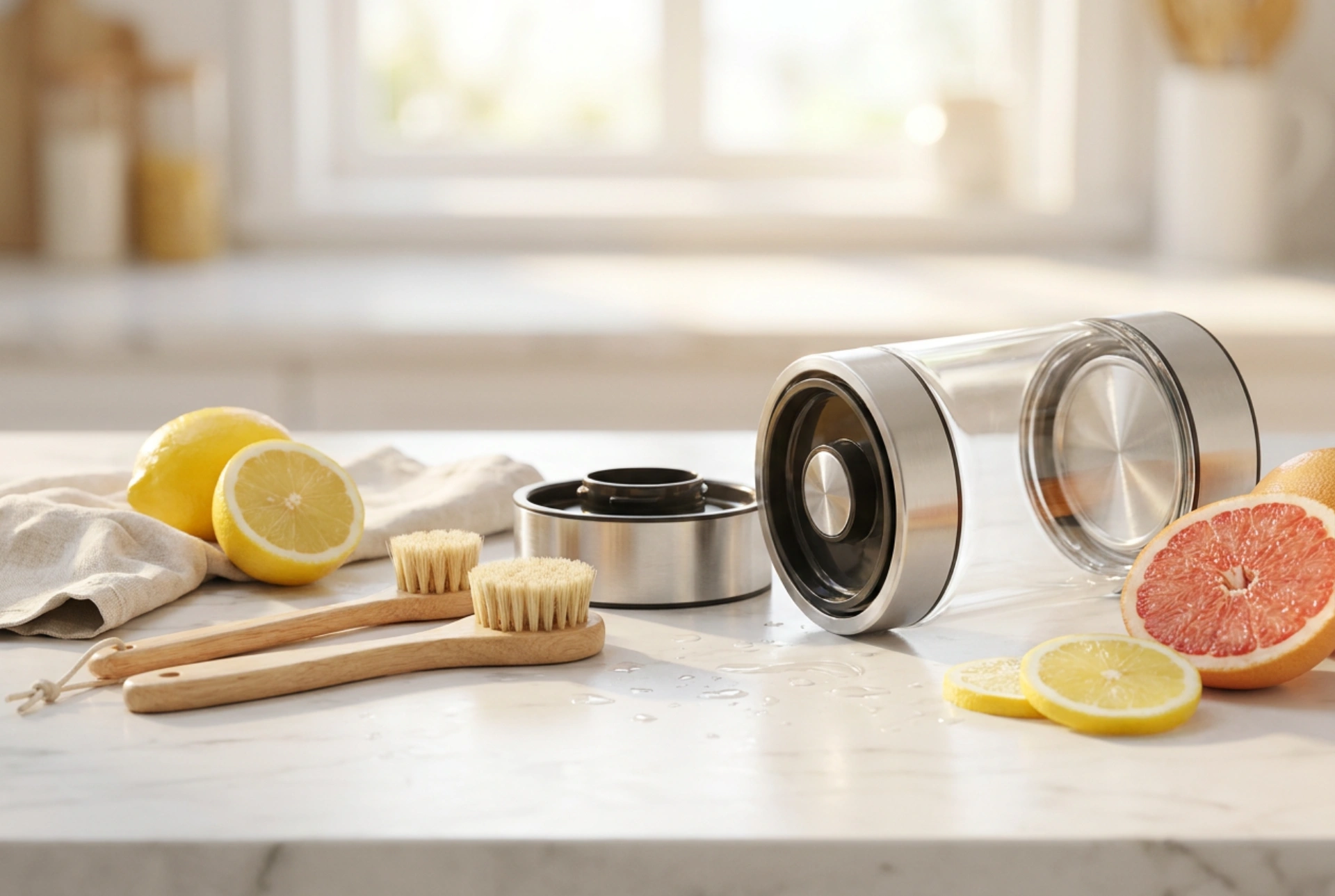
The stainless steel strainer contains thousands of micro-perforations designed to separate liquid from solid matter. These tiny holes easily trap microscopic cellulose fibers. To clean them efficiently, avoid using abrasive scouring pads, which can dull the metal perforations and scratch the plastic. Instead, use a stiff-bristled nylon brush. Brush the screen from both the inside and the outside under running water. The water pressure should ideally oppose the direction of the juicing force; since pulp is pushed outwards during juicing, rinsing the screen from the outside-in helps dislodge trapped particles. If the mesh is clogged with mineral scale from hard water, submerge it in a solution of warm water and citric acid for fifteen minutes to break the mineral bonds.
Maintaining the Auger and Silicone Seals
The auger, or squeezing screw, experiences high pressure and friction during operation, compressing fine pulp into its tight spirals. Wipe the auger using a soft microfiber cloth and a mild surfactant solution. Pay special attention to the bottom gear mechanism where the auger connects to the motor shaft. Equally important are the removable silicone seals and gaskets. The moist, dark environments behind these seals are prime breeding grounds for mold. Carefully remove the silicone seals during every clean, wash them with soapy water, and allow them to dry completely before reassembly to prevent deterioration.
Drying and Preventing Water Spotting
Before reassembling and storing the juicer, all parts must be thoroughly dried. Allowing water to evaporate naturally can lead to the formation of calcium carbonate deposits (limescale), which create a rough surface texture that encourages organic residues to cling during future uses. Dry each piece with a clean, lint-free linen towel. Avoid assembling the juicer while the parts are still damp, as trapped moisture inside the sealed chambers can lead to musty odours and microbial growth.