

Raw meat processing equipment, such as mechanical tenderisers and grinders, requires meticulous cleaning to eliminate stubborn pathogens like Salmonella and E. coli without damaging the underlying metal. Due to the intricate micro-grooves, gears, and blades of these appliances, standard surface wiping is insufficient to prevent dangerous bacterial biofilms from forming.
The Science of Meat Residue: Why Hot Water Is Not the First Step
When cleaning meat processing equipment, the natural instinct is to flood the parts with boiling water immediately. However, from a chemical perspective, this is a critical mistake. Raw meat consists of complex proteins (such as actin and myosin) and lipids (fats). Exposing these proteins to temperatures above 45°C causes thermal denaturation. This process alters the protein structure, causing it to coagulate and bind tenaciously to the stainless steel or cast-metal surfaces, creating a stubborn film that is incredibly difficult to remove.
To prevent this protein adhesion, the initial rinse must always be conducted with cold or lukewarm water (strictly under 35°C). Cold water physically forces soluble proteins off the metal plates and blades, flushing them away before they can bake onto the components. Only after the bulk of the organic matter has been rinsed away should you transition to warmer temperatures to target the fats.
The Emulsification Stage: Tackling Lipids
Once the soluble proteins are flushed, the remaining challenge is lipid residue. Animal fats have a high melting point and do not dissolve in water. To remove them, you must employ the process of emulsification using surfactants (standard pH-neutral washing-up liquids) and warm water heated to approximately 50°C. At this temperature, the animal fats liquefy, allowing the hydrophobic tails of the surfactant molecules to bind to the grease, while their hydrophilic heads bind to the water molecules.
For thorough cleaning, follow this mechanical procedure:
- Complete Disassembly: Remove all detachable components, including feed screws, cutting blades, grinding plates, ring collars, and tenderising needles.
- Mechanical Scrubbing: Use a stiff, cylindrical nylon brush to penetrate the internal threads and the tiny apertures of the grinding plates. Micro-residues trapped in these blind spots are the primary breeding grounds for bacteria.
- Directional Scrubbing: Scrub along the grain of the machined steel to dislodge packed particles without dulling the sharp edges of the cutting blades.
Sanitisation and Material Science
After physical cleaning, chemical or thermal sanitisation is necessary to destroy any remaining microscopic pathogens. The method you choose must align with the material science of your equipment. Most high-quality meat processors are made from either stainless steel or cast aluminium. This distinction is vital because these materials react differently to cleaning agents:
- Stainless Steel: Highly resilient. It can be sanitised chemically using a dilute solution of oxygen bleach (sodium percarbonate) or thermally by immersing the disassembled steel parts in water heated to 75°C for at least two minutes.
- Cast Aluminium: Highly sensitive to alkaline environments. Using strong oxygen bleaches or putting aluminium parts in a dishwasher will trigger oxidation, turning the metal a dull grey and leaving a powdery residue. For aluminium, stick to manual washing with mild, pH-neutral detergents and sanitise with specialised food-safe, non-corrosive disinfectants.
Moisture Control and Oxidation Prevention
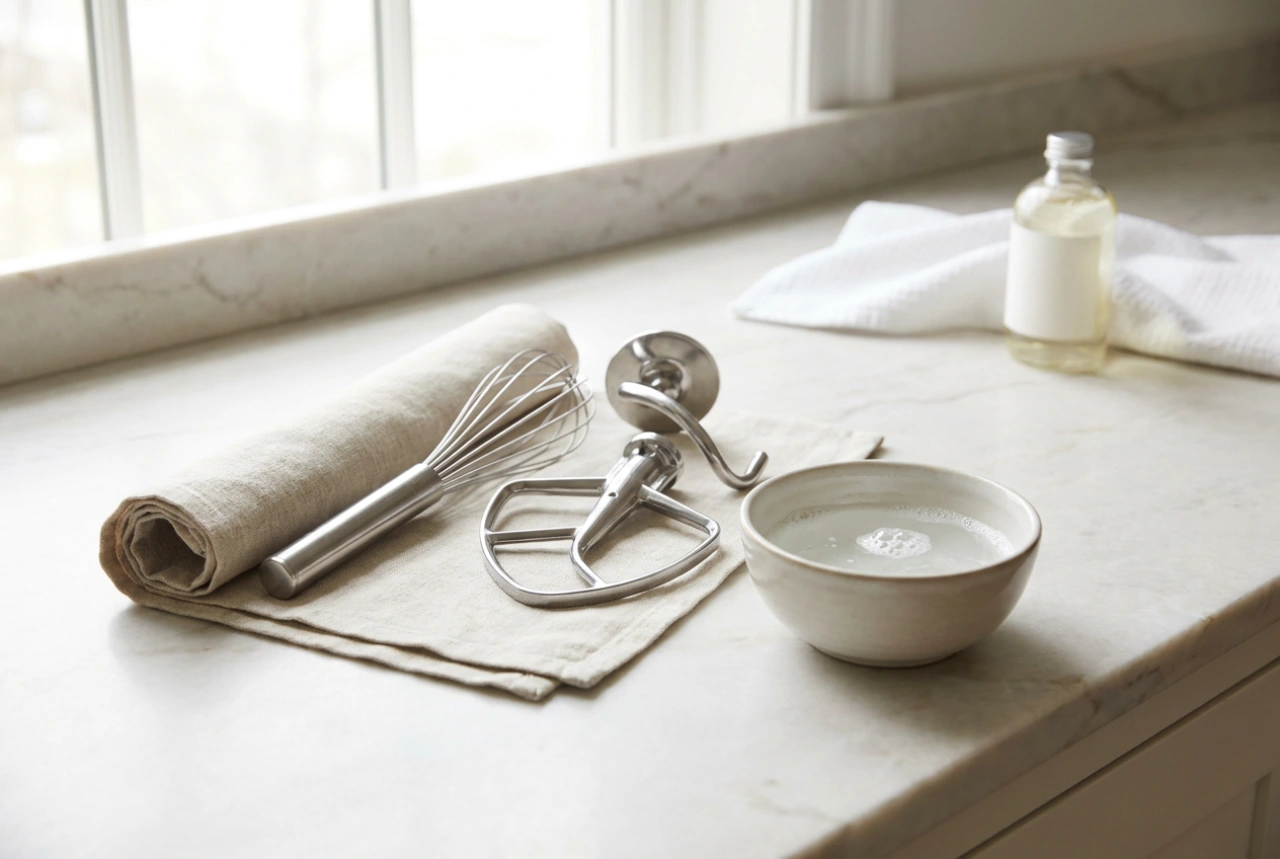
The final, crucial step in the hygienic loop is moisture control. Leftover moisture on metal components triggers oxidation (rust), particularly on carbon steel blades and cast-iron parts. To prevent this, dry all components immediately after rinsing using a clean, lint-free microfibre cloth.
For long-term preservation and hygiene, apply a thin layer of food-grade mineral oil to the blades, plates, and internal screw mechanisms. This oil acts as a hydrophobic barrier, preventing atmospheric oxygen and ambient humidity from reacting with the iron in the metal, ensuring the machine remains sharp, sterile, and ready for its next use.