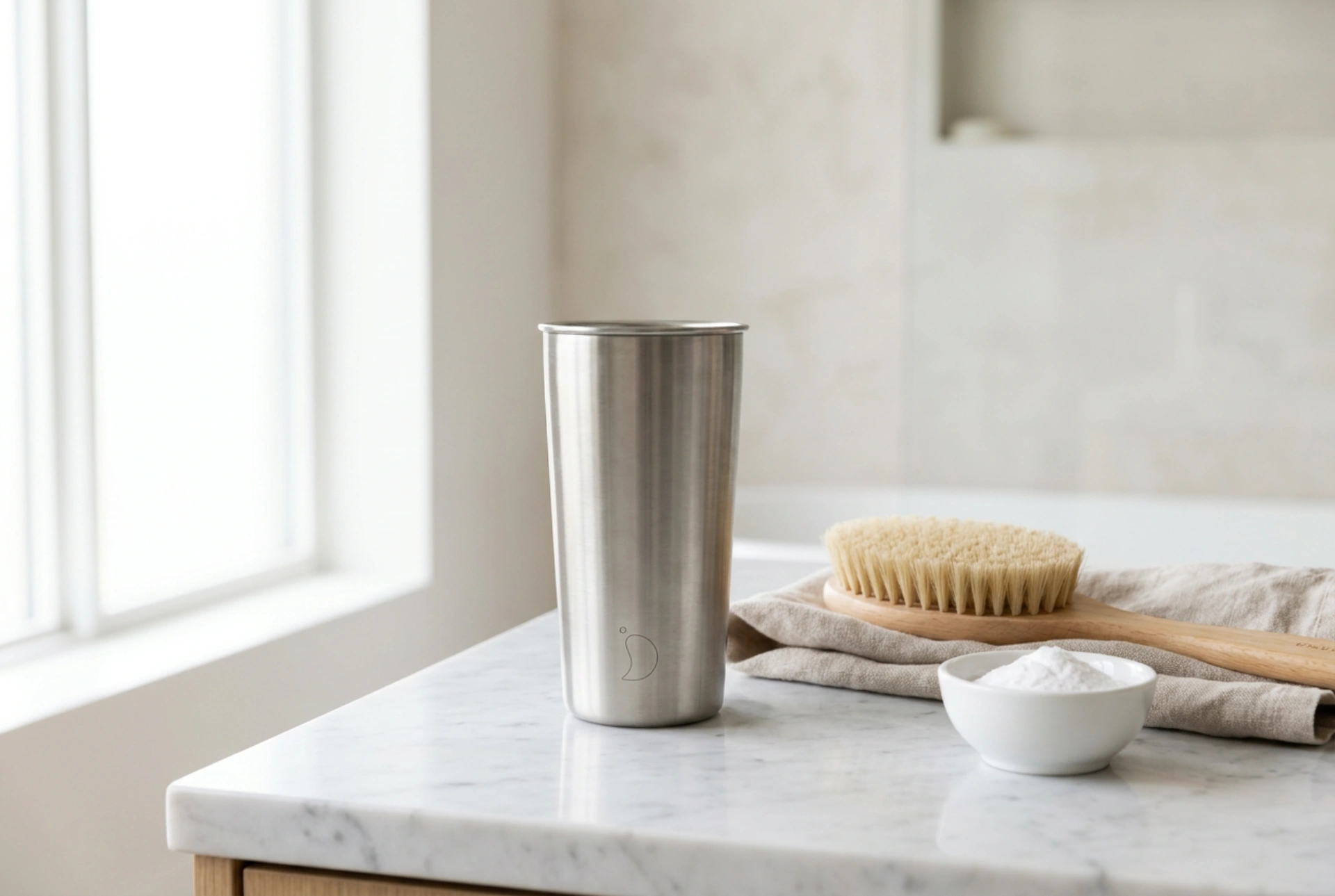


Discolored interiors and persistent stale odors in travel mugs are caused by polymerized coffee oils bonding to the microscopic crevices of stainless steel. Restoring your flask to its original, sterile state requires targeting these organic compounds with the right chemical reactions rather than abrasive scrubbing, which can permanently damage the metal's protective layer.
Why Coffee Stains Stick: The Chemistry of Polymerized Lipids
Coffee is not just a dark liquid; it is a complex emulsion containing lipids (oils), proteins, acids, and melanoidins—nitrogenous polymers formed during the roasting process. When coffee sits in a travel mug, these organic compounds cool, oxidize, and begin to polymerize. Stainless steel owes its corrosion resistance to a microscopic passivation layer of chromium oxide. While highly durable, this layer is not perfectly flat on a molecular scale. The cooling coffee oils settle into these microscopic crevices and solidify, creating a hydrophobic, sticky film. Standard dish soap and quick rinsing cannot break the molecular bonds holding this film to the metal, leading to the gradual accumulation of dark, bitter-tasting plaque.
The Hazard of Chlorine Bleach on Stainless Steel
Many turn to chlorine-based household bleach as a quick fix for discoloration. However, this is highly damaging to stainless steel. Chlorine contains active chloride ions that aggressively attack the chromium oxide passivation layer. Once this protective layer is breached, the chloride ions initiate a localized electrochemical reaction called pitting corrosion. This process creates tiny, microscopic pits in the metal that cannot be repaired. These pits not only weaken the integrity of the mug but also become permanent breeding grounds for bacteria and trap even more coffee oils in the future. To clean stainless steel safely, you must use non-corrosive, oxygen-based agents.
The Chemical Solution: Saponification and Oxidation
The most effective and safe compound for removing organic residues from stainless steel is sodium percarbonate, commonly known as active oxygen bleach. When dissolved in hot water (ideally between 60°C and 80°C), sodium percarbonate dissociates into sodium carbonate and hydrogen peroxide. This reaction triggers two distinct cleaning mechanisms:
- Saponification: The sodium carbonate creates a highly alkaline environment (pH around 10.5). This alkalinity breaks down the insoluble coffee lipids and fatty acids, turning them into water-soluble soaps that easily rinse away.
- Oxidation: The hydrogen peroxide decomposes into water and active oxygen radicals. These radicals break the double bonds of the complex, colored organic molecules (melanoidins) responsible for the dark brown stains. Once these bonds are broken, the molecules lose their color and their ability to cling to the metal.
Step-by-Step Restoration Protocol
To safely execute this chemical cleaning process at home, follow these precise physical steps:
1. Temperature Control: Fill the travel mug to the brim with hot water at approximately 70°C. Do not use boiling water if your mug has sensitive vacuum-insulated seals, as extreme thermal expansion can occasionally stress the welded seams of lower-quality flasks.
2. Adding the Reactant: Add one tablespoon of pure sodium percarbonate powder directly to the hot water. You will immediately notice vigorous effervescence as oxygen gas is released.
3. Ventilation and Pressure: Leave the lid completely off. Closing the lid during this reaction is highly dangerous, as the rapidly releasing oxygen gas will build intense pressure inside the sealed mug, potentially warping the structure or causing hot liquid to spray out violently when opened.
4. Dwelling Time: Allow the mixture to sit for 15 to 30 minutes. The continuous bubbling action mechanically lifts the loosened organic matter from the steel wall.
5. Gentle Agitation: Pour out the solution and use a soft-bristled nylon or wooden bottle brush to wipe away any residual softened paste. Never use steel wool or abrasive metal scourers, as they will scratch the polished interior, creating new physical traps for future stains.
Addressing the Porous Lid and Silicone Gaskets
While the stainless steel body is easily restored, the plastic lid and silicone gaskets require a different approach. Silicone is highly porous and readily absorbs volatile organic compounds, which is why lids often retain a stale coffee smell even after thorough washing. To deodorize these components, disassemble the lid completely, removing all silicone rings. Soak these parts in a warm solution of water and sodium bicarbonate (baking soda). Sodium bicarbonate acts as a mild amphoteric buffer, neutralizing both acidic and basic odor molecules rather than simply masking them. After a 1-hour soak, wash the parts with a mild surfactant, rinse thoroughly with fresh water, and allow them to dry completely in a well-ventilated area to prevent mold growth before reassembly.