

Selecting the right dishwasher tablet requires understanding how different chemical agents target specific food residues, temperatures, and water conditions. Matching the active ingredients to your typical culinary waste ensures spotless results while protecting your machine and tableware.
The Chemistry of Clean: Enzymes versus Bleaching Agents
Dishwasher detergents rely on a carefully balanced mix of enzymes and oxygen-based bleaching agents to break down food residues. Understanding how these components interact with different types of soil is key to choosing the correct formulation for your household's cooking habits.
Enzymes are highly specialized proteins that act as biological catalysts, accelerating the breakdown of organic matter. The two primary enzymes in dishwasher tablets are amylases and proteases. Amylases target starch-based residues like pasta, rice, and thick sauces, breaking down carbohydrates into water-soluble sugars. Proteases attack protein-based stains, such as dried egg yolk, meat residues, and dairy, by cleaving peptide bonds to let them wash away. Because enzymes are biological, they perform optimally between 45°C and 55°C and are deactivated above 60°C.
For oxidized stains like tea, coffee, wine, and fruit juices, enzymes are ineffective. Instead, these stains require oxygen-based bleaching agents, typically sodium percarbonate. When dissolved in water above 50°C, sodium percarbonate releases hydrogen peroxide, which oxidizes the chromophores—the chemical groups responsible for color in organic stains—rendering them colorless and soluble. If your diet involves highly pigmented foods and beverages, prioritizing tablets with active oxygen is essential.
Physical Formats: Gel, Powder, and Multi-Chamber Tablets
The physical state of a dishwasher tablet dictates its dissolution rate, directly influencing its effectiveness across various washing cycles and temperatures.
- Powder Tablets: Compressed powder is highly stable and allows for a high concentration of bleach and builders. However, its density means it dissolves slowly, making it ideal for heavy-duty, high-temperature cycles (65°C and above) where prolonged exposure is guaranteed.
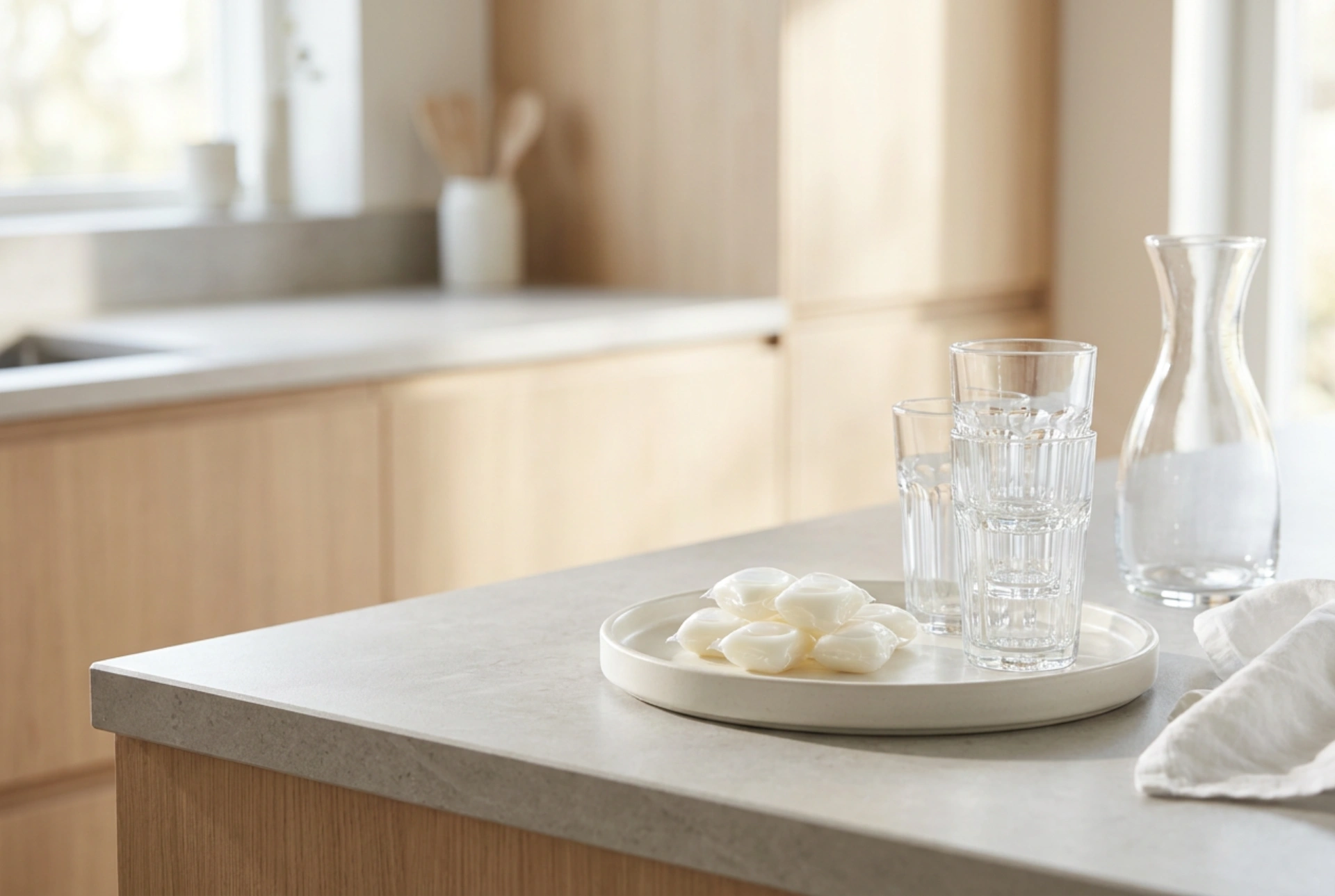
- Gel Tablets: Liquid-filled or gel-based capsules dissolve almost instantly, even in cold water or short cycles. While excellent for quick washes and delicate glassware, gels cannot easily incorporate oxygen-based bleaches due to stability issues in liquid mediums, making them less effective against tough tea or coffee stains.
- Multi-Chamber Tablets: These modern solutions isolate liquid surfactants, gel components, and dry powders into separate soluble compartments. This physical separation prevents premature chemical reactions during storage, releasing each component at the optimal phase of the washing cycle.
The Role of Water Hardness and Builders
Water hardness, determined by the concentration of calcium and magnesium ions, significantly impairs the performance of detergents. Hard water causes surfactants to precipitate out of solution, reducing their ability to emulsify oils and fats, while leaving behind dull mineral deposits on glassware.
To combat this, dishwasher tablets contain builders, such as methylglycinediacetic acid (MGDA) or glutamic acid diacetic acid (GLDA), which act as chelating agents. These molecules bind tightly to calcium and magnesium ions, softening the water within the chamber and allowing the surfactants to focus on dispersing soil. If you live in an area with extremely hard water, basic single-phase tablets will require supplementary dishwasher salt in the machine's ion exchange unit to prevent mineral clouding.
Optimising Cycle Parameters for Maximum Efficacy
To leverage the physical chemistry of your chosen tablet, you must align it with the correct machine cycle. An eco-friendly cycle, operating at lower temperatures (around 50°C) for a longer duration, provides the perfect environment for biological enzymes to work without degrading. Conversely, a rapid cycle lacks the time required for dense powder tablets to fully dissolve, potentially leaving behind a gritty residue. For quick washes, select gel-based formulations or multi-chamber capsules that break down rapidly. For baked-on grease, which requires saponification—the process where alkaline agents convert fats into soluble soaps—high-temperature cycles paired with high-alkalinity tablets are indispensable.