

Achieving the perfect indoor climate requires balancing two distinct physical processes: removing microscopic pollutants and maintaining optimal moisture levels without damaging your filtration equipment or encouraging mould growth.
The Physics of Airflow, Moisture, and Filtration
To combine purification and humidification effectively, it is essential to understand how moisture interacts with air filters. Most high-performance air purifiers rely on HEPA (High-Efficiency Particulate Air) filters. These filters are constructed from a dense, random web of fiberglass or synthetic fibres designed to trap microscopic particles through interception, impaction, and diffusion.
However, these fibres are highly sensitive to relative humidity (RH). When the RH in a room rises above 60%, several physical complications occur:
- Fiber Swelling: Certain hydrophilic filter materials can absorb moisture, causing the fibres to swell. This narrows the microscopic gaps in the filter, increasing air resistance and drastically lowering the Clean Air Delivery Rate (CADR).
- Mould and Bacterial Growth: Dust, pollen, and skin flakes trapped on the filter surface serve as organic nutrients. When exposed to high humidity, this damp organic matter becomes an ideal breeding ground for fungal spores and bacteria, which can then be released back into your living space.
- Electrostatic Neutralisation: Many modern filters utilise an electrostatic charge to attract ultra-fine particles. High humidity neutralises this charge, severely reducing the filter’s efficiency at capturing viral particles and fine combustion soot.
Conversely, extremely dry air (below 30% RH) causes electrostatic charges to build up on household surfaces. This keeps dust and allergens suspended in the air longer, making it harder for the purifier to capture them before they are inhaled.
The Critical Rule of Device Placement and Distance
A frequent error is placing an air purifier and a humidifier directly next to each other. This setup leads to immediate mechanical and sensory interference.
Modern air purifiers monitor air quality using optical PM2.5 sensors. These sensors project an infrared or laser beam through a small chamber; when particles pass through the beam, they scatter the light, which is measured by a photodetector. Ultrasonic humidifiers release tiny, liquid water droplets containing dissolved minerals (such as calcium and magnesium carbonates). The purifier's optical sensor cannot distinguish between a harmful PM2.5 dust particle and a microscopic water droplet. As a result, the purifier registers a false spike in pollution, ramping its fan speed to maximum and unnecessarily wearing out the motor and filters.
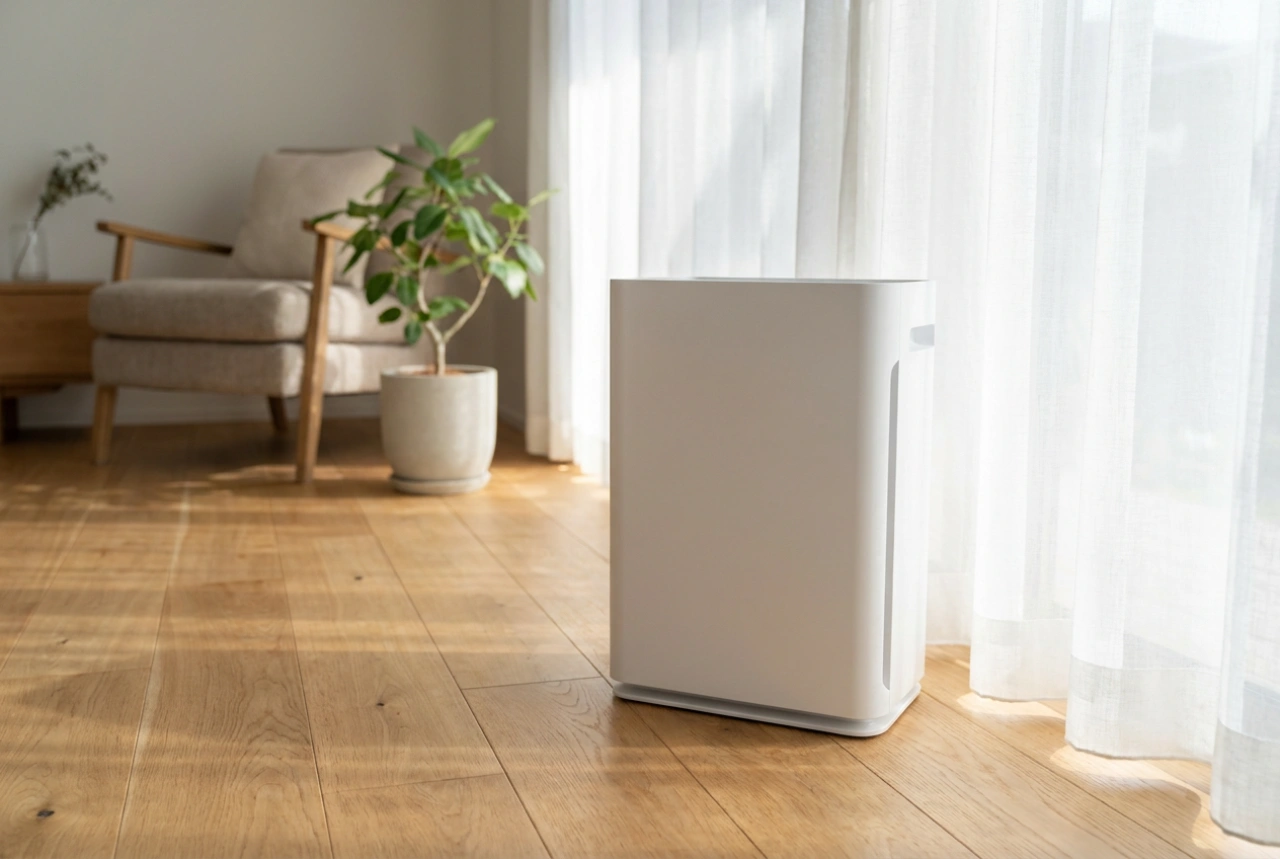
To prevent this, maintain a minimum physical distance of two to three metres between the devices. Position the humidifier in an area with active natural convection—such as near a radiator or in the centre of the room—to allow the moisture to fully transition into a gaseous state before it reaches the air purifier's intake. Place the air purifier closer to known pollutant sources, such as seating areas, pet beds, or doorways.
Choosing the Right Humidification Technology
The type of humidifier you pair with your purifier dictates the efficiency of your entire indoor climate system. The three main technologies behave differently in a filtered environment:
Evaporative Humidifiers
This is the most compatible technology for use alongside air purifiers. These devices draw dry air through a wet wick filter, causing water to evaporate naturally into a pure gaseous state. Because gaseous water molecules are far smaller than the microscopic pores of a HEPA filter, they pass through the purifier effortlessly without wetting the fibres or triggering PM2.5 sensors. Additionally, minerals are left behind on the wick, preventing mineral dust from entering the air.
Ultrasonic Humidifiers
While quiet and energy-efficient, ultrasonic models use a vibrating diaphragm to aerosolise liquid water into a fine mist. This mist carries every mineral present in your tap water into the air. When these droplets evaporate in mid-air, the minerals crystallise into an ultra-fine white dust. This dust is immediately sucked into your air purifier, clogging the expensive HEPA filter within weeks and forcing the purifier to run constantly at high speed. If you must use an ultrasonic humidifier, you must use distilled or highly demineralised water.
Steam Humidifiers
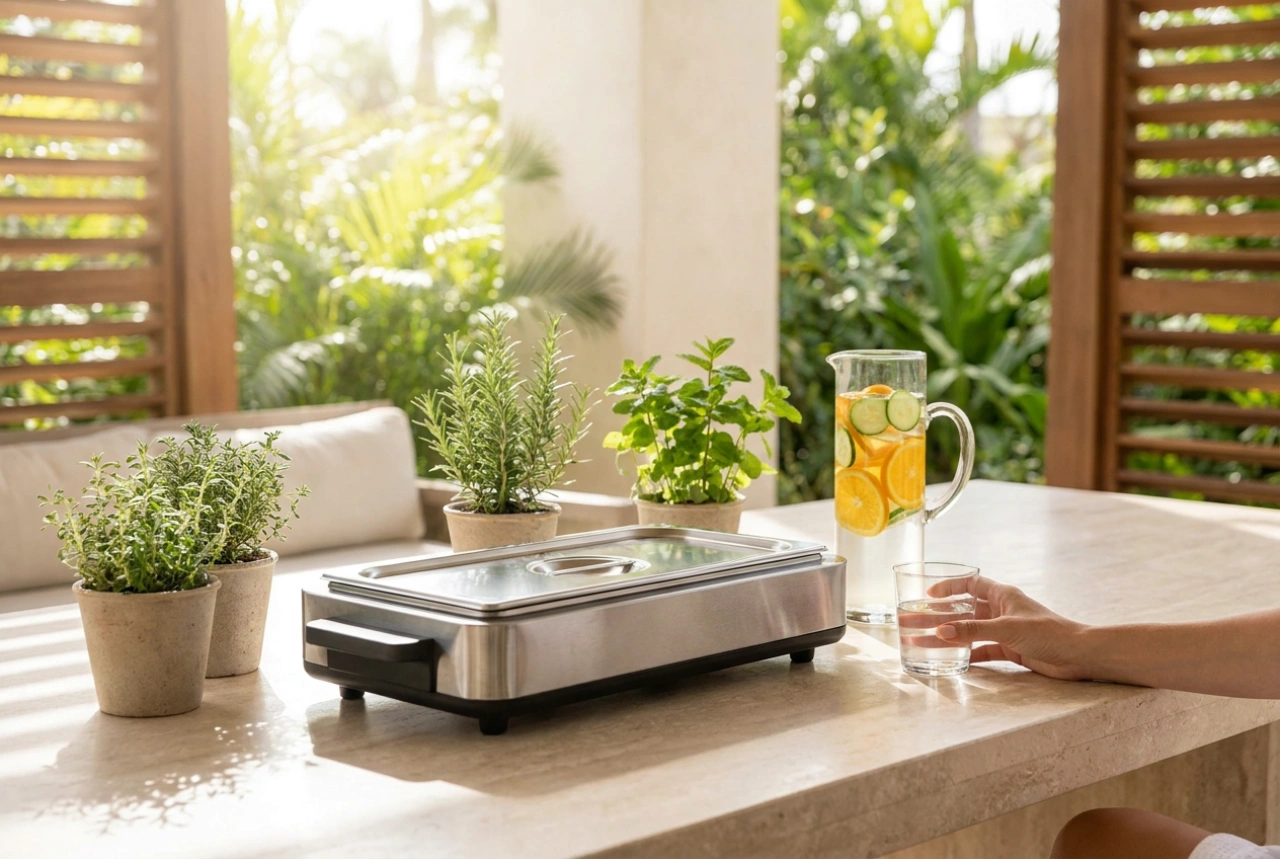
These devices boil water to release pure, sterile steam. Like evaporative systems, they do not release mineral dust. However, because they emit hot steam, they can raise local humidity rapidly. Care must be taken to ensure the warm steam does not condense directly onto the cooler intake grilles of nearby electronics or air purifiers.
Maintenance Protocols for Synced Devices
To ensure healthy operation, establish a strict cleaning and monitoring schedule. Aim to keep your indoor relative humidity strictly between 40% and 50%. Use a standalone hygrometer placed at breathing height, away from both devices, to get an accurate reading.
Humidifiers must be descaled and disinfected weekly using food-grade citric acid or white vinegar to dissolve mineral scale and destroy biofilms. For the air purifier, vacuum the mesh pre-filter every fortnight to ensure unrestricted airflow, allowing the system to handle the gently humidified air efficiently without putting strain on the primary HEPA filter.