

Ensuring kitchen hygiene requires destroying pathogens on food-preparation surfaces without leaving behind chemical residues that can contaminate your meals. By understanding the chemical behaviour of disinfectants, you can select agents that fully evaporate or decompose into completely harmless elements after doing their job.
The Chemistry of Residue-Free Disinfection
Most commercial disinfectants rely on active ingredients like quaternary ammonium compounds (QUATs) or synthetic surfactants. While highly effective at breaking down lipid membranes of bacteria and viruses, these compounds are non-volatile. They remain on the surface as a sticky, invisible film long after the liquid carrier has evaporated. When food comes into direct contact with these treated countertops, it absorbs these chemical residues, which can alter food taste and pose minor health concerns over time.
To achieve a truly residue-free clean, you must use volatile compounds or molecules that decompose rapidly. The most effective options are alcohols (specifically ethanol and isopropyl alcohol) and hydrogen peroxide. These substances target pathogens through physical and chemical destruction and then vanish. Alcohols evaporate entirely into the air, leaving nothing behind, while hydrogen peroxide decomposes into simple water (H2O) and oxygen gas (O2) when exposed to air and organic material.
The Material Compatibility of Volatile Disinfectants
Choosing the right residue-free disinfectant depends heavily on the mineral composition of your countertop. What works perfectly on stainless steel can permanently damage natural stone.
- Natural Stone (Marble, Granite, Quartzite): These materials contain calcium carbonate, which reacts violently with acids. Never use vinegar (acetic acid) or citric acid solutions, as they cause irreversible acid etching, dulling the polished surface. Instead, use a 70% isopropyl alcohol solution, which is chemically neutral and completely safe for stone sealants.
- Engineered Quartz: Made of crushed quartz bound by polymer resins, quartz is highly durable but sensitive to extreme pH levels and harsh solvents. A 70% ethanol spray is ideal here, as it kills germs without degrading the resin binders.
- Stainless Steel and Glass: These non-porous surfaces are highly resilient. Both 70% alcohol solutions and 3% hydrogen peroxide work exceptionally well, leaving a sterile, streak-free surface without any chemical build-up.
- Wood and Butcher Blocks: Wood is porous and can absorb liquids. While 3% hydrogen peroxide is highly effective at oxidizing pathogens deep within the wood grain, it can bleach the wood over time. A light mist of 70% ethanol followed by a wipe with a clean microfiber cloth is the safest way to disinfect sealed wood without leaving moisture pockets.
Why 70% Concentration is the Scientific Sweet Spot
A common misconception is that higher concentrations of alcohol, such as 99%, provide better disinfection. In reality, pure alcohol is less effective at killing microbes than a diluted solution. The mechanism of alcohol disinfection relies on denaturing proteins—essentially unfolding and coagulating the structural and functional proteins of bacterial cell walls and viral envelopes.
Water acts as a crucial catalyst in this process. In a 99% alcohol solution, the alcohol causes rapid coagulation of the proteins on the outer shell of the microorganism. This creates a protective crust that prevents the alcohol from penetrating deeper into the cell. Furthermore, high-concentration alcohol evaporates too quickly, failing to maintain the necessary contact time. A 70% concentration contains enough water to slow down evaporation and keep the cell wall permeable, allowing the alcohol to penetrate the organism and destroy it from the inside out.
The Correct Protocol for Flawless Disinfection
Disinfection is a two-step process: you cannot effectively disinfect a dirty surface. Soil, grease, and food proteins act as physical shields, protecting microscopic pathogens from coming into contact with the disinfecting agent. Follow this precise sequence for optimal results:
First, perform a mechanical pre-clean. Use a warm water solution with a tiny amount of generic, fragrance-free dishwashing liquid to cut through grease and lift physical debris. Wipe the surface clean and rinse with plain water to remove any soap molecules.
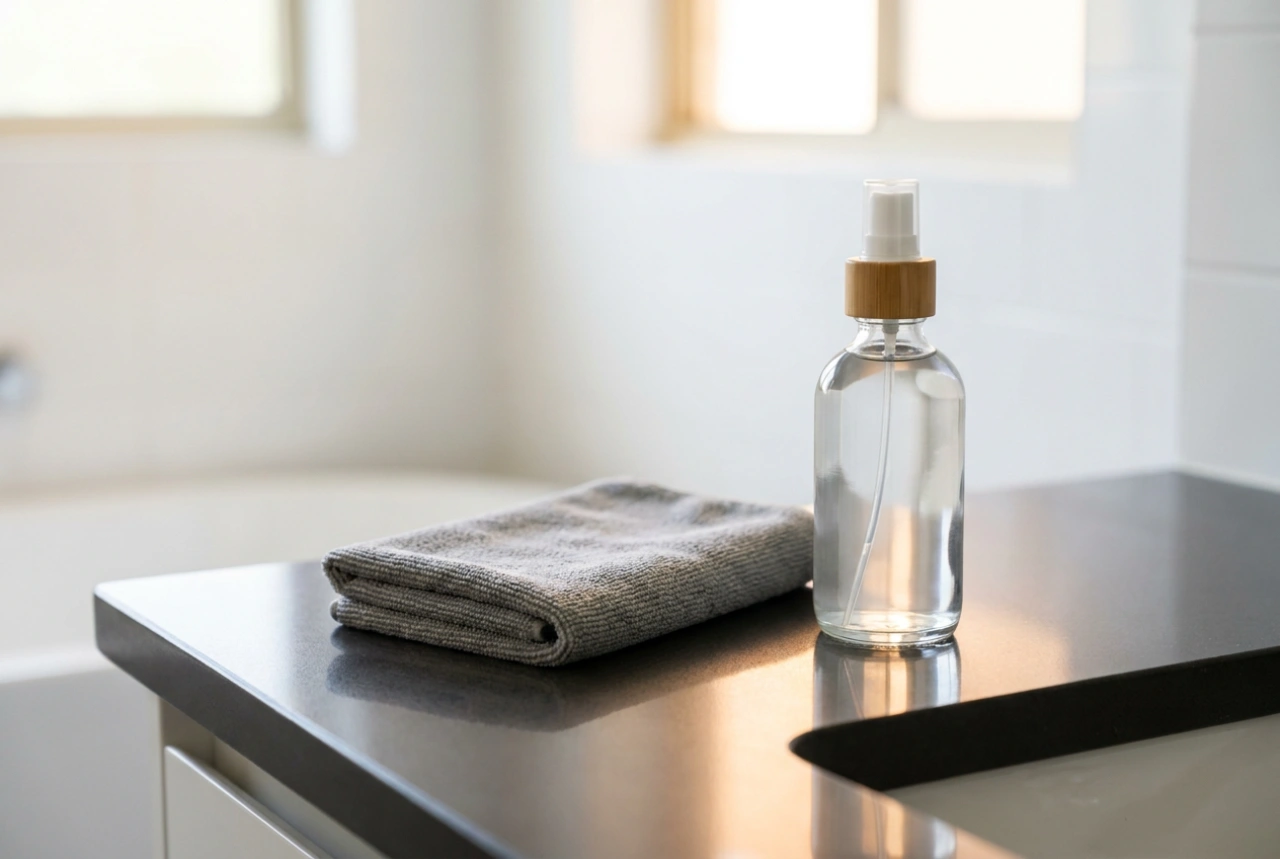
Second, spray your chosen residue-free disinfectant (70% ethanol or 3% hydrogen peroxide) evenly across the countertop. Ensure the surface remains visibly wet for at least 60 seconds—this dwell time is critical for the chemical to denature the pathogen proteins.
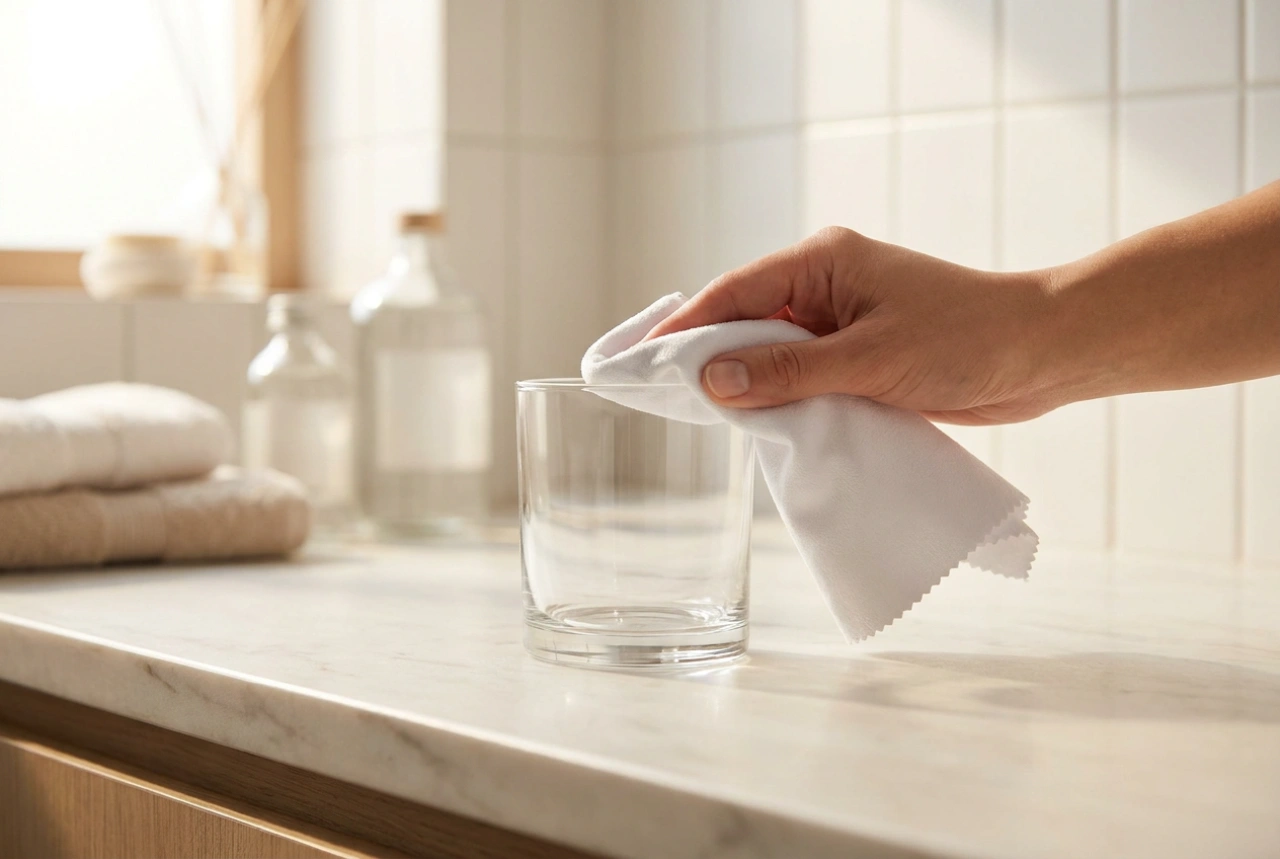
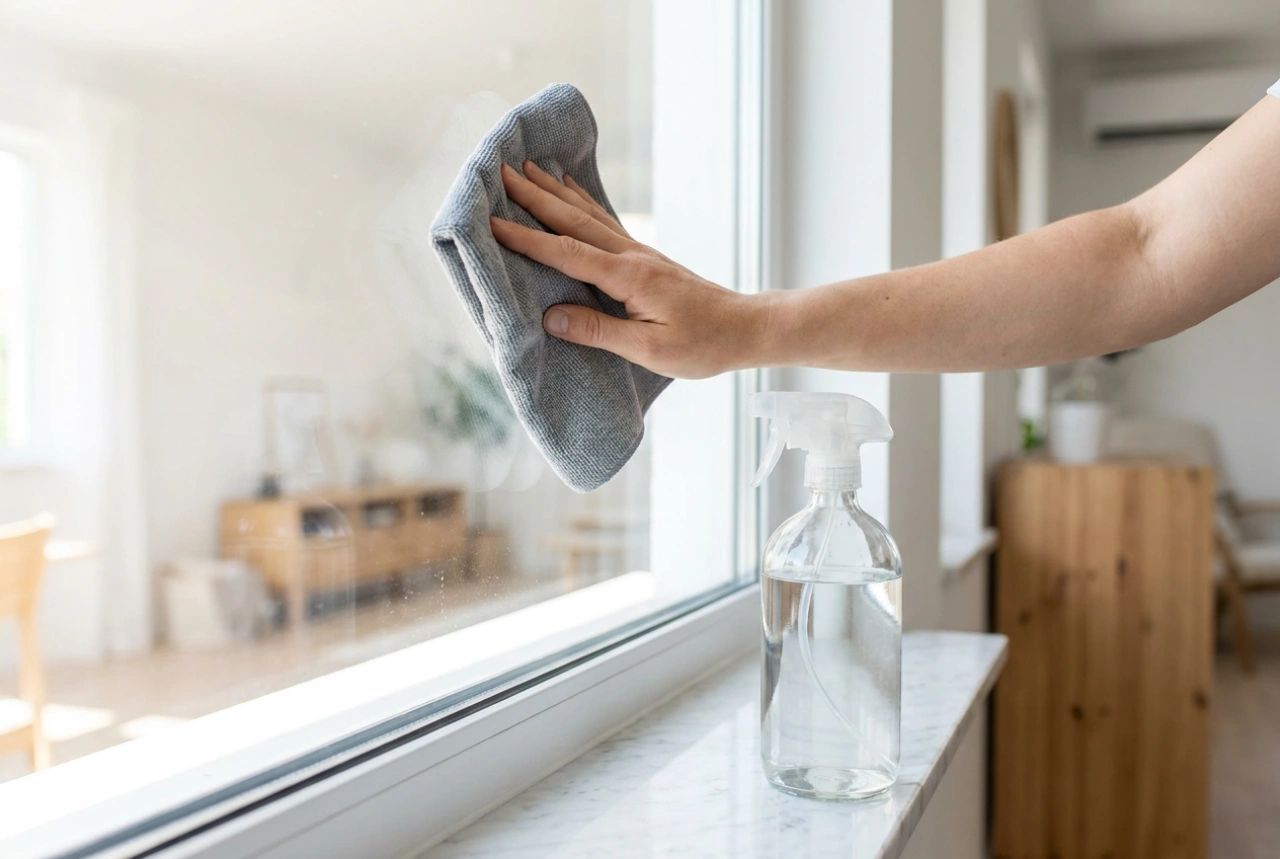
Finally, allow the surface to air-dry completely. If you are working on sensitive natural stone or want to ensure absolutely zero water-spotting from dissolved minerals in tap water, wipe the surface down with a clean, dry microfiber cloth after the required contact time has elapsed.