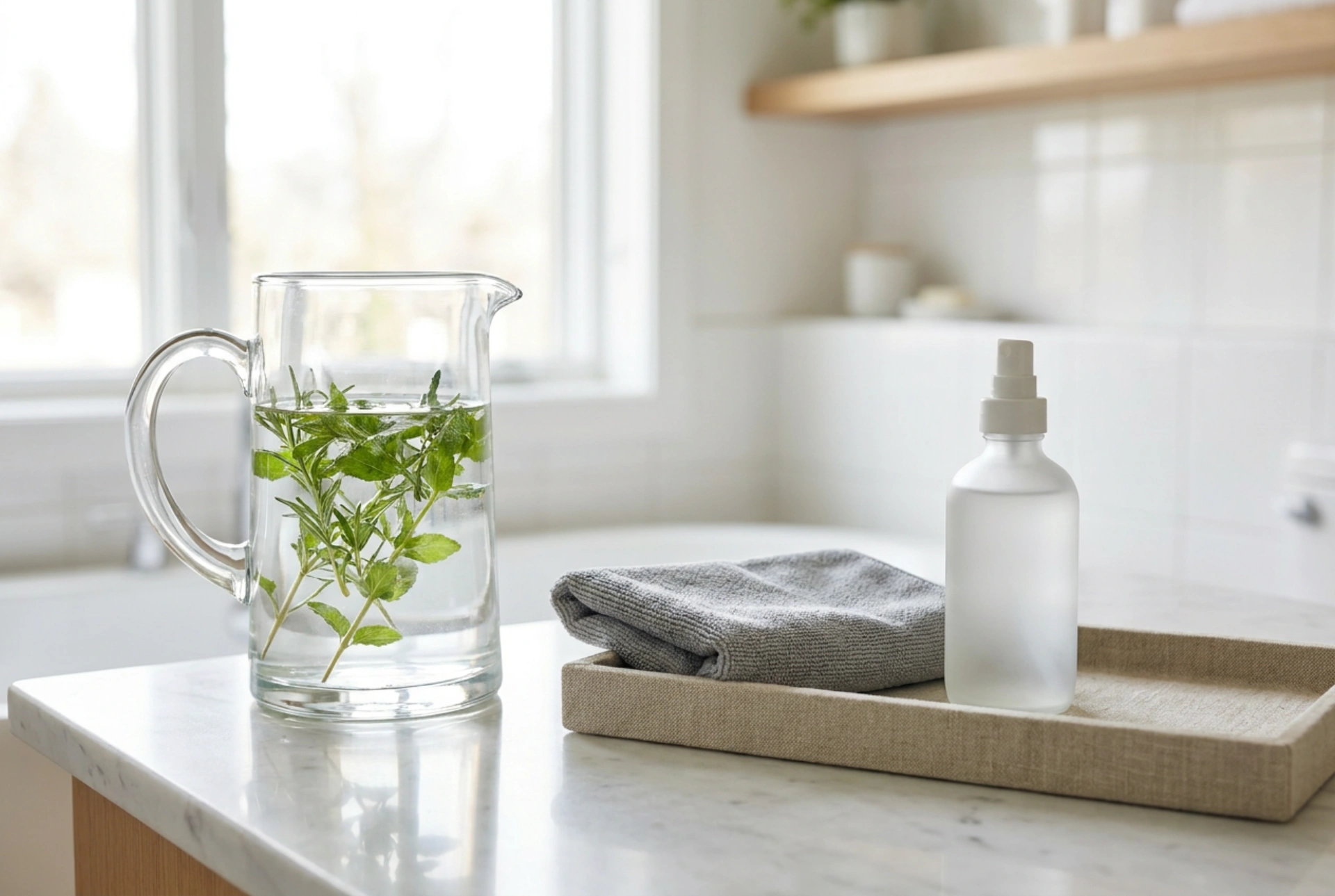


Achieving a crystal-clear finish on a glass water pitcher requires understanding how mineral deposits bond to silica surfaces and how to neutralise them chemically. Standard dish soaps often fail to dissolve these stubborn, cloudy films, leaving behind unsightly white spots or streaks upon drying.
Understanding the Chemistry of Glass Cloudiness
The white, hazy film that accumulates inside a glass water pitcher is not simply dirt; it is a microscopic layer of mineral deposits, primarily calcium carbonate and magnesium carbonate. Tap water contains dissolved minerals that precipitate out of solution when water evaporates or undergoes temperature changes. Glass, while appearing smooth to the naked eye, actually possesses a chemically active, microscopically porous surface. Sodium ions on the glass surface can interact with water, leaving behind silica-rich structures that easily bond with dissolved minerals.
Using alkaline detergents or standard dish soaps on these deposits is ineffective because carbonates are resistant to basic pH environments. To break these bonds without damaging the glass, you must alter the chemical equilibrium using a mild acid. This process, known as decalcification, converts insoluble calcium carbonate into highly soluble calcium salts, allowing them to be rinsed away effortlessly.
The Acidic Solution: Neutralising Mineral Bonds
The most effective and material-safe way to dissolve mineral scale is through the application of a weak organic acid, such as acetic acid (found in white vinegar) or citric acid. Here is how the process works on a molecular level:
- Chemical Reaction: When citric or acetic acid contacts calcium carbonate, a reaction occurs that produces carbon dioxide gas, water, and soluble calcium citrate or calcium acetate. This dissolves the solid lattice structure of the scale.
- Temperature Activation: Warmth increases the kinetic energy of the acid molecules, accelerating the reaction rate. However, avoid boiling water, as extreme thermal shock can cause tension in the glass, leading to stress fractures.
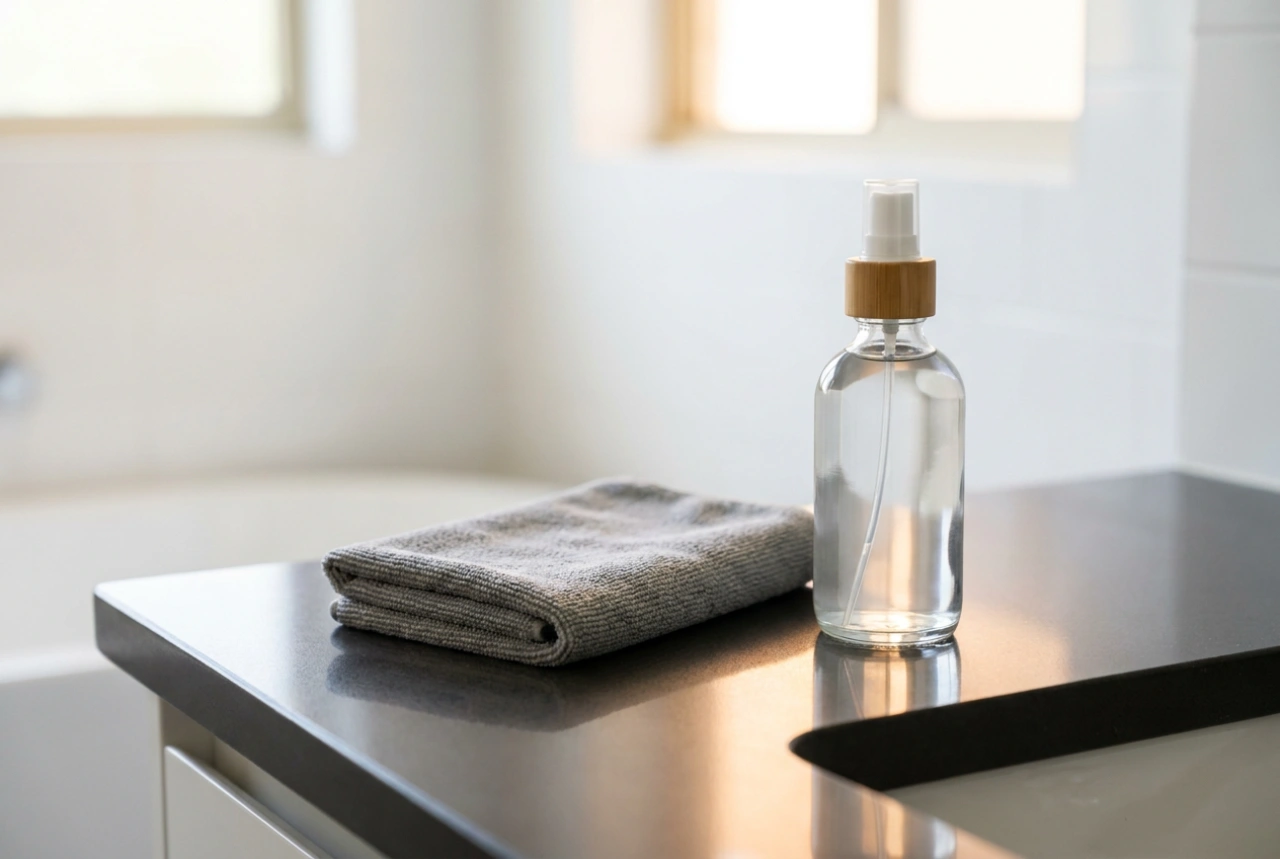
- Application Technique: Fill the pitcher with a solution of equal parts warm water and white vinegar, or add two tablespoons of citric acid powder to warm water. Let the mixture sit for 15 to 30 minutes, depending on the thickness of the residue.
Mechanical Cleaning without Micro-Scratches
Once the chemical bond of the limescale is weakened, gentle mechanical action is needed to lift the loosened particles. It is critical to avoid abrasive materials such as wire sponges, coarse scouring pads, or stiff-bristled brushes. Glass has a hardness of about 5.5 to 6.5 on the Mohs scale; while metal sponges might not deeply scratch the glass instantly, they create micro-abrasions over time.
These microscopic scratches ruin the optical clarity of the pitcher and create perfect physical anchor points for future mineral deposits and bacterial biofilm to adhere to. Instead, use a flexible silicone brush, a soft foam bottle swab, or a clean microfibre cloth. For narrow-necked pitchers where hands cannot reach, adding a handful of uncooked rice or coarse salt to the acidic solution and gently swirling it creates a safe, gentle abrasive action that lifts loosened scale from the glass walls.
The Critical Rinse and Drying Phase
The final step is where many processes fail, resulting in streaks. If you rinse the pitcher with tap water and allow it to air-dry naturally, the water droplets will evaporate, leaving behind the dissolved minerals they contain. This physical process is called spot formation.
To achieve a streak-free finish, follow this specific order of operations:
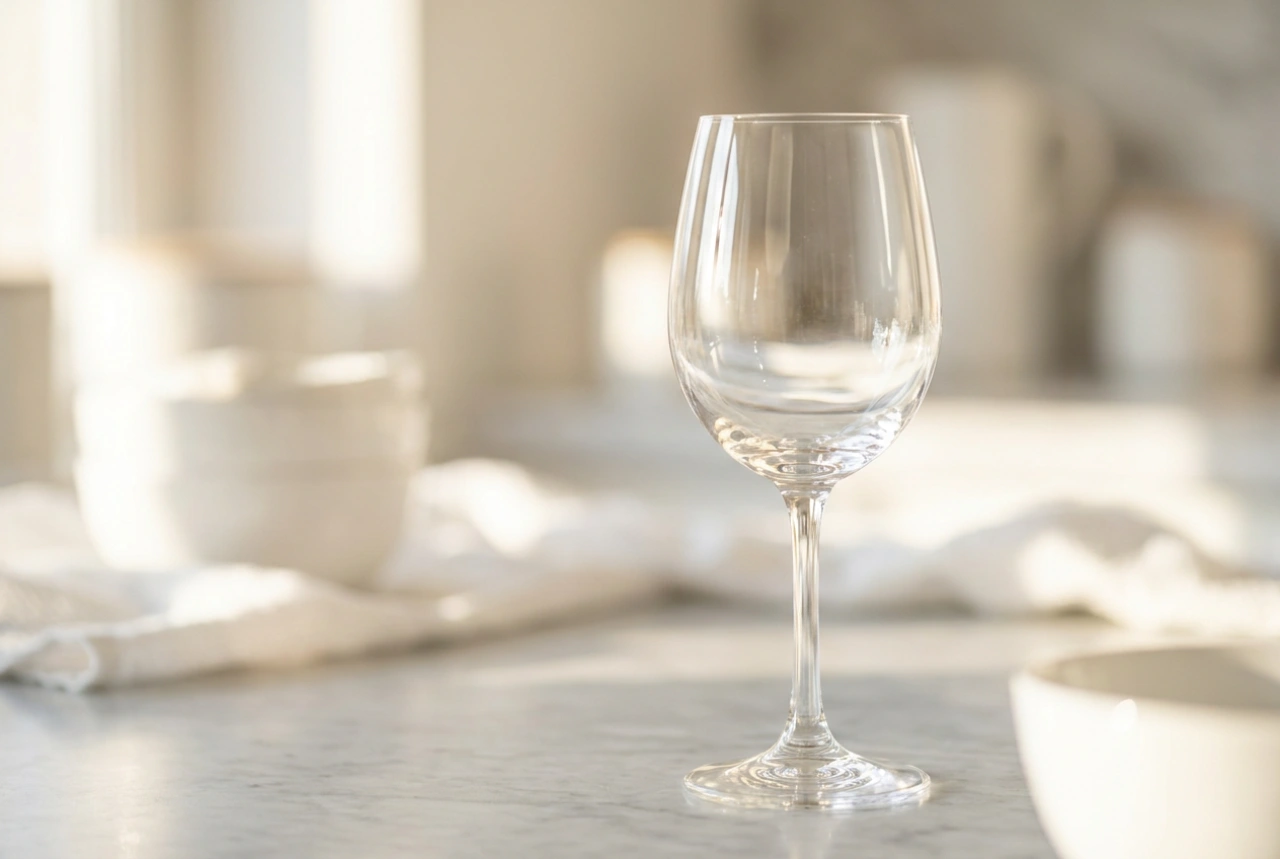
- The Purified Rinse: For an absolute pristine finish, perform a final rinse with distilled or demineralised water. Because this water is completely free of dissolved ions, it leaves no residue whatsoever upon evaporation.
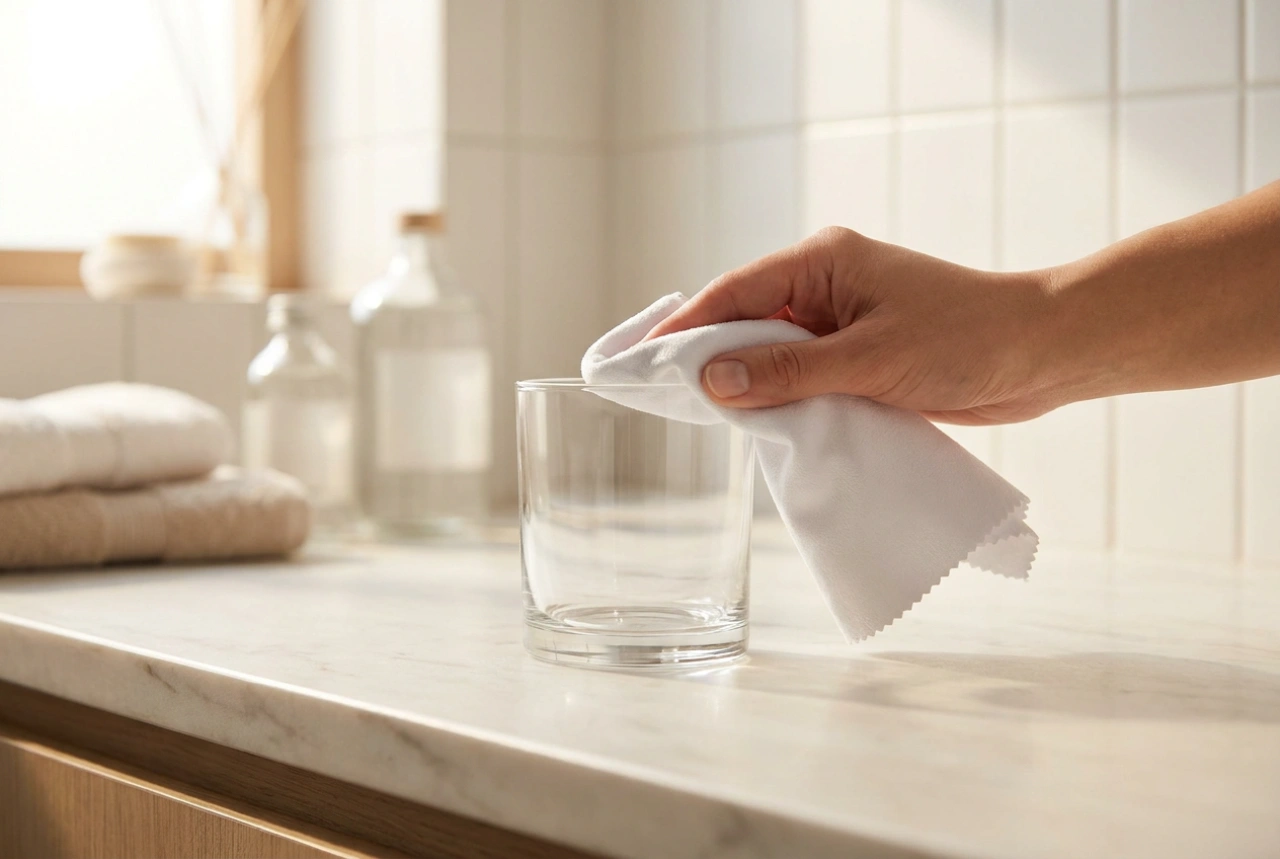
- Active Drying: If distilled water is unavailable, you must dry the pitcher manually before the tap water droplets can evaporate. Use a clean, lint-free microfibre cloth or a glass polishing towel. Microfibre works through capillary action, lifting water off the surface rather than smearing it.
- Technique: Wipe the glass in circular, overlapping motions from the bottom of the pitcher upwards. Ensure your hands do not touch the clean glass directly, as skin oils will instantly create smudges. Use the dry portion of the cloth to hold the vessel.
Preventative Habits for Pristine Glass
Maintaining a streak-free pitcher is significantly easier than restoring a heavily scaled one. Cultivating a few simple habits will keep the glass optically clear for longer. Always empty unused water at the end of the day rather than letting it sit and evaporate inside the vessel. Give the pitcher a quick rinse with cold water after each use to wash away residual droplets before they dry. Store the pitcher upside down on a clean, ventilated drying rack to ensure all internal moisture drains away completely, preventing stagnant water spots from forming at the base.