

Keeping a portafilter espresso machine with an integrated grinder and steam wand in pristine condition is essential for both mechanical longevity and extraction quality. Over time, coffee lipids oxidize, milk proteins polymerize, and mineral scale accumulates, directly degrading the flavor profile and thermal stability of your machine.
The Chemistry of Coffee Oils and Backflushing the Group Head
Coffee beans contain up to 15% lipids. During extraction, high pressure (around 9 bar) and temperature (90–95°C) squeeze these oils out. Some of these lipids inevitably stick to the shower screen, brass dispersion plate, and the three-way solenoid valve. Exposed to heat and oxygen, these oils oxidize rapidly, turning rancid and imparting a bitter, stale taste to subsequent extractions.
To dissolve these polymerized oils, you must perform a backflush using an oxygen-based detergent (such as sodium percarbonate). This chemical reaction breaks down the fatty acid chains, making them water-soluble:
- Insert a blind basket (a basket without holes) into your portafilter and add half a teaspoon of specialized cleaning powder.
- Lock the portafilter into the group head and engage the pump for 10 seconds to build pressure, forcing the hot water and dissolved cleaner into the brew group.
- Turn off the pump. The sudden drop in pressure forces the cleaning solution through the three-way solenoid valve and down into the drip tray, stripping away residual oils.
- Repeat this cycle 5 times, then remove the portafilter, rinse it, and run the pump again with clean water to flush out any chemical residues.
Restoring the Portafilter and Filter Baskets
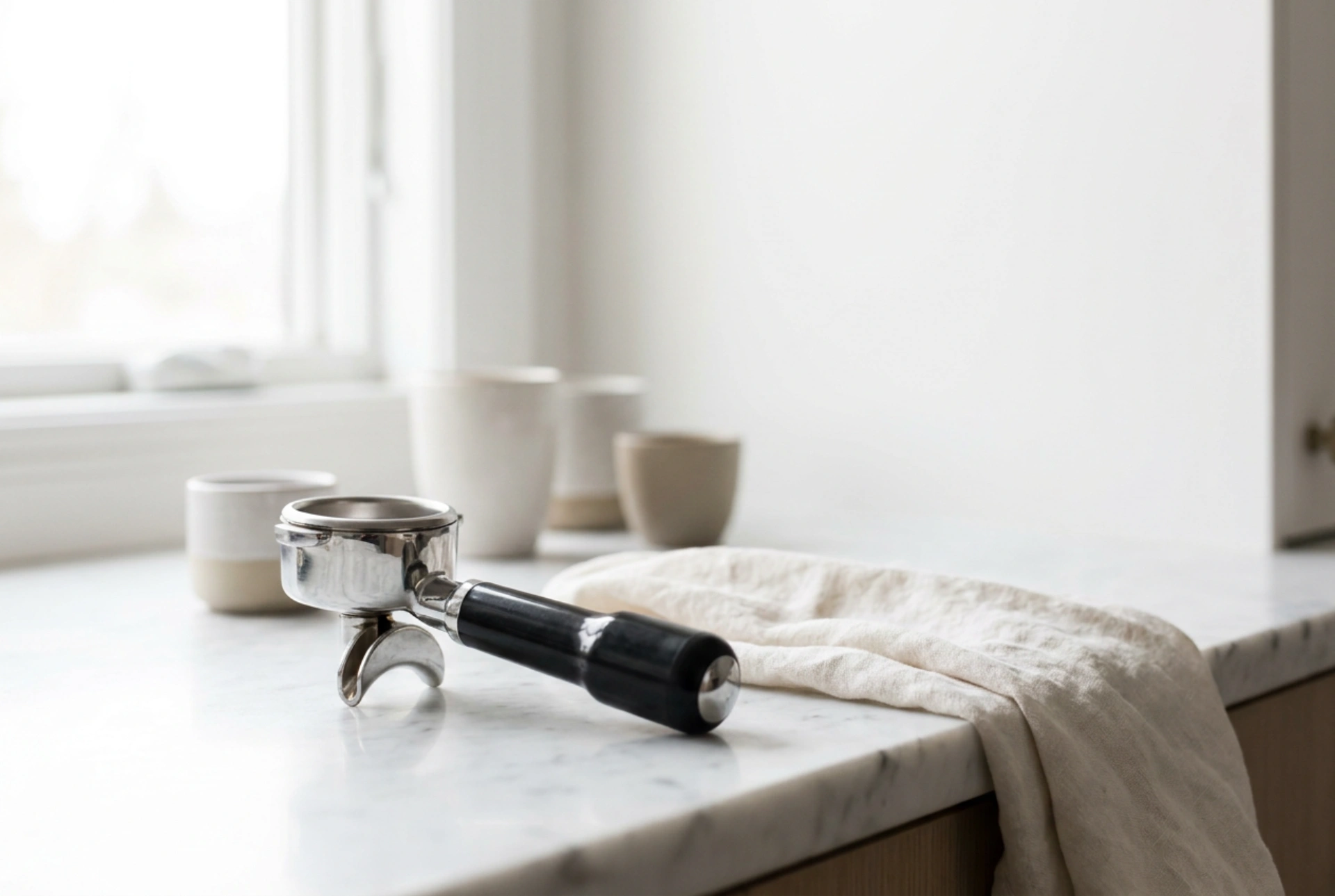
The micro-perforations in filter baskets easily become clogged with microscopic coffee particles and oily film. To clean them, separate the basket from the portafilter. Soak both stainless steel parts in hot water mixed with an oxygen bleach powder for 15 minutes. Note that you should never soak the plastic handle or chrome-plated brass parts for extended periods, as harsh chemicals can corrode non-ferrous metals.
After soaking, use a stiff brush to clear any stubborn residue from the basket holes. Rinse thoroughly under hot running water. Clean the retaining spring slot inside the portafilter head, as this hidden groove is a magnet for stagnant coffee sludge.
Deconstructing Milk Residue on the Steam Wand
Milk consists of water, lactose, fats, and proteins (primarily casein and whey). When steam heats milk above 60°C, these proteins denature and form a strong polymer bond on the hot surface of the steam wand. If not addressed instantly, the milk hardens into a stubborn layer, and the rapid cooling of the wand creates a vacuum that can suck milk residue back inside the steam tip, breeding bacteria.
The first line of defense is immediate action. Purge steam through the wand for two seconds right after texturing milk to expel any liquid, and wipe the exterior immediately with a damp, clean microfiber cloth. For deep cleaning, dissolve an alkaline-based milk cleaner in warm water and submerge the steam wand tip. Let it soak for 15 minutes to break down the protein structures, then purge with clean steam and wipe clean. Unscrew the steam nozzle periodically to inspect the small exit ports for physical blockages.
Maintaining the Integrated Grinder
Water must never touch steel grinder burrs, as it will initiate oxidation and rust. To clean the integrated grinder, shut off and empty the hopper. Use specialized cleaning pellets made of compressed, gluten-free grains. As these pellets pass through the burrs, they absorb the rancid coffee oils and sweep away trapped coffee dust without altering the calibration of the burrs. After running the pellets, grind a small handful of sacrificial coffee beans to purge any remaining powdery residue.
Decalcification: Managing Mineral Scale
As water is heated inside the boiler, dissolved calcium and magnesium ions precipitate out, forming calcium carbonate scale. This scale acts as a thermal insulator, preventing the heating element from regulating water temperature accurately. To dissolve scale, run a solution of organic acids (such as citric or lactic acid) through the water pathways, allowing the acid to react with and dissolve the calcium carbonate before flushing the system completely with fresh water.