

Excess indoor moisture compromises structural integrity, fosters mold growth, and alters thermal comfort. Deciding between an electric dehumidifier and a passive chemical moisture absorber requires understanding the physical mechanisms of water extraction and the specific volume demands of your living space.
The Physics of Air Moisture and Dew Point
Air carries water vapor, the capacity of which depends heavily on temperature. Relative humidity (RH) represents the ratio of current moisture in the air to the maximum amount the air can hold at that specific temperature. When warm, humid air contacts cold surfaces, its temperature drops to the dew point, causing gaseous water to transition into liquid condensation. To prevent this, moisture must be extracted. Electric dehumidifiers and chemical absorbers achieve this through entirely different thermodynamic and chemical processes, each suited for distinct environmental conditions.
Active Dehumidifiers: Thermodynamics at Work
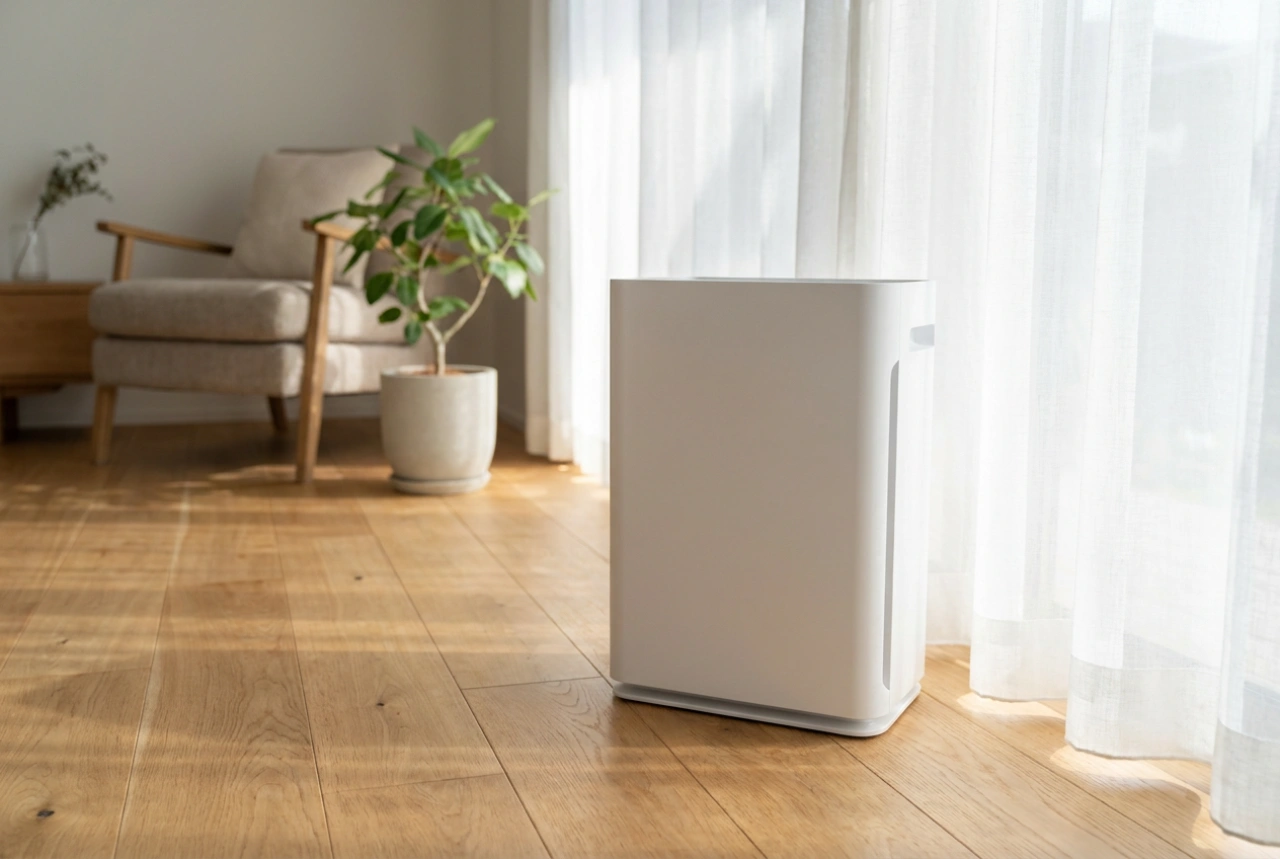
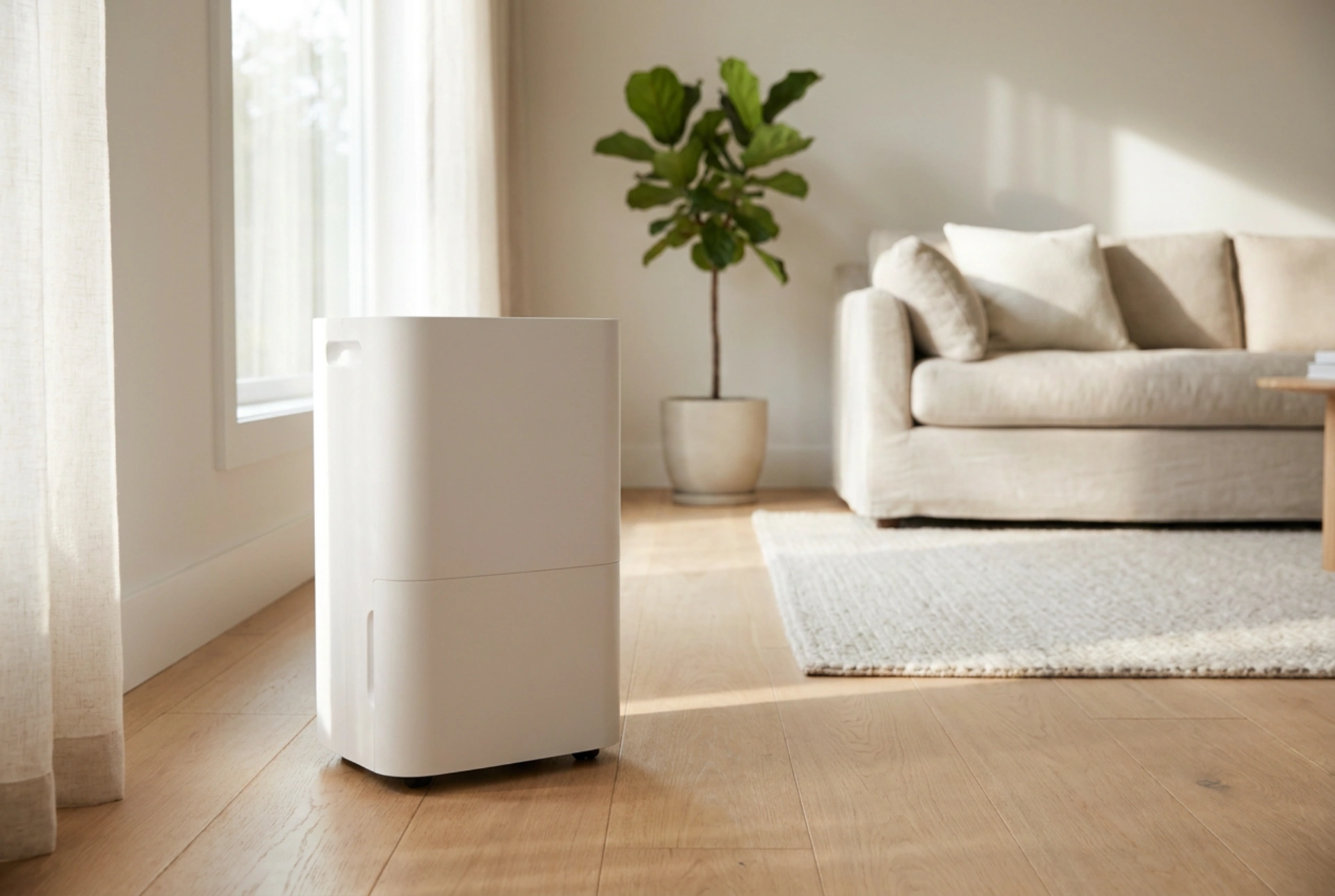
Electric dehumidifiers are active mechanical systems designed for high-volume air processing. The most common type, the compressor-based dehumidifier, operates on a vapor-compression refrigeration cycle. An internal fan draws humid air over an evaporator coil cooled by a refrigerant. As the air temperature falls below its dew point, water vapor condenses onto the coils and drips into a collection tank. The dry, cold air then passes over a condenser coil, where it is reheated slightly above room temperature before being exhausted back into the room. This continuous cycling rapidly reduces RH in large areas. For cooler environments below fifteen degrees Celsius, desiccant electric dehumidifiers are used. These employ a rotating zeolite wheel that adsorbs moisture directly from the air, which is then released via an internal heating element and condensed into a tank, maintaining efficiency where compressor models freeze up.
Passive Moisture Absorbers: Chemical Hygroscopy
In contrast, passive moisture absorbers rely on hygroscopic chemical compounds, typically anhydrous calcium chloride. Calcium chloride has a natural affinity for water vapor, attracting molecules from the surrounding air through chemical adsorption. As the salt absorbs moisture, it undergoes deliquescence—the process where the solid substance dissolves in its absorbed water to form a concentrated liquid brine. This chemical reaction requires no electrical energy and is entirely silent. However, the rate of moisture extraction is governed strictly by the exposed surface area of the salt crystals and the natural passive airflow of the room. This makes chemical absorbers slow-acting and strictly limited in capacity, as they can only extract a few hundred milliliters of water over several weeks before the chemical medium is fully depleted and requires replacement.
Matching the Device to Your Room Volume and Source
Selecting the correct device depends on the volume of the space and the rate of moisture generation. For high-moisture zones with active water sources, such as bathrooms, kitchens, or basements prone to rising damp, an electric dehumidifier is essential. These units can extract ten to twenty-five liters of water per day, actively matching the high rate of evaporation from showers or cooking. For small, enclosed, static environments like wardrobes, pantries, or under-sink cabinets, a chemical moisture absorber is highly efficient. In these confined spaces, an electric unit is impractical due to physical size and heat emission, whereas a small chemical canister silently stabilizes the humidity level, preventing musty odors on fabrics and dry goods.
Optimizing Placement and Airflow for Maximum Efficiency
To maximize the efficiency of either system, physical placement must be strategic. Electric dehumidifiers require unobstructed airflow; placing them at least thirty centimeters away from walls ensures the intake and exhaust grilles operate at peak capacity. They work most efficiently in closed rooms where external, humid air cannot enter to replenish the extracted moisture. Conversely, chemical absorbers must be placed in draft-free zones where they can slowly dry the immediate microclimate. If placed near an open window or a highly ventilated area, the calcium chloride will quickly saturate by attempting to dry the entire outdoor atmosphere, rendering the chemical medium useless in a matter of days.