

Cleaning a severely carbonised oven does not require chaotic scrubbing or harsh synthetic fumes; it relies on systematic chemical softening and thermodynamic principles. By breaking down polymerised fats stage-by-stage, you can restore the enamel surface without damaging the delicate protective seal or heating elements.
Understanding the Chemistry of Baked-on Grease
When cooking oils and animal fats are repeatedly heated to high temperatures inside an oven, they undergo polymerisation. This chemical process links individual lipid molecules into a tough, plastic-like varnish that bonds tightly to the porcelain enamel. Simply wiping with water is ineffective because polymerised fat is hydrophobic.
To break these bonds, you must leverage alkaline hydrolysis (saponification). Alkaline agents, such as sodium bicarbonate (baking soda), react with the fatty acids, converting them into water-soluble salts (essentially soap) that can be easily wiped away. This chemical breakdown requires two essential catalysts: moisture and time. Attempting to scrub dry, polymerised grease physically is highly likely to scratch and compromise the underlying enamel layer.
Phase 1: Dry Extraction and Component Isolation
The primary rule of efficient oven cleaning is to isolate the structural components. Working around wire racks and tray runners leads to missed spots and chemical pooling in inaccessible corners.
- Remove all internal fittings: Extract the wire racks, side runners, and integrated trays. These require a different treatment protocol, as their metallic coatings can react differently to prolonged alkaline exposure than the oven's interior enamel.
- Dry vacuuming: Before applying any liquid or paste, use a soft brush attachment on a vacuum cleaner to remove loose carbon particles, crumbs, and ash. This prevents the formation of an abrasive, muddy slurry once liquid agents are introduced.
- Protect the heating elements: Identify the location of exposed heating elements (usually at the top and bottom) and the convection fan inlet. Avoid direct application of paste or liquids to these electrical components to prevent insulation breakdown.
Phase 2: Chemical Softening via Alkaline Paste
Once the loose debris is cleared, apply a homemade alkaline paste consisting of sodium bicarbonate and water. The consistency should resemble thick toothpaste, ensuring it clings to the vertical walls of the oven cavity without dripping down to pool on the floor.
Apply this paste evenly over the soiled enamel surfaces using a soft sponge, deliberately avoiding the heating elements, light covers, and fan vents. The critical factor here is dwell time. For heavily carbonised grease, allow the paste to sit for at least eight to twelve hours. During this period, the alkaline molecules slowly penetrate the polymerised lipid layers, cleaving the chemical bonds and converting the hardened crust into a soft, rinseable compound.
Phase 3: Steam-Assisted Softening and Wipe-Down
For exceptionally stubborn carbonisation, thermal energy can accelerate the chemical reaction. Before wiping away the paste, place a heatproof bowl filled with water inside the oven and run it at 100°C for twenty minutes. The steam will rehydrate the alkaline paste, loosening the remaining stubborn spots through thermal expansion.
Once the oven has cooled down to a safe, warm temperature, begin the wipe-down. Use a non-abrasive cellulose sponge or a soft microfibre cloth. Wipe in consistent, single-direction strokes, rinsing the cloth frequently in warm water. Avoid wire wool or aggressive plastic scourers, as they create micro-scratches in the glass-like enamel coating, which will collect grease even faster in future use.
Phase 4: Acidic Neutralisation and Polish
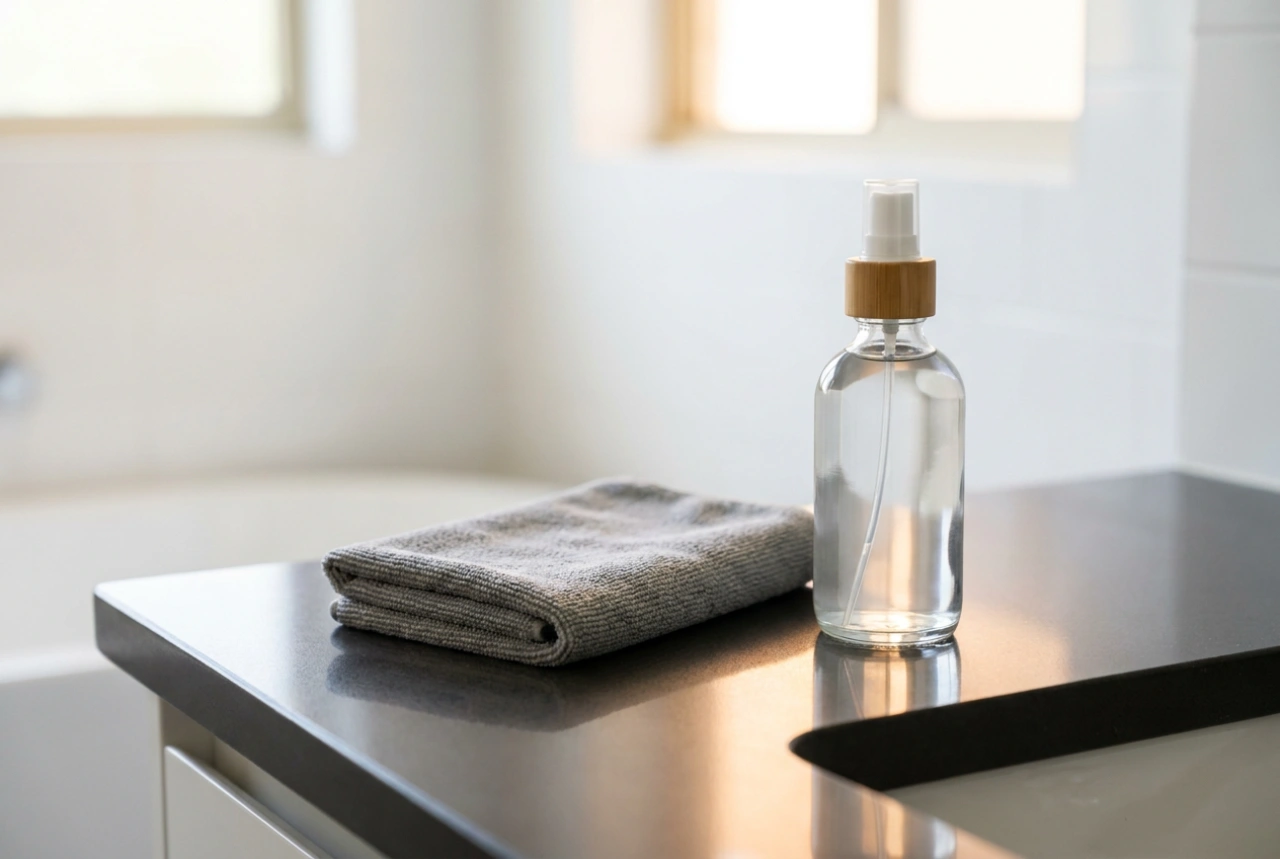
After removing the paste and grease slurry, a thin alkaline residue will remain on the enamel, which can dry into cloudy white streaks. To neutralise this, spray a mild acidic solution (diluted acetic acid or white vinegar) over the surfaces.
An immediate effervescent reaction occurs as the acid meets the remaining alkaline traces, releasing carbon dioxide gas. This physical reaction lifts the final microscopic particles of soil from the pores of the enamel. Wipe the surfaces dry with a clean microfibre cloth to achieve a streak-free, polished finish. Reinstall the clean, dry racks to complete the process.