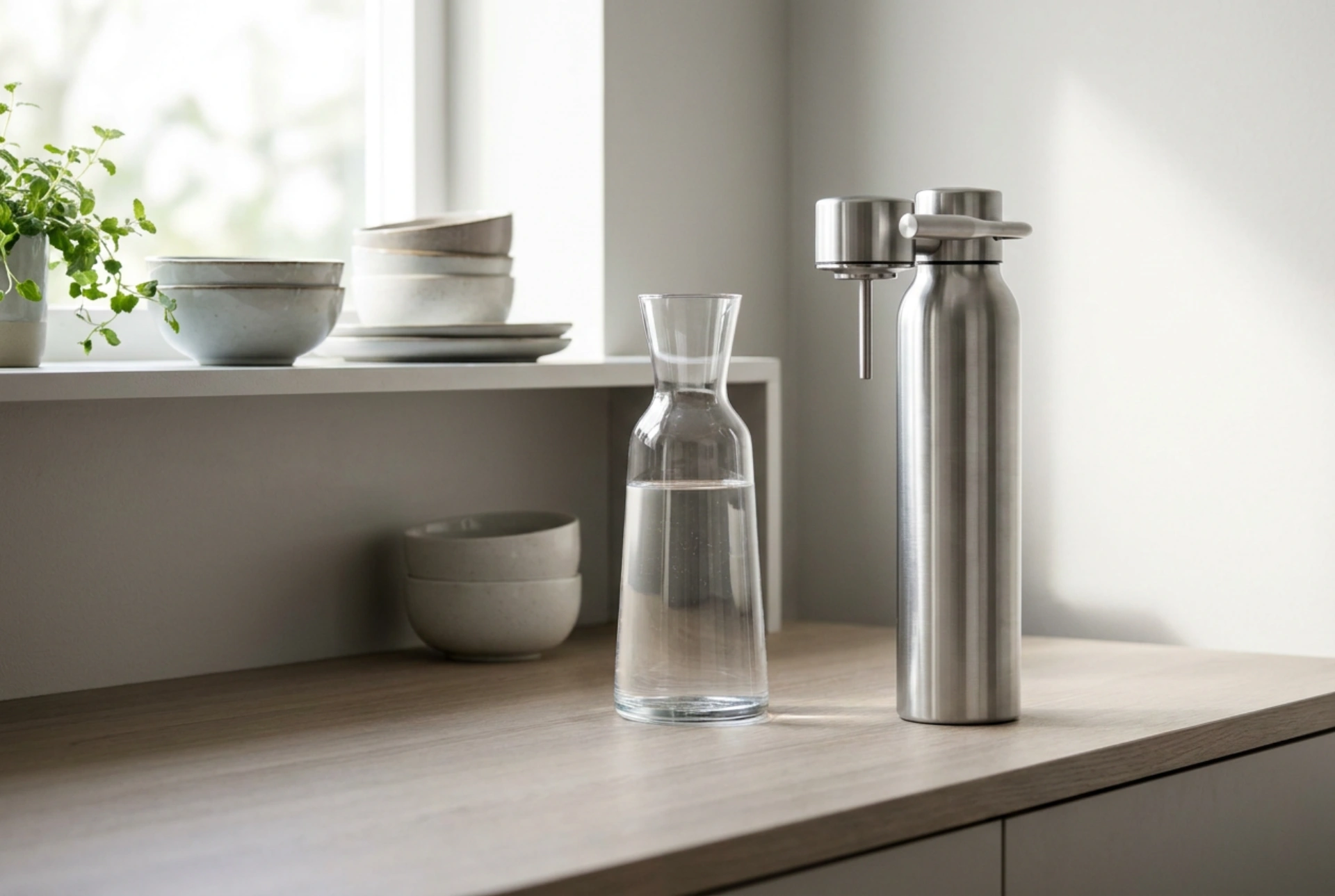


Storing a pressurized carbon dioxide cylinder for your home water carbonator requires an understanding of basic gas laws to ensure safety. By managing temperature, positioning, and physical protection, you can prevent accidental gas release and preserve the integrity of the cylinder.
The Physics of Pressurized Carbon Dioxide
Carbonator cartridges are filled with liquefied carbon dioxide (CO2) under high pressure, usually around 50 to 60 bars at a standard room temperature of 20°C. Inside the cylinder, a thermodynamic equilibrium exists between the liquid phase at the bottom and the gaseous phase at the top. According to Gay-Lussac's law, the pressure of a gas is directly proportional to its absolute temperature. If the cylinder is exposed to elevated temperatures, the liquid CO2 expands and rapidly transitions into gas, causing a steep rise in internal pressure.
Most modern cylinders feature a safety burst disc designed to rupture and safely vent the gas if the pressure reaches dangerous thresholds (typically around 250 bars). While this prevents a catastrophic explosion of the metal container, a sudden release of concentrated carbon dioxide in an enclosed space can displace oxygen, presenting an asphyxiation hazard. Therefore, keeping the cartridge cool is the absolute priority in home storage.
Selecting the Optimal Storage Environment
To prevent thermal pressure spikes, carbonator cylinders must be kept away from all heat sources. This means avoiding areas near ovens, hobs, radiators, and windows where direct sunlight can create a greenhouse effect.
An ideal location is a lower cabinet in a pantry or a kitchen island. Because warm air rises and cool air sinks, floor-level storage naturally provides a more stable, cooler microclimate. The temperature of the storage area should ideally remain below 50°C at all times. Avoid unventilated utility closets that house heat-generating appliances like washing machines, tumble dryers, or boilers. Additionally, keep the storage environment dry; while aluminum cylinders resist corrosion well, brass valves and steel components can oxidize over time when exposed to high humidity, potentially seizing the safety mechanisms.
Orientation and Physical Security
The orientation of the cylinder during storage is highly critical. Always store carbonator cartridges in an upright position. Within the cylinder, the liquid CO2 rests at the bottom while the gas occupies the headspace directly beneath the valve. If a cylinder is stored horizontally or upside down, the liquid phase comes into direct contact with the valve assembly. In the event of a minor leak or a triggered safety release, liquid carbon dioxide would escape instead of gas. Liquid CO2 expands by a factor of hundreds as it vaporizes, which can cause rapid freezing of the valve assembly, potentially locking it open or causing physical damage due to extreme thermal contraction.
Furthermore, ensure the cartridges are secured against mechanical impact. If stored on a high shelf, there is a risk of them falling and damaging the brass valve, which is the most vulnerable part of the assembly. Use a dedicated storage rack, a wooden block with circular cutouts, or a sturdy bin to keep multiple cylinders upright and prevent them from rolling or knocking against one another.
Inspection and Basic Maintenance Techniques
Before storing or installing a cylinder, a quick physical inspection ensures safety. Examine the brass threading at the neck for any signs of cross-threading or physical deformation. The small rubber O-ring or gasket seal inside the connection valve must be intact, flexible, and free of cracks to prevent slow leaks.
If you suspect a slow leak, you can apply a simple scientific diagnostic method using soapy water. Brush a mild solution of water and a few drops of generic liquid soap around the valve area. If a leak is present, the escaping gas will overcome the surface tension of the soapy film, creating visible, growing bubbles. If bubbles appear, the valve is compromised; the cylinder should be placed in a well-ventilated outdoor area immediately to allow the gas to dissipate safely. Never attempt to tighten or repair the valve assembly yourself, as the high pressure inside makes manual disassembly extremely dangerous.