

Preparing a coffee machine for its first deep clean requires understanding the chemical and physical residues left behind during manufacturing and initial use. Taking the correct preliminary steps ensures you safely purge factory oils and prime the hydraulic system without damaging sensitive internal components.
Why the First Cleaning is Critical: Factory Residues and Hydrophobic Lipids
Every newly manufactured coffee machine, whether an espresso maker or an automatic brewer, carries invisible remnants of the industrial production process. During manufacturing, metal parts are treated with anti-corrosive lubricants, and plastic components can retain microscopic polymer dust. If these substances are not thoroughly flushed before your first chemical cleaning, they can bind with coffee oils, forming a stubborn, foul-tasting barrier on the internal walls of the thermoblock or boiler. This barrier reduces the thermal conductivity of the heating element, forcing the machine to consume more energy to reach brewing temperature.
Additionally, coffee beans contain hydrophobic lipids (natural oils) that vaporize and polymerize under high heat and pressure. When these oils adhere to the brass or stainless steel surfaces of the brew group, they undergo rapid oxidation, leading to rancid flavors. Preparing your machine properly ensures that subsequent cleaning agents—such as oxygen-based bleaches or surfactants—can directly target these organic compounds without being blocked by manufacturing residues or air pockets.
The Chemistry of Preparing Your Cleaning Solution
Choosing the correct solvent is essential to protect the internal metallurgy of your coffee machine. For descaling, acids are used to dissolve calcium carbonate. However, the type of acid matters significantly:
- Lactic and Citric Acids: These organic acids are highly effective at dissolving mineral scale while remaining gentle on brass, copper, and silicone gaskets. Citric acid is excellent for stainless steel but should be used at controlled temperatures to prevent the precipitation of calcium citrate, which can form a sticky, insoluble residue inside the boiler.
- Sulfamic Acid: Often used in high-performance descalers, it works rapidly at lower temperatures and is highly soluble, minimizing the risk of undissolved powder clogging narrow capillary tubes.
- Avoid Acetic Acid: Standard vinegar contains acetic acid, which is highly corrosive to copper and brass components commonly found in heating elements. It also degrades synthetic rubber seals, causing premature leaks, and leaves a persistent sensory residue that is incredibly difficult to flush out.
Step-by-Step Mechanical Preparation
Before introducing any active chemical cleaners into your machine, you must prepare the physical chassis and hydraulic circuit. Follow this precise order of operations to ensure safety and efficacy:
1. Power Cycling and Thermal Stabilization
Ensure the machine is switched off and completely cool before removing any internal parts. Attempting to clean or disassemble a pressurized, hot machine can damage the seals due to sudden thermal contraction when cool water is introduced. Once cooled, unplug the unit from the power source to ensure safety during the handling of wet components.
2. Disassembly and Manual Pre-Rinse
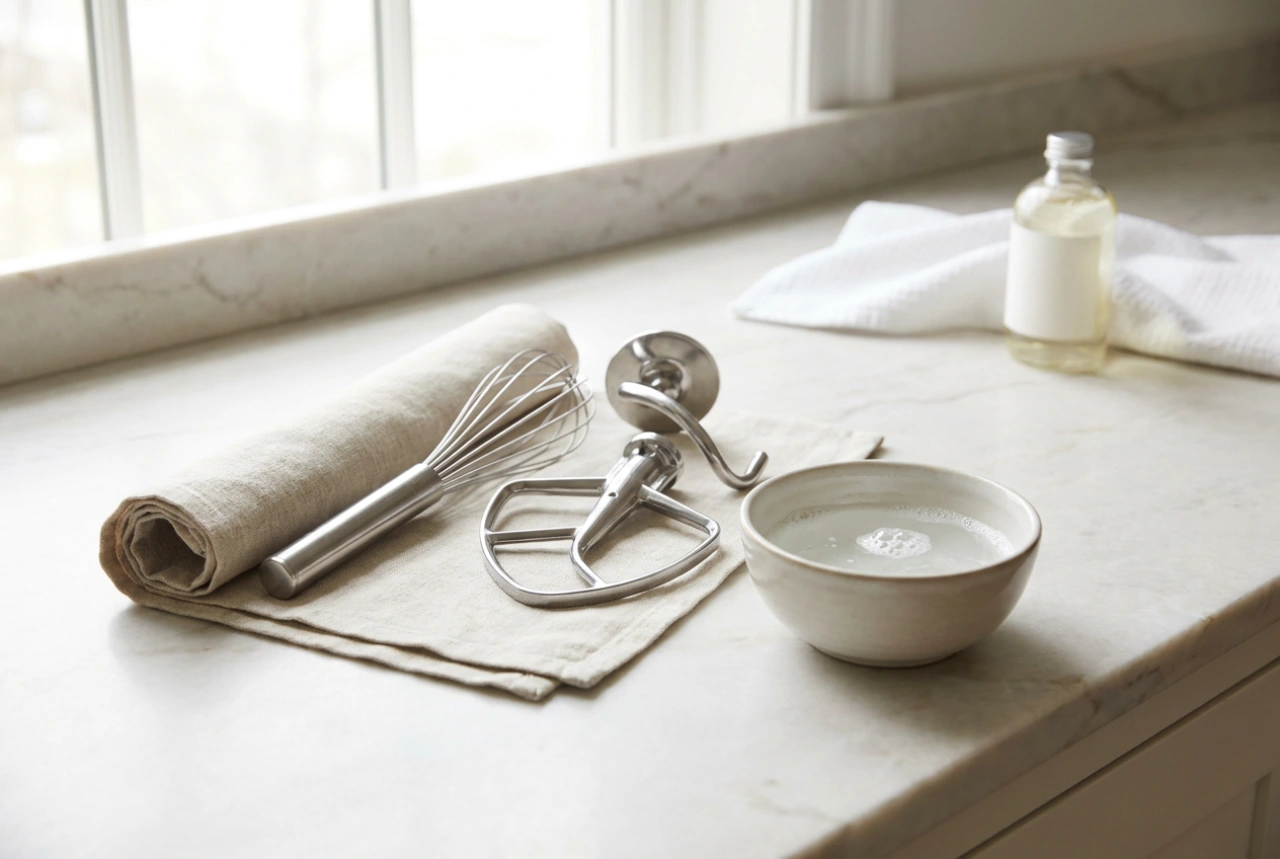
Remove the water reservoir, drip tray, portafilter, and the removable brew group (if your machine has one). Rinse these parts in warm, running water without soap to remove loose dust. Use a soft microfiber cloth to wipe down the basket and shower screen. Avoid abrasive pads, which can create microscopic scratches in the metal where coffee oils can pool and spoil.
3. Purging the Hydraulic Lines
Reassemble the dry components and fill the water reservoir with fresh, filtered water. Do not add the cleaning agent yet. Plug the machine back in, turn it on, and run at least two full water cycles through both the brew head and the steam wand. This process, known as priming, removes trapped air pockets from the pump and pre-heats the internal tubing, ensuring that when the cleaning solution is eventually introduced, it distributes evenly at the correct thermodynamic state.
Preventing Vapor Lock and Pump Stress
One of the most common mistakes during a first clean is introducing concentrated cleaning agents into a dry hydraulic system. Vibration pumps rely on the presence of water to self-prime and dissipate heat. Running a cleaning cycle with air pockets in the system can lead to a condition known as vapor lock, where the pump cannot build sufficient pressure to push the cleaning solution through. By running a clean water flush first, you establish a continuous fluid column, allowing the active cleaning chemicals to flow smoothly and contact all internal surfaces uniformly.