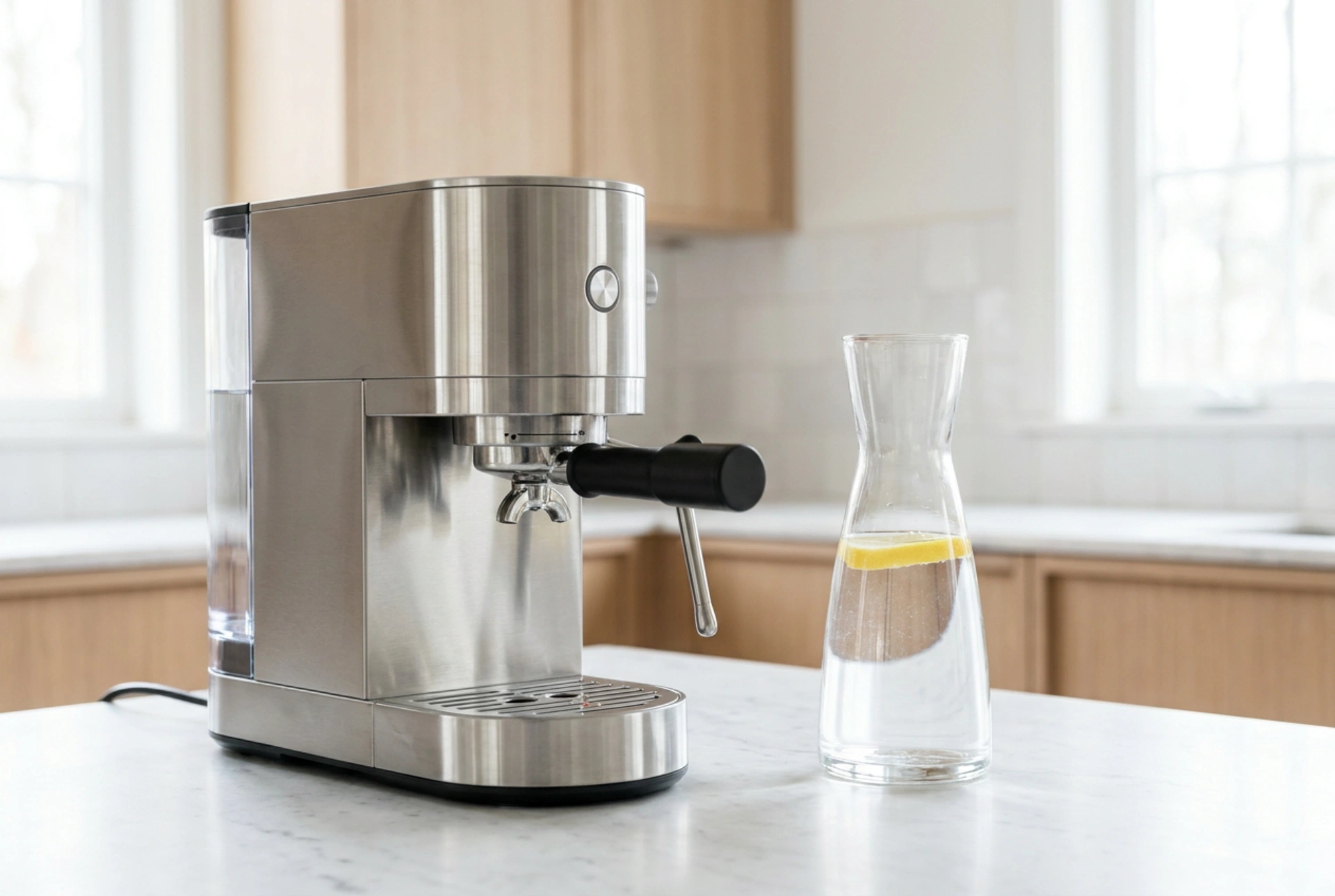


Choosing the wrong descaling agent can permanently degrade the internal seals of your coffee machine, leading to internal leaks and pressure loss. Understanding the chemical compatibility between various descaling acids and the elastomer gaskets inside your machine is essential for safe and effective maintenance.
The Science of Limescale and Why It Requires Acid
Limescale is primarily composed of calcium carbonate, which precipitates out of tap water when heated. This mineral buildup forms a highly stable crystalline lattice on heating elements and inside narrow thermoblocks. To break these ionic bonds, an acid is required. The acid introduces hydrogen ions that react with the insoluble calcium carbonate, converting it into highly soluble calcium salts, water, and carbon dioxide gas. However, while the acid must be strong enough to dissolve this mineral crust, it must also be gentle enough not to attack the metallic and elastomeric components of the machine.
The Vulnerability of Coffee Machine Seals
The internal plumbing of an espresso machine relies on various seals made from synthetic elastomers, most commonly silicone, EPDM (ethylene propylene diene monomer), and NBR (nitrile butadiene rubber). Each of these materials reacts differently to chemical exposure:
- EPDM: Highly resistant to polar solvents and dilute acids, but susceptible to degradation by mineral oils and highly concentrated organic acids.
- Silicone: Extremely temperature resistant and flexible, but can degrade under prolonged contact with strong acidic solutions.
- NBR: Excellent resistance to oils, but exhibits poor resistance to highly concentrated acids and polar organic solvents.
When an incompatible acid is introduced, it can cause these elastomers to swell, lose their elasticity, or become brittle. Once a seal loses its elastic memory, it can no longer maintain a tight seal under high pressure, leading to micro-leaks that can short-circuit the machine's electronic components.
Evaluating Common Descaling Agents
1. Lactic Acid (The Optimal Choice)
Lactic acid is a highly efficient carboxylic acid that is widely considered the safest option for modern coffee machines. It dissolves calcium carbonate readily at both room temperature and moderate brewing temperatures. Crucially, lactic acid is highly compatible with EPDM, silicone, and copper-based alloys. It does not cause rubber seals to swell or degrade, making it the ideal base for high-quality, generic liquid descalers.
2. Citric Acid (Effective But Temperature-Sensitive)
Citric acid is a common household descaling agent. While highly effective at dissolving calcium carbonate, it carries a significant risk: when heated above 60 degrees Celsius, citric acid can react with calcium to form calcium citrate, an insoluble white precipitate. This substance can clog the fine capillary tubes and valves of your coffee machine, causing permanent blockages. If using citric acid, it is critical to perform the process with cool or lukewarm water.
3. Sulfamic Acid (Fast and Powerful)
Also known as amidosulfonic acid, this inorganic compound is incredibly fast-acting. It dissolves scale up to ten times faster than citric acid. When used in the correct, low-concentration formula, it is safe for EPDM and silicone. However, because of its strength, it must always be thoroughly rinsed to prevent any residual acid from slowly corroding metal boilers and heating elements over time.
4. Acetic Acid / Vinegar (The High-Risk Option)
Household white vinegar containing acetic acid should never be used in a coffee machine. Acetic acid is highly aggressive toward copper, brass, and especially rubber gaskets. It causes NBR and EPDM seals to swell and soften rapidly. Furthermore, acetic acid leaves a persistent, oily residue and strong odour that penetrates plastic components and is extremely difficult to rinse out.
The Step-by-Step Safe Descaling Protocol
To protect your machine's seals during maintenance, follow a precise chemical and physical protocol:
- Dilute correctly: Always adhere to the recommended concentration of the descaling agent. Excessively high concentrations increase osmotic pressure on the rubber seals, accelerating chemical degradation.
- Control the temperature: Ensure the machine is warm but not boiling hot. High temperatures accelerate chemical reactions, making even mild acids more corrosive to metals and elastomers.
- The dwell time rule: Do not leave the descaling solution inside the machine for longer than thirty minutes. Prolonged contact increases the risk of acid diffusing into the polymer matrix of the seals.
- Rinse comprehensively: Run at least two to three full reservoirs of clean, fresh water through both the coffee spout and the steam wand to neutralise the pH level inside the system.