

Selecting the right cookware for an air fryer prevents physical damage to the appliance and dangerous thermal shock. Understanding how different materials interact with high-speed convection currents is key to safe and efficient cooking.
The Physics of Air Fryer Heat Transfer
An air fryer is essentially a compact, high-powered convection oven. It utilizes a powerful heating element combined with a high-velocity fan to circulate superheated air around the food. This process, known as convection, transfers thermal energy far more rapidly and intensely than a traditional static oven. Because the heat transfer coefficient is so high, any dish placed inside will experience rapid temperature fluctuations. Materials must be able to withstand this fast thermal expansion without cracking, warping, or releasing harmful compounds into your food.
Ceramics and Glass: Managing Thermal Shock
Not all ceramic and glass containers are created equal. The primary risk when using these materials in an air fryer is thermal shock—the cracking that occurs when different parts of an object expand by different amounts due to sudden temperature changes. To safely use glass, it must be borosilicate glass or tempered glass, which has a very low coefficient of thermal expansion. Standard soda-lime glass will shatter under rapid convective heating.
Evaluating Ceramic Stability
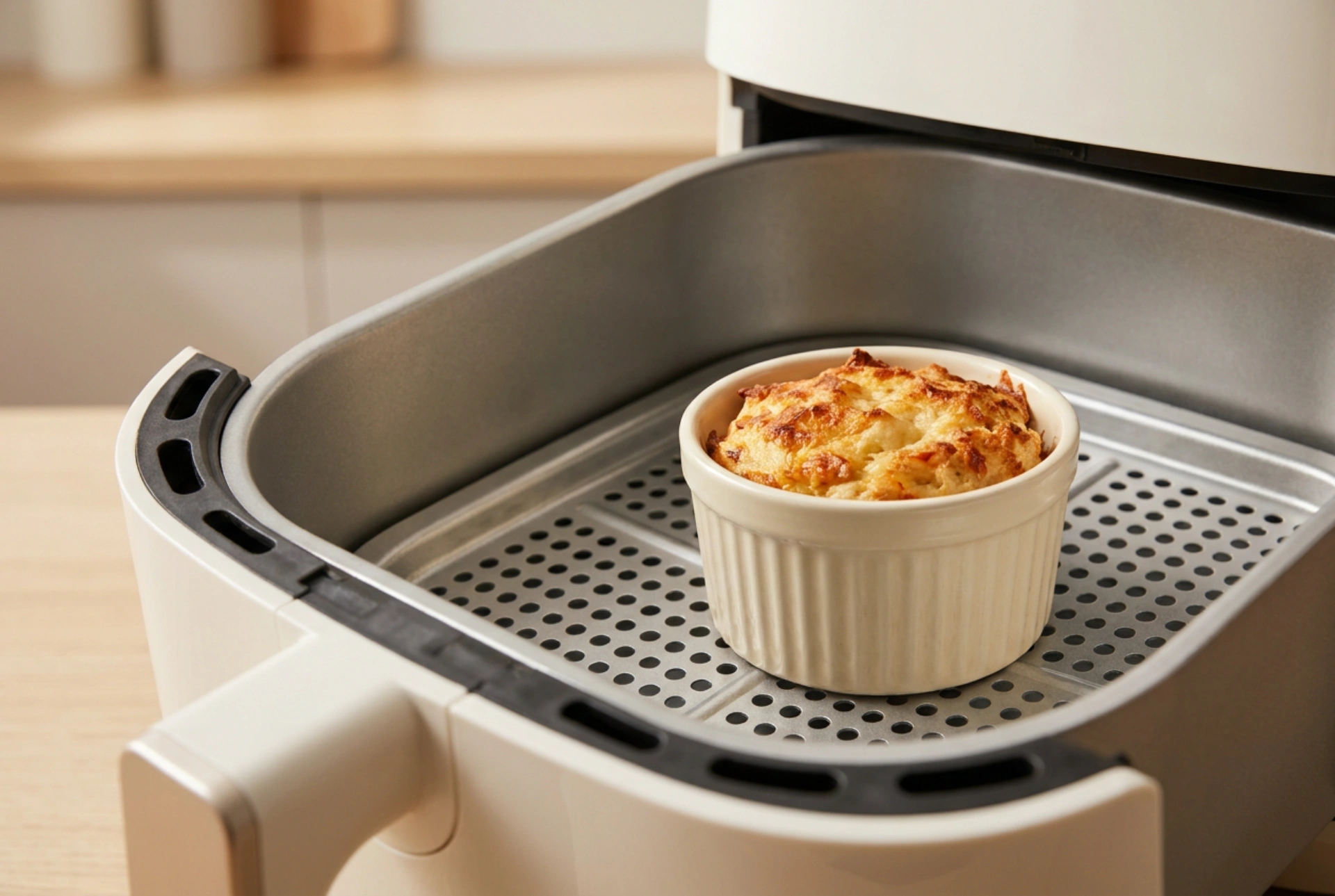
For ceramics, stoneware and porcelain fired at extremely high temperatures are generally safe, provided they do not have metallic glazes or structural micro-cracks. Moisture trapped inside tiny cracks in cheap ceramic glazes can vaporize rapidly when exposed to hot air, causing the dish to fracture. Always ensure the ceramic piece is marked oven-safe, as this guarantees the clay and glaze have been vitrified to handle intense thermal gradients.
Metals and Silicone: High Conductors and Synthetic Polymers
Metals are exceptionally well-suited for air fryers due to their high thermal conductivity. Aluminum, stainless steel, and cast iron absorb and distribute heat quickly, aiding the Maillard reaction (browning) on the bottom of your food. When using metal dishes, ensure they are unpainted or coated with stable, heat-resistant non-stick layers that do not degrade at temperatures up to 230 degrees Celsius. Avoid using vintage metalware with unknown alloy compositions, as they may leach heavy metals under acidic cooking conditions.
Silicone Capabilities
Food-grade silicone is another highly reliable material. It is a synthetic polymer characterized by high thermal stability, meaning its molecular chain does not break down at standard air fryer temperatures (usually up to 230 degrees Celsius). Silicone is highly flexible and inert, meaning it will not react with acidic foods. However, because silicone is a poor thermal conductor compared to metal, food cooked inside silicone molds may take longer to brown on the exterior.
The Mechanics of Airflow and Paper Liners
While parchment paper and specialized paper liners are structurally safe, they introduce dynamic mechanical risks inside an air fryer. The high-speed fan creates a powerful updraft. If a lightweight paper liner is placed inside without sufficient food weight to hold it down, the air currents can lift it directly into the exposed heating element at the top of the chamber. This presents an immediate fire hazard through direct thermal conduction. Always ensure the liner is physically anchored by the weight of the ingredients before starting the cooking cycle.
Structural Checklist for Cookware Selection
- Verify Oven-Safe Certification: If a dish is not explicitly rated for standard ovens up to 220 degrees Celsius, do not place it in an air fryer.
- Avoid Airtight Seals: Never use lids or tight foil covers that prevent steam escape, as pressure buildup can cause physical explosions inside the chamber.
- Assess Airflow Obstruction: Choose dishes that leave at least a two-centimeter gap around the edges of the basket to allow proper convection current circulation.
- Check for Micro-Cracks: Inspect older ceramic ramekins for hairline cracks in the glaze before exposing them to high-speed thermal cycling.