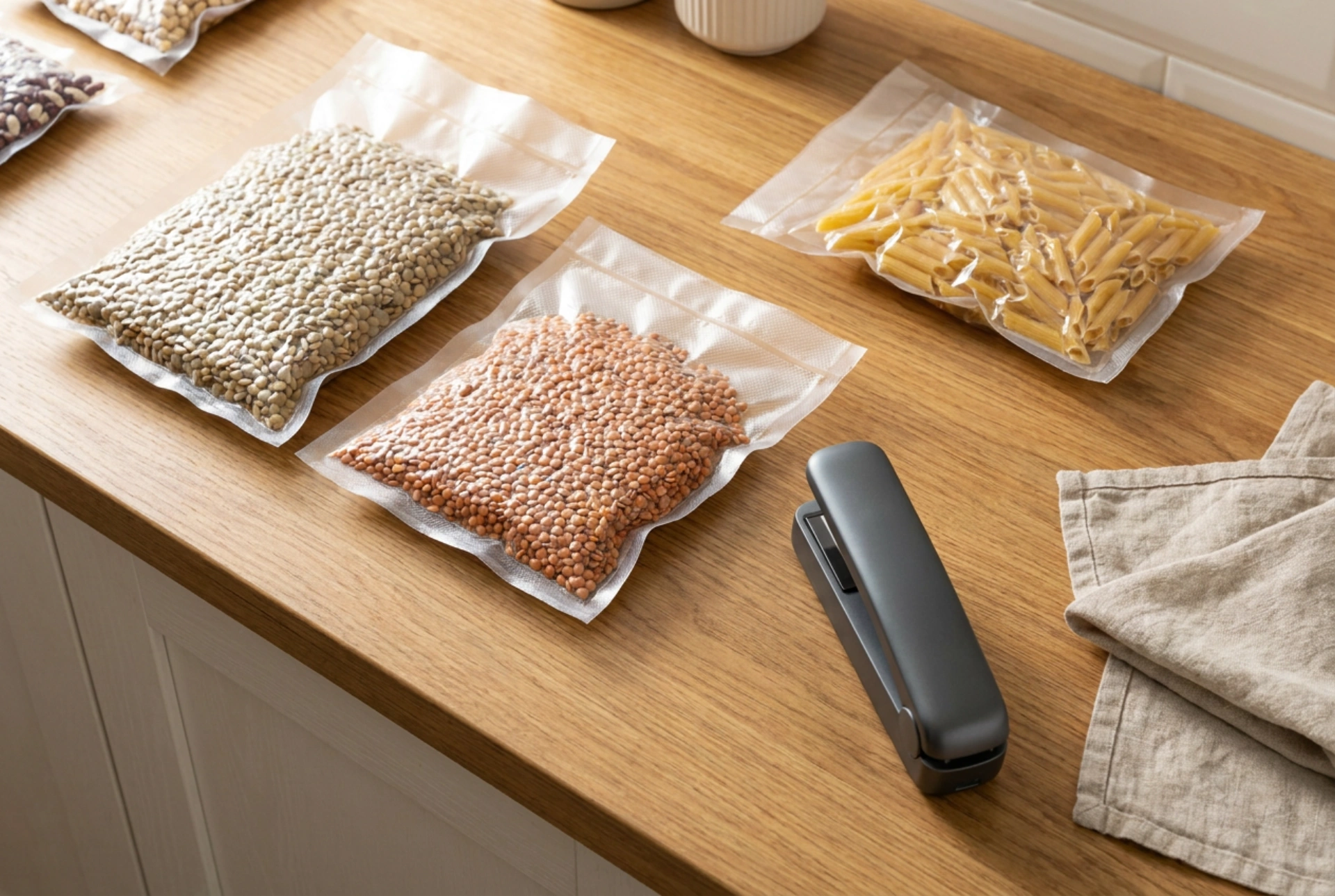


Achieving a truly airtight seal on plastic bags depends on understanding the thermodynamics of polymers rather than just pressing a button. This guide details how to master heat-sealing technology and thermal fusion techniques to preserve dry goods and portioned foods by preventing oxidation and moisture transfer.
The Science of Polymer Fusion
To create an impenetrable barrier, you must understand what happens to plastic under heat. Most food-grade bags are made of thermoplastics, such as low-density polyethylene (LDPE) or polypropylene (PP). These materials do not have a sharp melting point but rather transition from a rigid crystalline state to a malleable, viscous liquid state as temperature rises. When a heat sealer applies thermal energy, the tightly packed polymer chains at the interface of the two film layers begin to vibrate, untangle, and intermingle. As the heat source is removed and the plastic cools, these chains recrystallise in an intertwined configuration, effectively turning two separate sheets of film into a single, continuous sheet.
If the temperature is too low, the polymer chains do not gain enough mobility to entangle, resulting in a weak seal that peels apart under minimal stress. Conversely, if the temperature is too high, the polymer undergoes thermal degradation, weakening the molecular structure and thinning the plastic at the seal line, making it prone to tearing.
Pre-Sealing Dynamics: Eliminating Contaminants
The most common cause of seal failure is contamination along the sealing line. Even a microscopic layer of moisture, fat, or dust can disrupt thermal fusion. When heat is applied to a wet plastic surface, the moisture instantly vaporises into steam. This steam expands rapidly, creating micro-voids and bubbles within the molten plastic that act as channels for air exchange once the material cools. Similarly, lipids and oils act as a physical barrier, preventing the polymer chains of the opposing film layers from contacting and bonding with one another.
- Dry-Wiping Technique: Before placing the bag in the sealer, use a clean, lint-free microfibre cloth to wipe the inside seal zone (the top 2 to 3 centimetres of the bag).
- Folding Shield: When filling bags with powdery substances like flour or oily foods, fold the top collar of the bag outward before filling. Once filled, unfold the collar; this keeps the sealing path completely pristine.
Mastering Tension, Pressure, and Dwell Time
A flawless seal requires the precise coordination of three physical variables: heat, pressure, and dwell time. Dwell time refers to the duration of heat application combined with the cooling phase under pressure. To execute this manually or with a basic clamp sealer, follow a strict sequence of operations.
First, ensure the film is perfectly taut. Wrinkles or folds double the thickness of the plastic in localized spots, which means those areas will receive insufficient heat and fail to fuse completely. Pull the edges of the bag outward slightly to flatten the seal zone before clamping. Next, apply firm, even pressure. This physical force is what drives the melted polymer chains to interpenetrate. Finally, do not release the pressure immediately after the heating cycle ends. The polymer needs a fraction of a second to recrystallise and regain tensile strength while still held flat. Releasing the clamp while the plastic is still molten allows the weight of the bag's contents to pull the weak joint apart, forming pinholes.
Managing Air Volume and Moisture
For long-term storage, reducing the internal volume of air is vital to halt oxidation. If you are not using a dedicated vacuum pump device, you can utilize physical displacement. Submerge the filled bag slowly in a container of water up to the seal line; the hydrostatic pressure of the water forces the air upward and out of the bag. Once the air is displaced, pinch the top shut and immediately seal it. For foods with high liquid content, freeze the portions solid before sealing. This prevents liquids from being drawn into the sealing element by vacuum pressure, guaranteeing a dry, secure thermal weld.