

Removing paper labels and stubborn adhesive residue from glass jars requires understanding the chemical properties of different glues. By applying the correct combination of thermal energy, solvent action, and mechanical force, you can easily restore glass to a pristine, food-safe state without scratching the surface.
The Chemistry of Jar Adhesives: Water-Soluble vs. Polymer-Based Glues
To choose the most effective removal method, it is crucial to understand that manufacturing plants use two primary categories of adhesives: water-soluble glues (often starch- or casein-based) and pressure-sensitive adhesives (usually acrylic- or rubber-based polymers). Water-soluble glues are highly polar, meaning water molecules can easily penetrate and break their chemical bonds. Polymer-based glues, on the other hand, are hydrophobic and resist water. Attempting to wash away a polymer adhesive with water alone often results in a sticky, smeared mess, as water cannot dissolve the non-polar molecular chains.
Method 1: Thermal Dissolution for Water-Soluble Adhesives
For standard starch-based glues, a combination of heat and alkalinity is highly effective. The thermal energy weakens the adhesive bonds, while alkaline agents break down the organic binders.
- Prepare the bath: Fill a basin with hot water (approximately 50°C to 60°C). Avoid boiling water at this stage, as sudden thermal shock can cause microscopic stress fractures in the glass.
- Add an alkaline agent: Dissolve two tablespoons of sodium carbonate (washing soda) or sodium bicarbonate (baking soda) into the water. The alkaline environment helps hydrolyse the starches or proteins in the glue.
- Submerge and soak: Place the jars completely under water and leave them to soak for 20 to 30 minutes. As the water penetrates the paper, the glue will swell and lose its shear strength.
- Peel and rinse: Gently slide the label off. Use a soft sponge to wipe away any remaining water-soluble film, then rinse the jar with clean water.
Method 2: Lipophilic Solvents for Acrylic and Rubber Glues
When dealing with plastic-coated labels or water-resistant glues, water-based soaking is ineffective. Instead, you must use a lipophilic (fat-loving) solvent to dissolve the non-polar adhesive matrix. Common vegetable oil works exceptionally well for this purpose.
The Oil and Baking Soda Paste
An elegant and highly effective solution is to create a paste using equal parts of any household vegetable oil and sodium bicarbonate. The oil acts as a solvent, penetrating the polymer chains and reducing their viscosity, which makes the adhesive fluid and weak. Meanwhile, the sodium bicarbonate acts as a mild, non-destructive abrasive. On the Mohs hardness scale, sodium bicarbonate sits at approximately 2.5, whereas glass is around 5.5 to 6. This significant difference ensures that the paste will scrub away the loosened adhesive without leaving microscopic scratches that could harbor bacteria or weaken the glass structure.
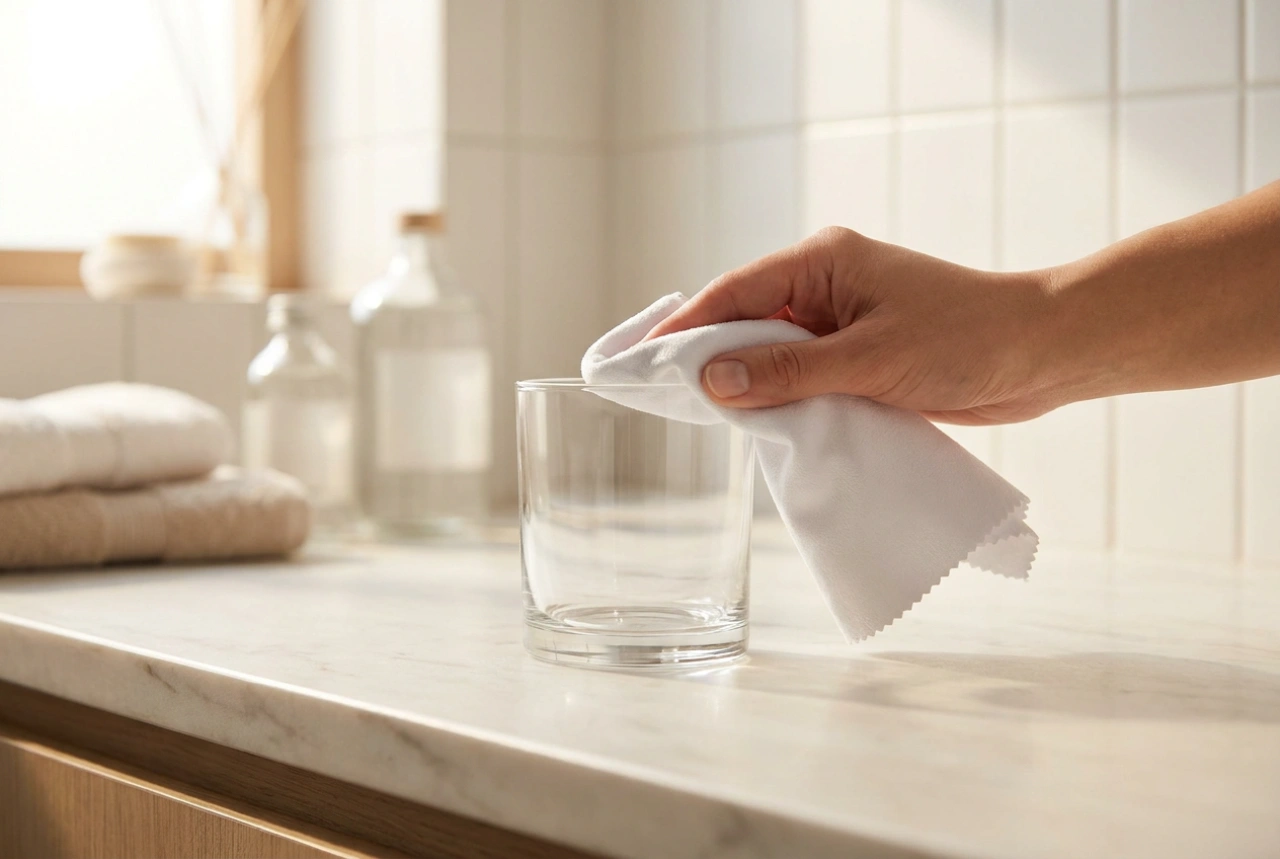
Apply the paste directly to the sticky residue and let it sit for 10 to 15 minutes to allow the oil to penetrate. Using a dry, soft cloth, rub in circular motions. The adhesive will ball up and lift off the glass. Wash the jar with standard liquid detergent and warm water afterward to emulsify and remove the remaining oil.
Method 3: Alcohol Solvents for Industrial-Strength Polymers
For exceptionally resilient adhesives that resist oil, isopropyl alcohol (rubbing alcohol) serves as an excellent solvent. Alcohol molecules possess both polar and non-polar characteristics, allowing them to dissolve many synthetic polymers quickly.
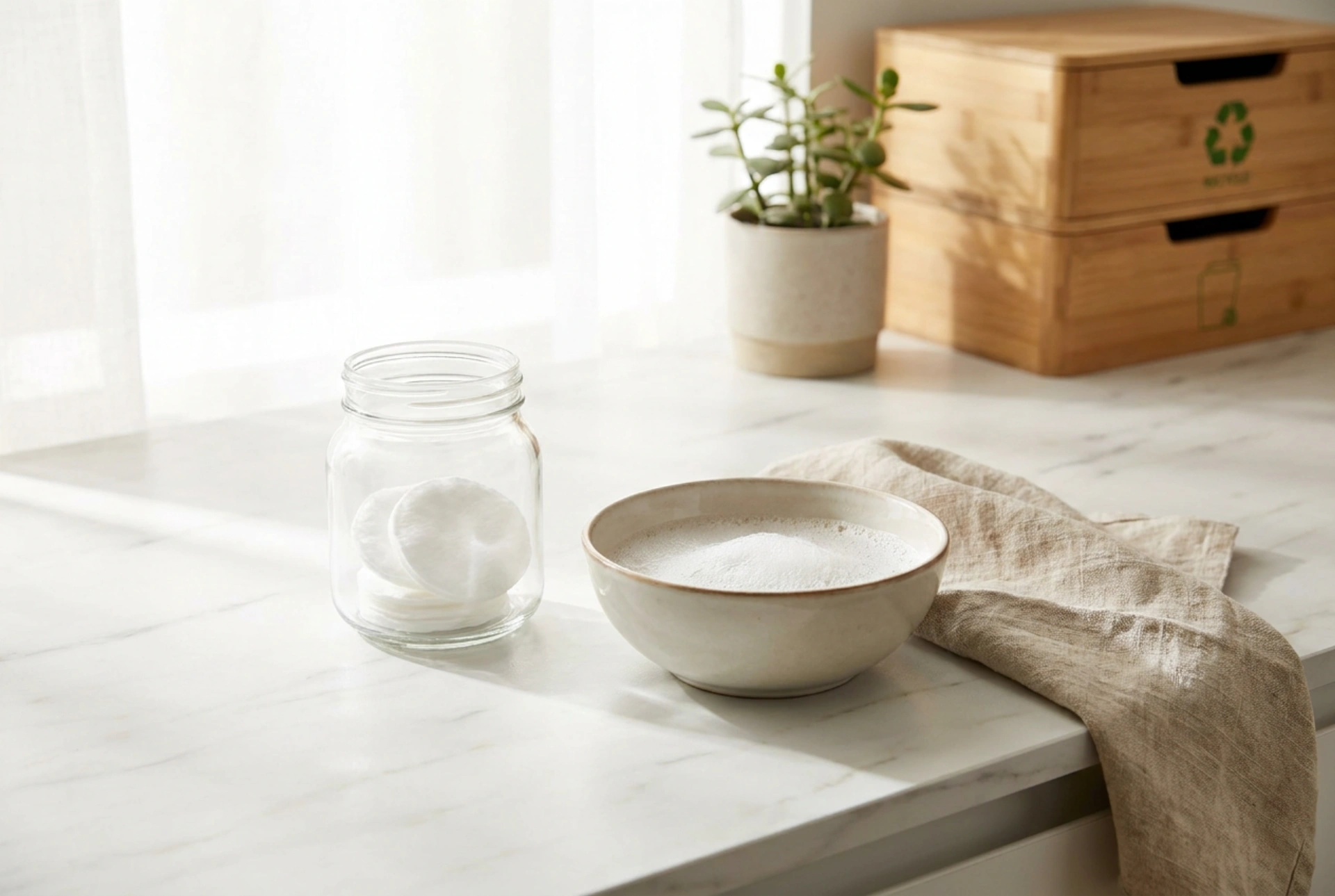
Saturate a clean cotton pad or cloth with isopropyl alcohol and press it firmly against the adhesive residue for two minutes. This direct contact prevents the alcohol from evaporating too quickly and allows it to penetrate the glue layer. Wipe the residue away in firm, single-directional strokes to prevent redistributing the tacky substance across the clean glass surface.
Preparing the Glass for Safe Food Storage
Once all adhesive and solvent residues are entirely removed, the glass must be prepared for its new life. Glass is an inert, non-porous material, making it ideal for food storage, but it must be properly sterilised first. Wash the jar thoroughly with hot water and dish soap to remove any remaining chemical or lipid traces. To sterilise, submerge the clean glass jars in boiling water for 10 minutes, or place them in an oven preheated to 100°C for 15 minutes. Allow them to cool down gradually at room temperature to avoid thermal shock, and ensure they are completely dry before sealing.