

Stubborn brown stains in a coffee carafe are more than an aesthetic nuisance; they consist of polymerised organic compounds and rancid oils that degrade the flavour of fresh brews. Removing this resilient residue requires understanding the chemical bond between coffee tannins, mineral deposits, and the glass surface.
The Chemistry Behind Stubborn Coffee Stains
Coffee is a complex chemical mixture containing lipids, proteins, and polyphenols known as tannins. When heated repeatedly, these organic molecules undergo polymerisation, forming a tough, hydrophobic film that binds tightly to glass or ceramic. Standard dishwashing liquids often fail because they are designed for loose grease, not polymerised organic matrices. Furthermore, hard water minerals, specifically calcium and magnesium ions, react with coffee compounds to form an insoluble metallic-organic scale. This dual-layered deposit requires targeted chemical reactions—specifically alkaline emulsification or oxygenation—to break the molecular bonds holding the residue to the carafe wall.
The Alkaline Emulsification Method
Sodium bicarbonate is an excellent, non-abrasive agent for lifting organic coffee oils. Because it is a mild base, it acts as an emulsifier, breaking down hydrophobic lipid chains into water-soluble compounds. To apply this method effectively, follow these precise steps:
- Create a paste: Mix three parts sodium bicarbonate with one part warm water until it reaches a thick, paste-like consistency. Warm water increases the solubility of the powder without dissolving it entirely, preserving its mild scrubbing properties.
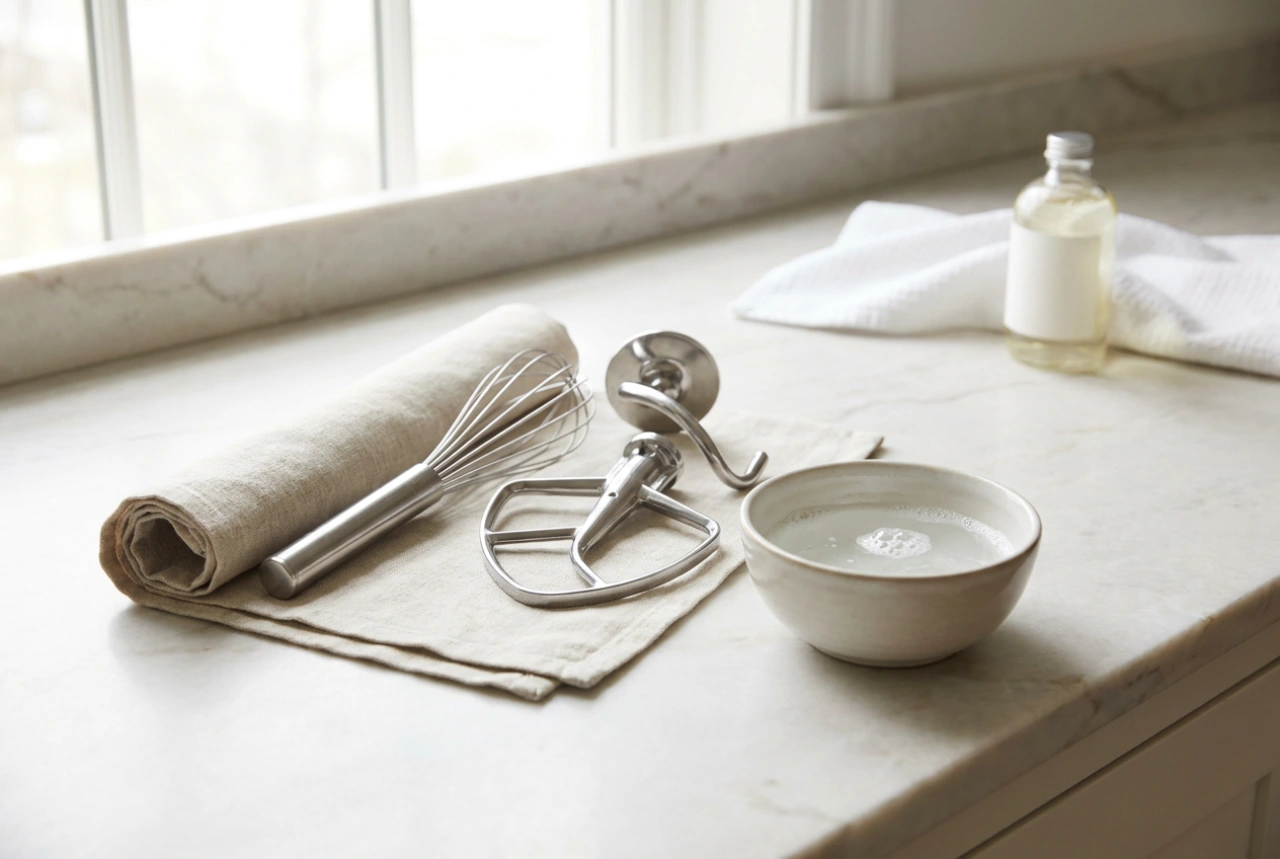
- Apply with friction: Use a soft microfiber cloth or a non-abrasive silicone sponge to work the paste over the stained areas. Use firm, circular motions. The physical friction combined with the mild abrasive nature of the crystals mechanically dislodges the loosened polymer layer without scratching the glass.
- Let it sit: Allow the mixture to rest on the glass for five to ten minutes. This gives the alkaline solution time to penetrate deeper into the organic matrix.
- Rinse thoroughly: Wash the carafe with hot water to carry away the emulsified oils and dissolved salts.
The Oxygen Bleach Deep Clean
For severe, baked-on residue that resists physical scrubbing, an oxygen-based bleaching agent like sodium percarbonate offers a highly effective, hands-off solution. When sodium percarbonate dissolves in hot water, it breaks down into sodium carbonate and hydrogen peroxide. The resulting release of active oxygen bubbles physically disrupts the molecular chains of the organic pigments, turning the dark brown tannins into colourless, water-soluble molecules.
To execute this process safely and effectively, heat water to approximately sixty degrees Celsius. Do not use boiling water, as extreme thermal shock can crack glass carafes. Add one tablespoon of sodium percarbonate powder directly into the carafe, then slowly pour in the hot water until the vessel is full. You will observe immediate effervescence as active oxygen gas is released. Allow the solution to react for fifteen to thirty minutes. Once the bubbling subsides, empty the carafe and rinse it multiple times with warm water to remove any chemical traces. The glass will be restored to its original, streak-free transparency.
Dissolving the Mineral-Tannin Bond with Citric Acid
When coffee stains are locked in place by hard water scale, an acidic treatment is necessary. Citric acid acts as a chelating agent, binding to calcium and magnesium ions and dissolving the mineral framework that anchors the brown pigments. Dissolve two teaspoons of citric acid powder in warm water, pour it into the carafe, and let it sit for twenty minutes. This chemical reaction breaks the bond between the scale and the glass, allowing the remaining coffee oils to be easily wiped away. Avoid using strong, highly volatile acids like household vinegar, as their pungent vapours can linger in the porous parts of the brewing equipment and affect future coffee flavour profiles.
Preventing Organic Build-Up
Maintaining a clean carafe is simpler than restoring a neglected one. To prevent polymerisation, never leave residual coffee sitting in a carafe on a warm hotplate, as continuous heat accelerates the oxidation and binding process. Rinse the carafe with warm water immediately after use to wash away oils before they can dry and form a solid film. Avoid using abrasive steel wool or harsh nylon brushes, as these create microscopic scratches on the glass surface. These micro-scratches increase the surface area and provide ideal anchor points for future oils and minerals, making subsequent cleaning cycles significantly harder.