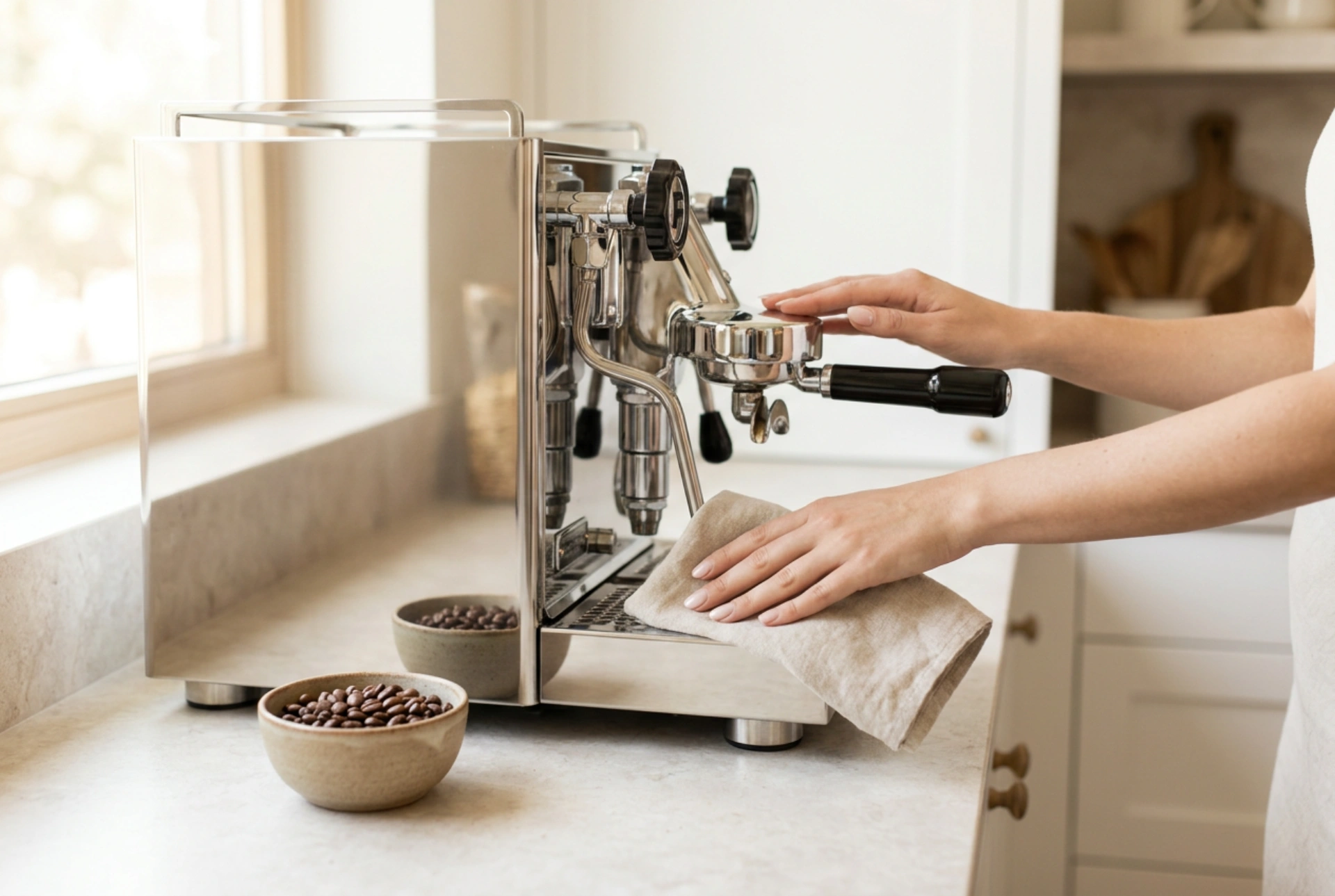


Maintaining a bean-to-cup coffee machine requires a clear understanding of how high-temperature extraction, organic compounds, and mineral deposits interact with mechanical components. Regular, scientifically grounded preventative care prevents mechanical failure and ensures optimal extraction pressure and water temperature.
The Chemistry of Coffee Oils: Preventing Rancidity and Blockages
Coffee beans naturally contain lipids, commonly referred to as coffee oils, which migrate to the surface of the beans during the roasting process. When these oils are exposed to oxygen and the elevated internal temperatures of a coffee machine, they undergo oxidation. This chemical reaction leads to rancidity and polymerisation, transforming the light oils into a sticky, resinous film. This film coats the grinder burrs, the bypass chute, and the brewing chamber.
Over time, this organic residue hardens, acting as an abrasive material that increases mechanical friction and alters the flavour of your espresso. To dissolve these hydrophobic lipids, surfactant-based cleaning tablets must be used. These cleaning agents often contain sodium percarbonate, which releases active oxygen when dissolved in hot water. This alkaline solution breaks down the organic chains of the polymerised oils, allowing them to be flushed away without damaging the underlying brass, stainless steel, or plastic components. A weekly cleaning cycle of the brewing unit prevents these oils from clogging the fine micro-mesh of the shower screen.
The Thermodynamics of Limescale: Why Decalcification Is Critical
Tap water contains dissolved mineral ions, primarily calcium and magnesium hydrogencarbonates. When water is heated inside the machine's thermoblock or boiler, these minerals undergo thermal decomposition, precipitating as solid calcium carbonate, commonly known as limescale. Limescale has very low thermal conductivity. Even a thin layer of scale on the heating element acts as an thermal insulator, forcing the heating element to work longer and hotter, which significantly reduces its lifespan.
Furthermore, insufficient heat transfer prevents the extraction water from reaching the optimal temperature range of 90°C to 96°C, resulting in sour, under-extracted coffee. To safely dissolve this mineral crust without corroding internal copper, brass, or rubber gaskets, a weak organic acid must be introduced. Lactic acid is highly effective for this process; it reacts with the calcium carbonate to form calcium lactate, a highly water-soluble salt that is easily flushed out of the narrow fluid pathways. Avoid harsh mineral acids, as they can cause irreversible pitting corrosion on metal surfaces.
The Grinder Assembly: Managing Friction and Moisture
The integrated grinder relies on precisely aligned stainless steel or ceramic burrs rotating at high speeds to achieve a consistent particle size distribution. The primary operational hazard for the grinder is moisture. Water vapour rising from the nearby brewing chamber can migrate up the ground coffee chute, causing fine coffee dust to swell and solidify into a dense paste. This paste restricts the flow of grinds, causing the motor to draw excess current, which can strip the drive gears or trigger thermal overload protection.
To maintain the grinder assembly, water must never be used for cleaning. Instead, use a stiff-bristled brush to clear the burr teeth and the exit chute. Periodically, run specialised cleaning grains through the hopper. These dry, compressed tablets—typically made from gluten-free starches—absorb the accumulated oils from the burrs through capillary action, restoring the cutting efficiency of the teeth without requiring disassembly.
Brew Group Lubrication and Gasket Integrity
The brew group is the mechanical heart of the machine, undergoing constant mechanical stress, high pressure, and thermal expansion cycles. To maintain a hermetic seal during the extraction phase, the moving pistons and rubber O-rings must be properly lubricated. Over time, hot water and cleaning cycles wash away the factory-applied lubricant, leading to dry friction, squeaking, and premature wear of the plastic drive gears.
To remedy this, remove the brew group weekly, rinse it with warm water to remove loose grinds, and allow it to dry completely. Apply a thin layer of food-grade silicone grease (NSF-H1 certified) to the guide rails, drive shafts, and rubber gaskets. This grease is highly resistant to water washout and remains stable at temperatures exceeding 100°C, ensuring smooth mechanical movement and preventing pressure loss during extraction.