

Maintaining a manual coffee grinder is essential to prevent stale coffee oils from altering the flavour profile of your next brew. Regular dry cleaning preserves the precision of the burrs and extends the lifespan of the internal mechanical parts.
The Chemistry of Coffee Residue and Oxidation
Coffee beans are rich in lipids, which are released during the grinding process. These organic oils deposit onto the surface of the grinding burrs, the inner chamber, and the catch cup. When exposed to oxygen, these lipids undergo a chemical process called oxidation. Over time, oxidized lipids turn rancid, developing a sour, bitter taste. If left uncleaned, these old oils coat the burrs, transferring unpleasant flavours to fresh coffee grounds. Additionally, static electricity generated by friction causes ultra-fine coffee particles to cling to the inner walls, creating a buildup that restricts bean flow and alters grind consistency.
Why Water is the Enemy of Precision Burrs
The primary rule of manual grinder maintenance is to avoid water. High-performance manual grinders typically utilize carbon steel or stainless steel burrs. Carbon steel offers exceptional hardness and sharpness but lacks chromium, making it highly vulnerable to oxidation and rust when exposed to moisture. Even stainless steel, which contains chromium, can corrode in the tight micro-crevices of the burr geometry where moisture can get trapped. Water also threatens the internal ball bearings. These bearings require specialized lubrication; water washes away this protective grease, leading to friction, squeaking, and eventually, mechanical failure.
Essential Tools for Safe Dry Cleaning
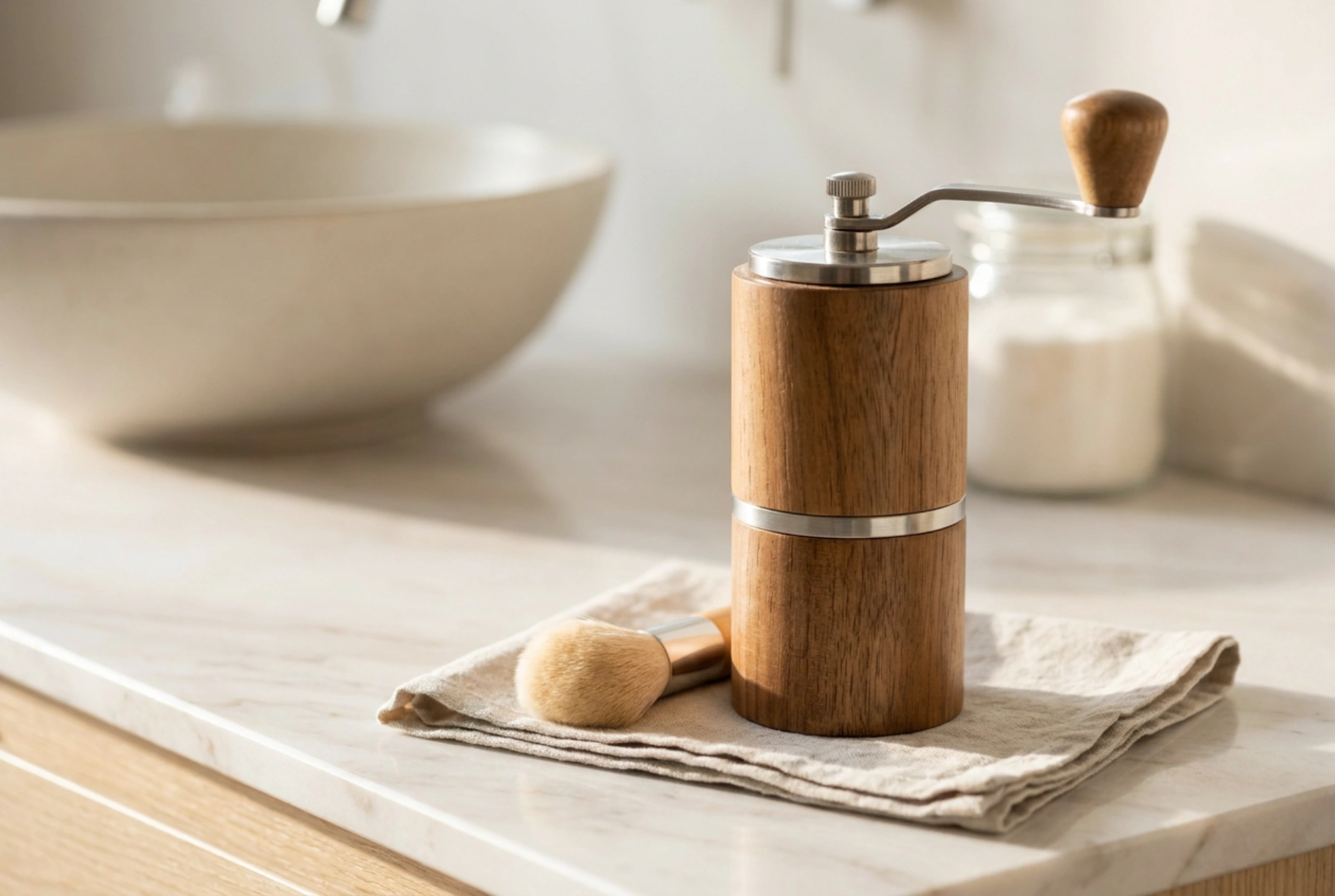
To safely clean your grinder without causing physical or chemical damage, you should rely on dry, mechanical cleaning methods. A stiff, natural-bristle brush, such as a pastry or specialized cosmetic brush, is the ideal tool for sweeping away packed grounds from the burr teeth. Supplement this with a rubber air blower (similar to those used for camera lenses) to dislodge microscopic dust from hard-to-reach areas using targeted air pressure. For wiping the exterior and the catch cup, a dry microfibre cloth is highly effective, as its synthetic fibres leverage static charge to attract and lift dust without requiring water or detergents.
The Danger of DIY Cleaning Myths
A common household myth suggests grinding uncooked rice to clean burr grinders. However, material science advises against this. Uncooked rice contains high levels of starch and is significantly harder than roasted coffee beans. Grinding rice puts immense strain on the manual axle, bearings, and adjustment mechanism, and can easily chip or dull precision-engineered burr edges. Instead, if a deep clean is required to remove stubborn oils, use generic, food-safe cleaning pellets designed specifically for coffee grinders. These pellets are made of compressed, gluten-free binders that absorb oils and break apart easily without putting undue mechanical stress on the grinder.
Step-by-Step Maintenance Protocol
To ensure thorough cleaning, establish a routine based on your usage frequency. A quick brush-out should follow every use, while a deep clean should occur every few weeks. First, disassemble the grinder over a clean, dry towel, taking careful note of the order of washers, springs, and bearings. Use your brush with outward radial movements to clean the grooves of both the inner and outer burrs. Use the air blower to clear the central axle housing. Wipe down the threaded adjustment dial and the interior of the catch cup with your microfibre cloth. When reassembling, ensure all components sit flush to maintain perfect alignment, which is critical for grind size uniformity.