

Efficient dishwashing relies on understanding how surfactants interact with grease and water, allowing you to clean effectively while minimizing chemical waste. By choosing a formulation with the right chemical properties and applying precise physical techniques, you can drastically reduce your consumption of dishwashing liquid while maintaining spotless hygiene.
The Chemistry of Effective Surfactants
The primary active ingredients in any dishwashing liquid are surfactants (surface-active agents). These molecules possess a dual nature: a hydrophilic (water-attracting) head and a lipophilic (fat-attracting) tail. When introduced to greasy plates, the lipophilic tails bind to the oils, while the hydrophilic heads remain oriented toward the water. This molecular alignment forms structures called micelles, which trap the grease inside and allow it to be rinsed away. A high-quality dishwashing liquid balances anionic surfactants, which provide excellent foaming and degreasing properties, with non-ionic or amphoteric surfactants, which reduce skin irritation and stabilize the foam.
pH Balance and Skin Integrity
While industrial degreasers rely on highly alkaline formulas, household dishwashing liquids must operate within a safe physiological range. A premium product maintains a pH between 5.5 and 7.0. This range preserves the natural lipid barrier of human skin while remaining highly effective at neutralizing food acids and emulsifying animal fats. Formulas that are too alkaline strip the skin's protective oils, leading to micro-cracks and dryness.
Viscosity, Temperature, and Emulsification
Many consumers mistake thickness for concentration. However, high viscosity is often achieved by adding simple thickeners like sodium chloride (salt), which do not contribute to cleaning power. A truly concentrated liquid contains a high active matter percentage rather than structural fillers. To maximize this cleaning power, water temperature plays a critical role. Surfactants function best above their Krafft point—the temperature at which they form micelles efficiently. Washing dishes in warm water (between 40°C and 50°C) softens solid lipids, lowering their viscosity and allowing the surfactant micelles to lock onto and lift them from ceramic, glass, and steel surfaces.
Advanced Techniques for Economical Usage
Direct application of dishwashing liquid onto soiled plates is highly inefficient, leading to rapid dilution and chemical waste. Instead, adopting structured washing techniques optimizes every drop of soap.
- The Pre-Soak Method: Scraping food solids into the compost and soaking dishes in warm water first loosens starches and proteins. This physical pre-treatment prevents these substances from binding with surfactants unnecessarily, leaving the active molecules free to tackle hydrophobic grease.
- The Two-Basin System: Instead of washing under a running tap, fill one basin with warm water and a measured dose of dishwashing liquid (typically 3 to 5 milliliters per five liters of water). Wash the least soiled items first, such as glassware, progressing to heavily soiled pots. Use a second basin with clean, cool water for rinsing.
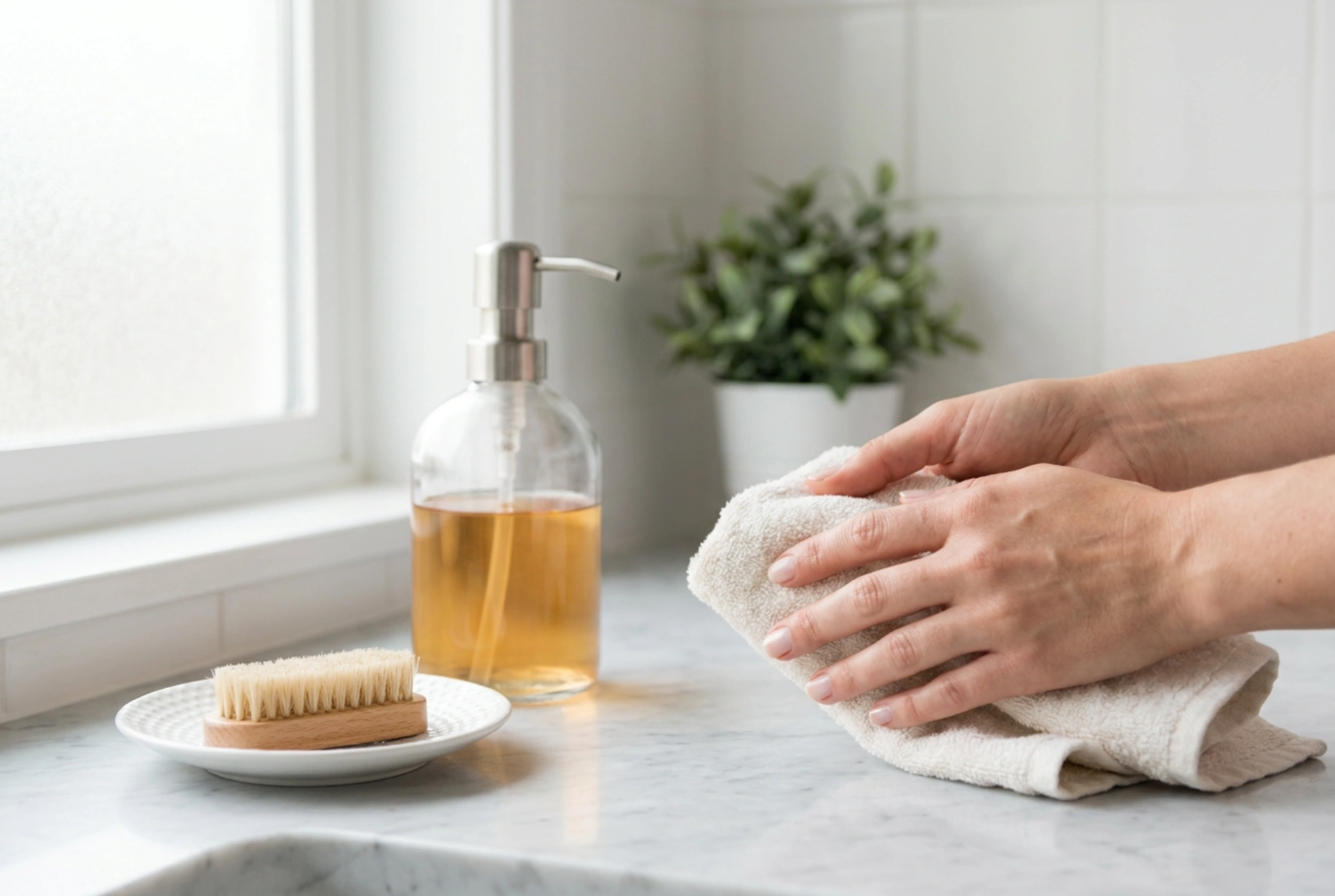
- Foam Activation: Apply a single drop of liquid directly to a damp, squeezed sponge. Compress the sponge repeatedly to incorporate air and water, generating a rich lather. This mechanical action creates a high surface-area foam that holds the surfactant molecules in place, allowing targeted spot-cleaning without wasting liquid in the drainage system.
Overcoming Hard Water Challenges
Water hardness, determined by the concentration of dissolved calcium and magnesium ions, directly affects detergent efficiency. These minerals react with anionic surfactants, forming insoluble salts (scum) and reducing the amount of active agent available for cleaning. If you live in a hard water area, you may need a slightly higher dose of liquid, or you can soften the washing water by adding a small amount of household sodium carbonate (washing soda) before introducing the dishwashing liquid. This precipitates the calcium ions, allowing the surfactants to work at peak efficiency.