

Deep cleaning a manual or electric food grinder prevents the build-up of pathogenic bacteria and preserves the mechanical integrity of its metal components. Understanding the chemistry of lipid removal and the physical properties of cast iron and stainless steel is key to extending the lifespan of the appliance.
Step-by-Step Disassembly and Pre-Cleaning Prep
Before initiating any cleaning process, ensure the appliance is disconnected from any power source. Disassembly must follow a specific sequence to protect the sharp cutting surfaces and prevent mechanical binding. Begin by removing the tray or hopper, then unscrew the outer ring collar. Carefully slide out the grinding plate, the cross-shaped cutting blade, and the internal feed screw.
A practical physical trick to clear out sticky residues before disassembly is running a dry, hard food item through the grinder. Passing a piece of stale bread, a raw potato, or a carrot through the system absorbs residual animal fats and pushes out remaining meat fibers from the feed screw and plate perforations. This drastically reduces the manual scrubbing required during the wet phase.
The Chemistry of Lipid and Fiber Removal
Animal proteins and lipids pose distinct cleaning challenges. Lipids are hydrophobic and adhere strongly to metal surfaces, especially on cast iron which has microscopic surface porosity. Simply rinsing with cold water causes these fats to solidify, creating a sticky layer that traps bacteria.
- Temperature control: Use hot water between 45 degrees and 55 degrees Celsius to melt the lipids, allowing them to emulsify when introduced to a surfactant. Do not use boiling water on cast aluminum parts, as high thermal shock can warp precise tolerances.
- Surfactants: A standard neutral or slightly alkaline dish soap breaks down the surface tension of the water, encapsulating fat molecules so they can be washed away.
- Mechanical action: Use a stiff-bristled bottle brush to clear the internal spiral chamber of the main housing and a dedicated pipe cleaner or small nylon brush for the individual holes in the grinding plate. Avoid steel wool, which can leave microscopic iron particles behind, triggering galvanic corrosion.
Material Science: Caring for Cast Iron vs. Stainless Steel
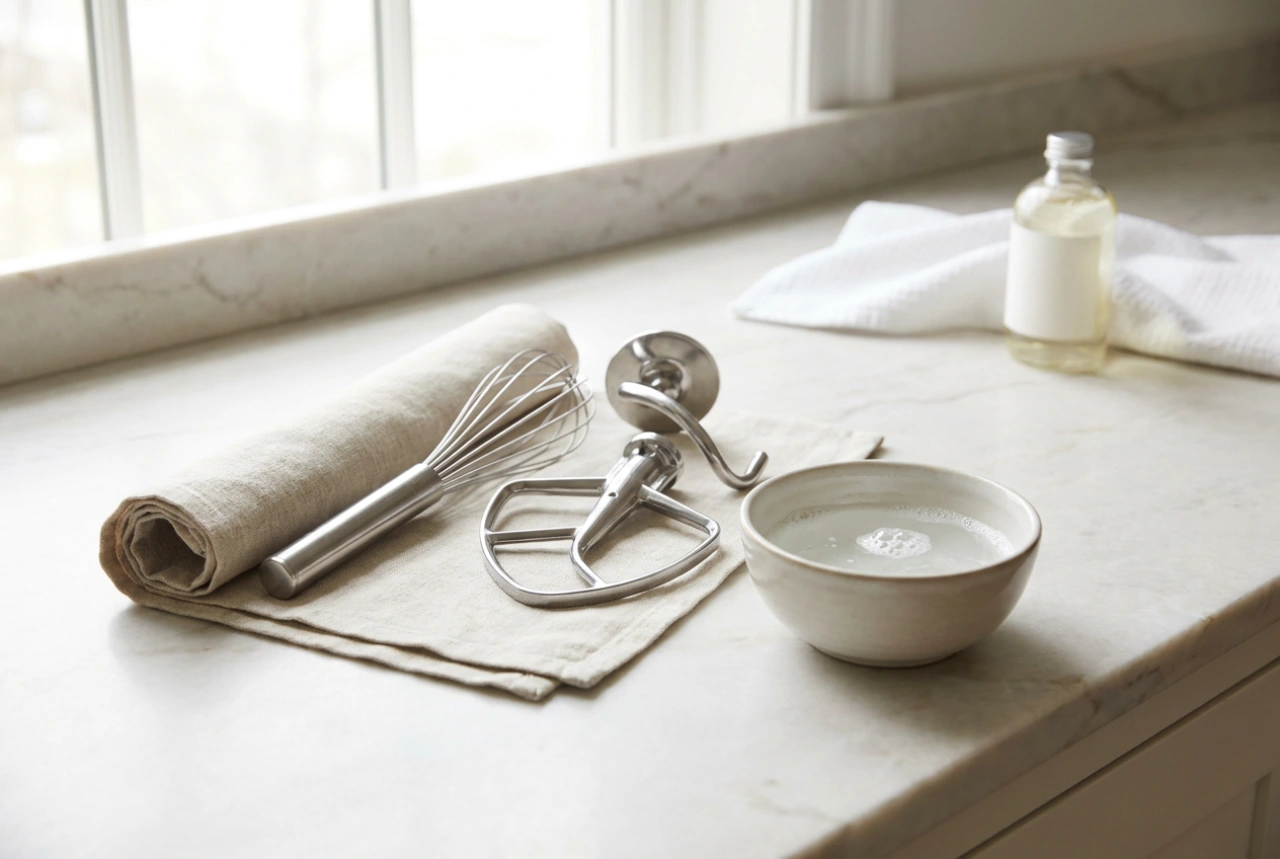
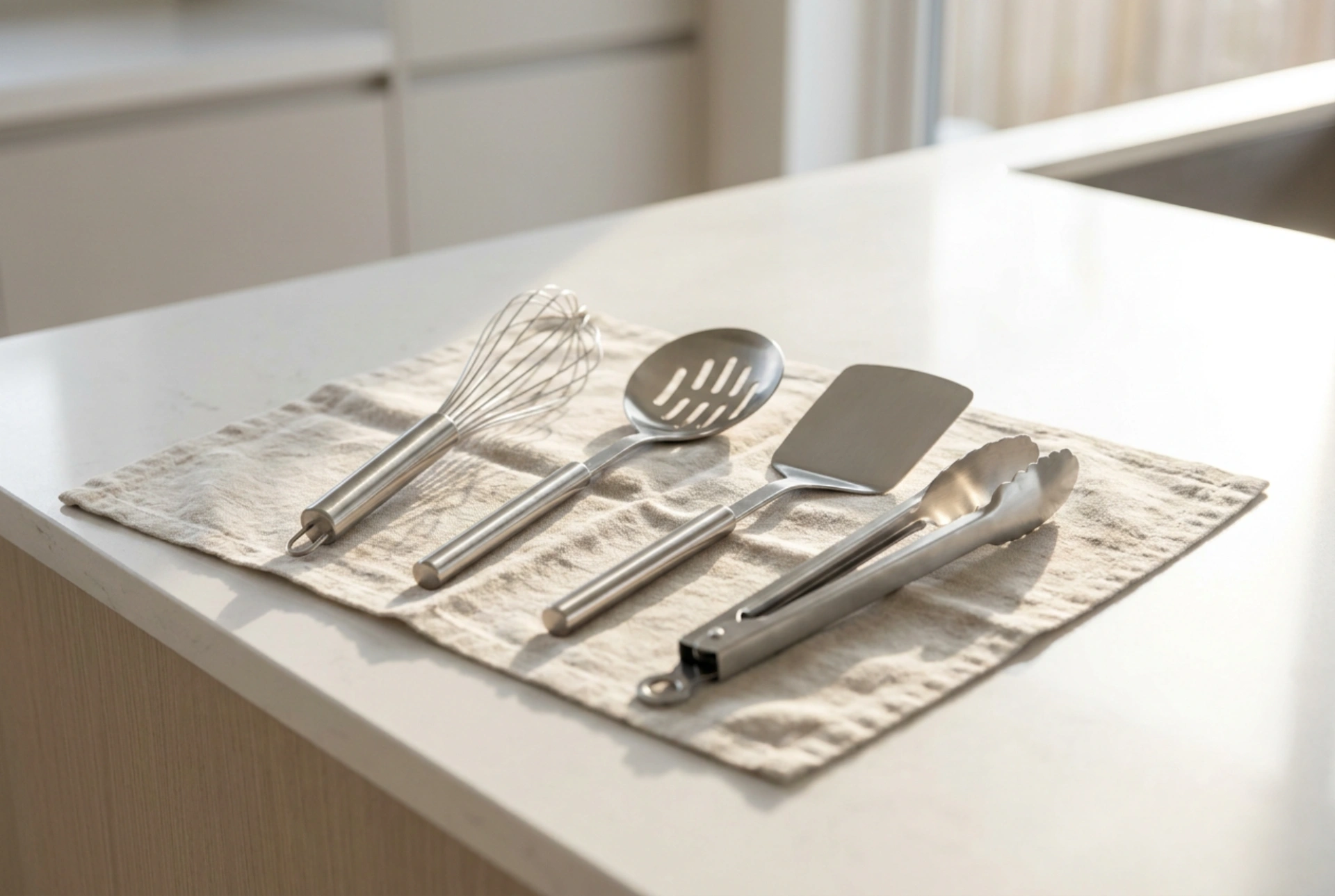
Grinder components are typically made of stainless steel, cast aluminum, or carbon-heavy cast iron. Each material dictates a completely different maintenance protocol. Stainless steel parts are highly resistant to oxidation due to a passive chromium oxide layer. However, they can still suffer from pitting corrosion if exposed to chlorinated detergents or salt for extended periods. Wash them promptly and dry them with a microfiber cloth.
Cast iron and polished aluminum parts must never be placed in a dishwasher. Dishwasher detergents are highly alkaline and contain oxidizers that strip away the protective anodized layer of aluminum, leaving a dull, black residue. For cast iron, moisture is the ultimate enemy because it triggers rapid oxidation. Immediately after washing cast iron parts, dry them completely with a lint-free towel and place them in a warm, turned-off oven for ten minutes to evaporate any residual moisture from the pores.
Sanitization and Mechanical Maintenance
Once the parts are dry, they require sanitization and lubrication to prevent rust and maintain a clean cut. The cutting action relies on a perfectly flat shear interface between the spinning blade and the stationary plate. Any rust or pitting ruins this flat contact, leading to torn, bruised food instead of a clean cut.
Apply a thin, protective layer of food-grade mineral oil or a high-smoke-point neutral cooking oil to all non-stainless steel parts before storage. Focus heavily on the cutting blade, the grinding plates, and the internal threads of the ring collar. Store the parts disassembled in a dry, well-ventilated space wrapped in clean paper towels to absorb any ambient humidity.