

Excess foam in an automatic dishwasher can disrupt the wash cycle, cause water to leak onto your kitchen floor, and even damage the circulation pump. Understanding the chemical differences between high-sudsing manual liquids and low-foaming automatic detergents is key to keeping your appliance running efficiently.
The Chemistry of Surfactants: Why Manual and Automatic Detergents Differ
At the heart of any cleaning agent are surfactants (surface-active agents). These molecules have a hydrophilic (water-loving) head and a hydrophobic (water-repelling) tail. In manual dishwashing liquids, manufacturers use anionic surfactants. When agitated by hand, these molecules align at the air-water interface, trapping air to create thick, stable pockets of foam. This foam helps suspend grease particles away from the plates but is highly problematic inside an appliance.
In contrast, automatic dishwasher detergents are formulated with non-ionic surfactants. These molecules lower the surface tension of water to allow it to sheet off plates and glasses, rather than forming droplets that leave water spots. Crucially, non-ionic surfactants are engineered to remain virtually foam-free, even when subjected to the high-velocity, high-pressure water jets spraying from the wash arms.
The Mechanical Impact of Foam on Your Dishwasher
When excess foam builds up inside a dishwasher, it interferes with the physics of the wash cycle in several ways:
- Pump Cavitation: The circulation pump relies on pumping liquid water to create the pressure needed to spin the spray arms. If foam enters the pump impeller, it causes cavitation—the formation of vapour bubbles that collapse violently. This drops the water pressure, stalls the spray arms, and can overheat the pump motor.
- Sensor Malfunction: Modern dishwashers use optical and pressure sensors to detect water levels and soil levels. Thick foam can obscure these sensors, tricking the machine into draining early or refusing to fill.
- Overfill and Leaks: Foam occupies far more volume than liquid water. As it expands, it can bypass the door seals and escape through the bottom vents, triggering the emergency float switch and causing a system shutdown.
Choosing the Best Low-Foam Formulation
To guarantee a foam-free wash, you must select formulations specifically designed for automatic systems. These generally fall into three categories, each utilising different chemistry to manage suds:
Powder Detergents
Powders are highly effective because they rely on mineral-based salts, oxygen-based bleaching agents (such as sodium percarbonate), and enzymes (protease and amylase). Because they do not require liquid binders, they naturally contain very low levels of organic surfactants, making them the least prone to accidental foaming. They perform exceptionally well in hard water, where mineral ions can otherwise interfere with surfactant efficiency.
Multi-Compartment Tablets and Pods
These combine concentrated powder, enzymes, and liquid surfactants in water-soluble polyvinyl alcohol (PVA) films. The liquid portions contain highly specialised non-ionic surfactants blended with chemical defoamers, such as silicone polymers or specific fatty alcohols, which actively suppress any bubbles generated by food residues like proteins.
Liquid and Gel Detergents
Gels are convenient but rely more heavily on liquid surfactants to stay in solution. If you use a gel, ensure it is designated solely for automatic dishwashers and avoid over-dispensing. Gels do not typically contain oxygen bleach, meaning they rely purely on enzymes and non-ionic surfactants to lift stains.
How to Eliminate Accidental Foam: A Chemical Approach
If hand-soap or manual dishwashing liquid was accidentally introduced into the dishwasher, you must neutralise the foam chemically rather than trying to scoop it out physically. Here is how to break the surfactant bonds:
- Introduce Lipids: Pouring a cup of standard vegetable oil or whole milk directly into the bottom of the tub will rapidly collapse the foam. Lipids disrupt the thin water-surfactant film surrounding the air bubbles, causing them to burst instantly.
- Use Acetic Acid: Distilled white vinegar (acetic acid) alters the pH of the wash water. This change in pH disrupts the electrostatic charges of anionic surfactants, destabilising the bubble walls.
- Disperse with Coarse Salt: Adding a handful of standard table salt or dishwasher salt helps break down the foam. The sodium and chloride ions shield the surfactant molecules, reducing their ability to align and hold air.
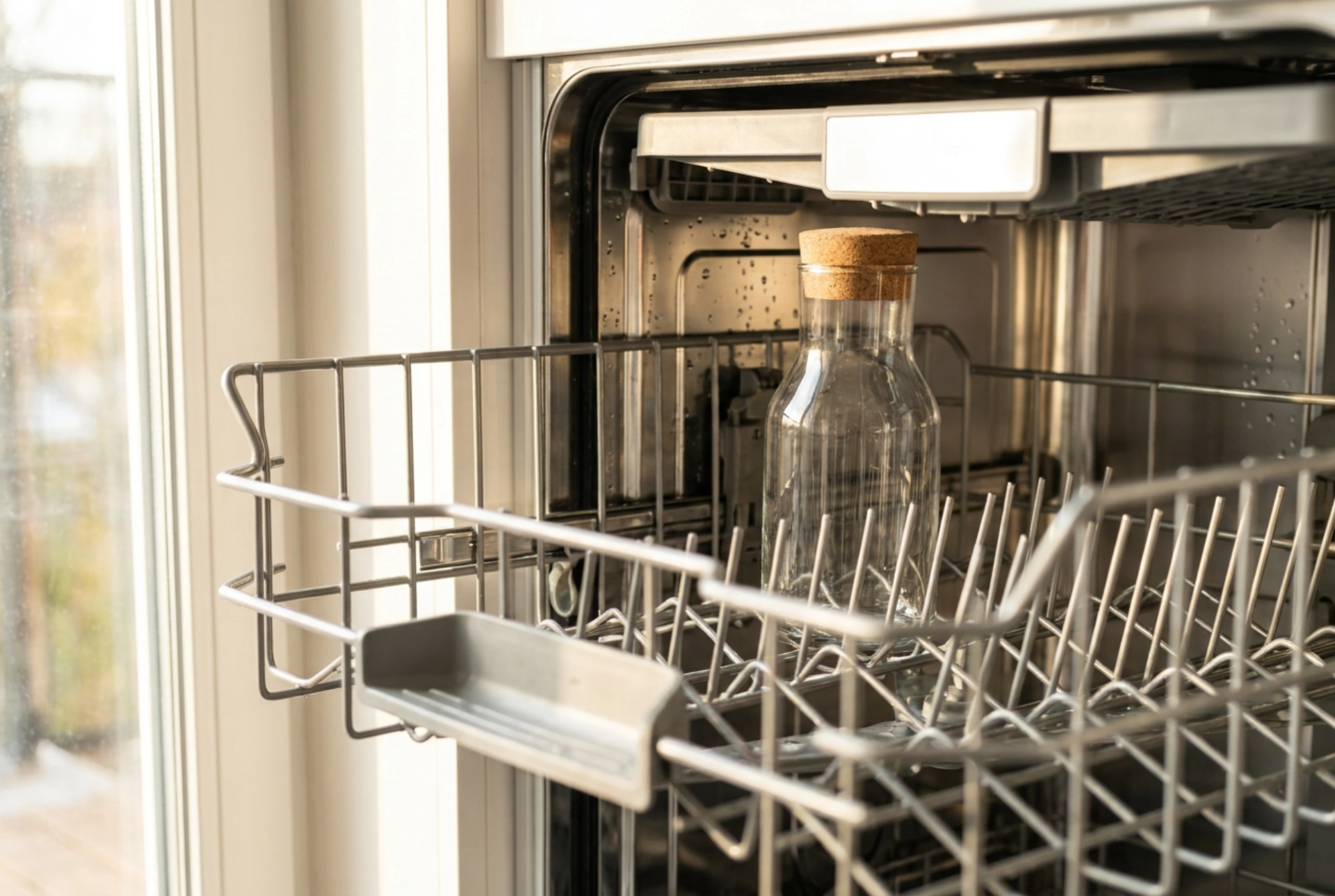
After introducing one of these agents, run a simple drain or rinse cycle. Repeat the process if any residual foam remains visible on the stainless steel racks.