

Removing burnt-on grease from oven surfaces does not require exhausting physical scrubbing or harsh synthetic chemicals that irritate your lungs. By understanding the chemical nature of polymerised fats and leveraging basic chemical reactions, you can effortlessly dissolve stubborn carbon deposits using simple household science.
The Chemistry of Baked-On Oven Grime
When oils and fats are repeatedly subjected to high temperatures inside an oven, they undergo a chemical process known as lipid polymerisation. During this reaction, the heat causes individual fat molecules to cross-link, forming a tough, hydrophobic, plastic-like varnish on the enamel walls. This polymerised layer is highly resistant to water and standard dish soaps because it forms a dense, macromolecular network. Trying to scratch this layer off physically using abrasive scourers often damages the underlying glass-like enamel, creating microscopic scratches. These scratches then act as anchors, making future grease deposits even harder to remove.
The Power of Saponification
To break down this resilient polymerised network without scratching the surface, you must use chemistry to turn the grease against itself. Highly alkaline substances, such as sodium bicarbonate (baking soda) or sodium carbonate (washing soda), trigger a process called saponification. When an alkaline solution meets fatty acids under the right conditions, it breaks the ester bonds holding the fat molecules together. This reaction transforms the insoluble, sticky grease into soluble soap molecules and glycerol, which easily dissolve in water. Because baking soda has a mild pH of around 8 to 9, it is exceptionally safe for domestic enamel while remaining highly effective at breaking down organic build-up when given sufficient dwell time.
Harnessing Thermal Hydration (The Steam Method)
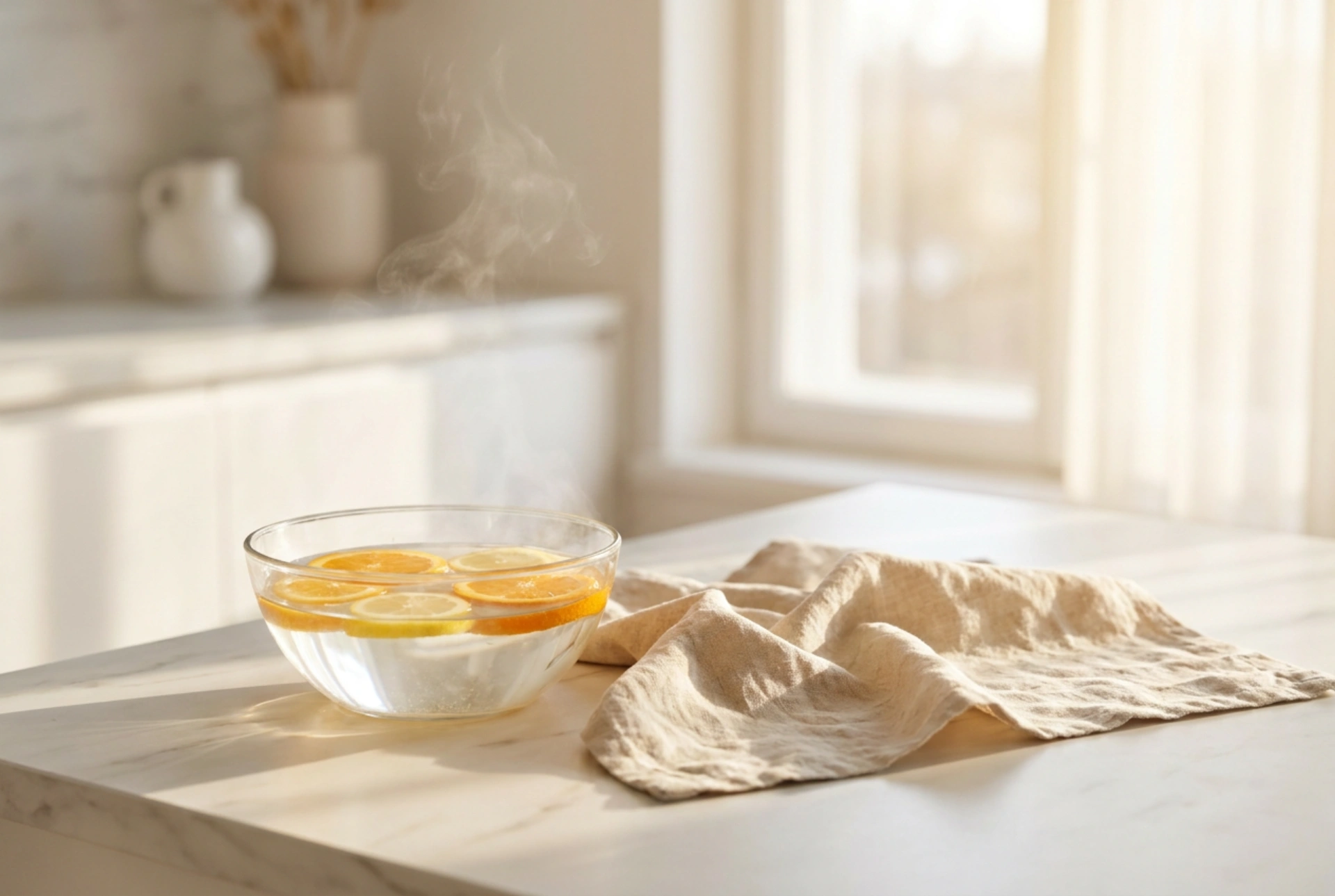
Before applying any alkaline paste, softening the hardened crust using steam significantly accelerates the chemical breakdown. Water molecules under high heat can penetrate the outer layers of the polymerised grease, hydrating and swelling the matrix. To do this, fill a heat-resistant ceramic or glass dish with water and place it on the center rack of your oven. Heat the oven to 100°C and let it run for approximately 30 to 45 minutes. The evaporating water will condense on the cooler walls of the oven, loosening the bonds of the carbonised grease. Once the oven has cooled down to a safe, warm temperature, the grease will be primed for chemical neutralisation.
The Step-by-Step Alkaline-Acidic Routine
Once the oven is warm and humid from the steam treatment, apply a thick paste made of sodium bicarbonate and water (roughly a three-to-one ratio) to all soiled surfaces, avoiding the heating elements. Leave this paste to work for at least four to twelve hours. During this dwell time, the saponification process slowly dissolves the grease at a molecular level.
After the waiting period, spray the dried paste with a mild acidic solution, such as diluted white vinegar (acetic acid). The chemical reaction between the alkaline sodium bicarbonate and the acidic acetic acid produces carbon dioxide gas. This rapid effervescence creates micro-bubbles that physically lift the softened grease off the enamel surface. Use a soft microfibre cloth or a non-scratch sponge to wipe away the resulting slurry. No heavy scrubbing is required; the chemical reaction does the mechanical work for you.
Protecting the Enamel for the Future
Oven interiors are lined with a smooth, non-porous borosilicate enamel coating designed to resist chemical corrosion and high temperatures. Preserving this surface is key to easy maintenance. Avoid using steel wool, wire brushes, or highly abrasive powders. These physical methods scratch the enamel, ruining the smooth finish and ensuring that next time you cook, grease will bond permanently inside those microscopic grooves. Stick to chemical dissolution and thermal softening to keep your oven pristine for years to come.