

Sealing food in plastic bags extends shelf life by preventing oxygen exposure and moisture loss, but doing it incorrectly can compromise food safety or ruin texture. Understanding the relationship between polymer melting points, thermal sealing, and atmospheric pressure is essential for mastering this preservation method.
The Material Science of Thermal Sealing
Plastic bags used for food preservation are typically made from thermoplastic polymers, most commonly polyethylene (PE) or polypropylene (PP). These materials possess linear or branched polymer chains that soften and melt when heat is applied, and then re-solidify as they cool. When you use a heat sealer, the heating element raises the temperature of the plastic film past its glass transition temperature and into its melting range, typically between 105°C and 135°C for low-density polyethylene.
Under pressure from the sealing bar, the melted polymer chains from both layers of the bag intermingle. As the heat source is removed, these chains recrystallise and lock together, forming a hermetic weld. For a strong, airtight seal, two factors are critical: heat duration and cooling pressure. If the heat is applied for too short a time, the polymer chains do not interpenetrate sufficiently, causing a weak seal that easily splits. Conversely, overheating degrades the polymer, thinning the joint and making it brittle. Allowing the seal to cool for a few seconds under pressure before releasing the sealing bar ensures the polymer crystallises in a stable, uniform structure.
The Role of Oxygen and Microbial Dynamics
The primary objective of vacuum sealing is the exclusion of oxygen, which inhibits the growth of aerobic spoilage organisms such as moulds and certain types of bacteria. Oxygen deprivation also halts chemical oxidation, which causes fats to turn rancid, pigments to fade, and vitamins to degrade. However, removing oxygen does not create a completely sterile environment.
In fact, anaerobic bacteria—microorganisms that thrive in oxygen-depleted environments—pose a serious safety hazard. The most notable of these is Clostridium botulinum, which can produce dangerous toxins in low-acid, moist, oxygen-free environments at room temperature. Therefore, vacuum sealing must never be treated as a standalone preservation method for perishable items. Fresh meats, fish, soft cheeses, and cooked vegetables must still be kept refrigerated or frozen after sealing to stop the growth of anaerobic pathogens.
Overcoming Technical Challenges: Liquids and Dust
Achieving a reliable seal requires a clean welding zone, but food preparation often introduces moisture or fine particles that interfere with the polymer bond.
- Liquid intrusion: When vacuuming moist foods or stews, the negative pressure pulls liquids toward the sealing bar. Liquid absorbs the thermal energy from the heating element, preventing the plastic from reaching its melting point and resulting in a failed seal. To prevent this, freeze liquid-rich foods slightly before sealing to solidise the moisture, or place a folded strip of clean, dry paper towel inside the bag just below the seal line to catch rising fluids.
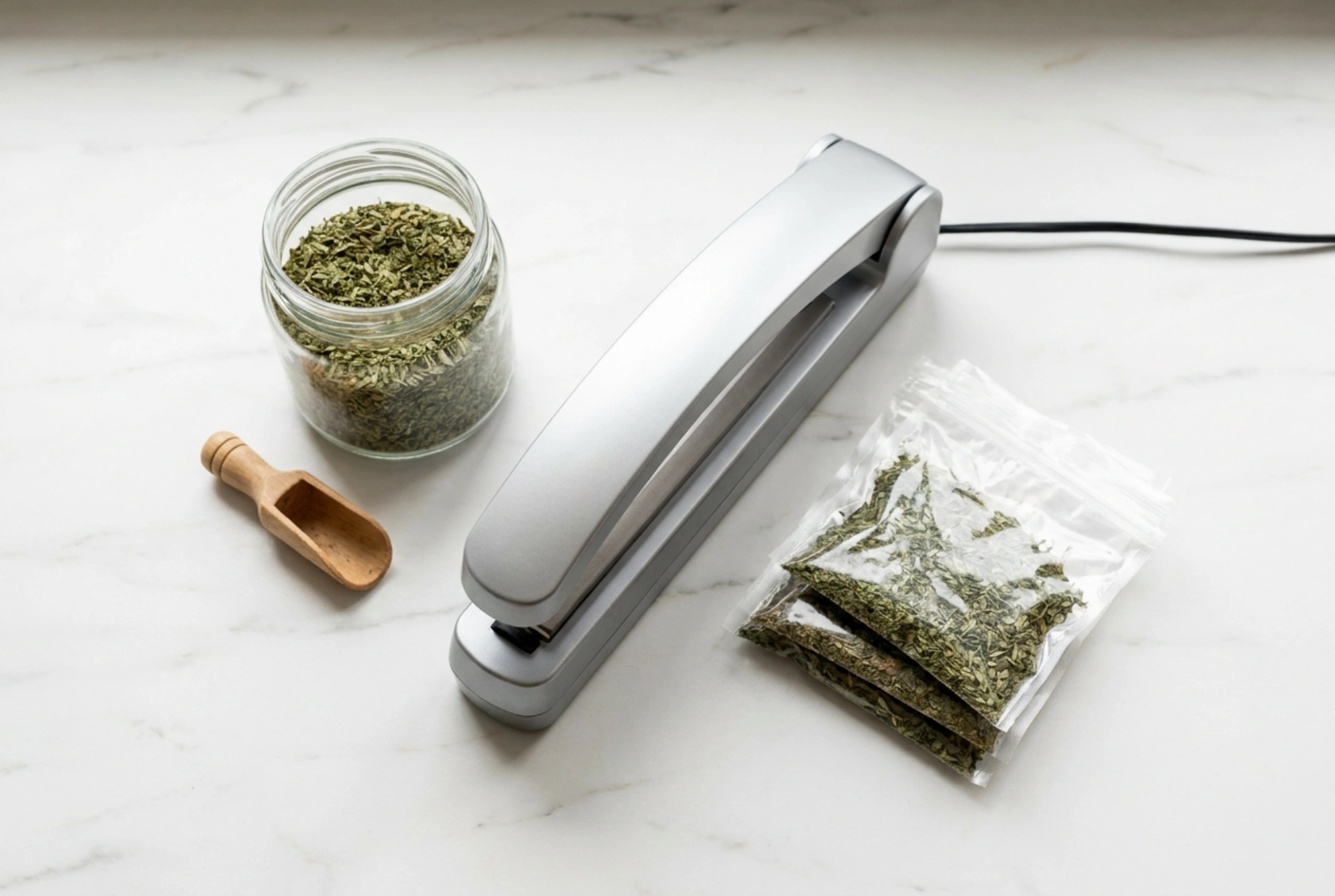
- Particulate interference: Powders like flour, spices, or starch can coat the inner surface of the plastic, physically blocking the polymer chains from bonding. Folding the top of the bag outward before filling keeps the sealing zone pristine. If dust does coat the zone, wipe it thoroughly with a dry, lint-free cloth before sealing.
Optimising the Sealing Process: A Step-by-Step Guide
To ensure consistency and safety, follow a structured sequence when operating a thermal bag sealer. First, select the correct film thickness; heavier bags require longer heating cycles to melt the polymer thoroughly. Lay the bag perfectly flat across the heating element, ensuring there are no wrinkles or folds, as even a minor crease creates a capillary channel that allows air to leak back in. Apply firm, steady pressure during the heating cycle, and maintain that pressure for three to five seconds after the heating indicator turns off. This cooling phase is when the molecular bond gains its mechanical strength. Finally, inspect the finished seam: a perfect seal is transparent, uniform, and free of bubbles or charred areas.