

The stubborn black crust that accumulates on the underside of frying pans is more than just an aesthetic issue; it reduces heat conductivity and impairs energy efficiency. This layer is a complex mix of polymerised cooking fats and carbonised organic matter that requires a precise scientific approach to dissolve without scratching the metal beneath.
The Chemistry of Pan Crust: Why Grease Hardens
Every time you cook, microscopic droplets of oil escape over the sides of the pan and settle on the bottom, where they are subjected to direct heat. At high temperatures, these liquid lipids undergo polymerisation—a chemical process where single fat molecules cross-link into tough, plastic-like chain networks. As this polymer layer is repeatedly baked, it carbonises, turning into a dense, insoluble black crust known as carbon residue. Because this layer is chemically inert to plain water and standard dish soaps, removing it requires altering its chemical structure using heat, mild acids, or alkaline agents that break down the polymer chains.
Material Matters: Assessing Your Cookware
Before applying any cleaning agent, it is vital to identify the metal composition of your pan, as different materials react uniquely to chemical cleaning agents:
- Stainless Steel: Highly resilient and non-reactive. It can safely tolerate both acidic solutions (like vinegar or citric acid) and alkaline agents (like sodium bicarbonate), as well as mild mechanical abrasives.
- Aluminium: Highly reactive to alkaline substances. Using sodium bicarbonate or strong sodium hydroxide on raw aluminium causes an oxidation reaction, turning the metal dull, grey, or black. For aluminium pan bases, stick to acidic solutions like citric acid or cream of tartar.
- Cast Iron and Carbon Steel: These materials rely on a polymerised oil layer (seasoning) for rust prevention. While the absolute bottom of the pan can be scrubbed with coarse salt or steel wool, avoid prolonged exposure to acids, which will strip the metal bare and encourage rust.
The Sodium Bicarbonate and Acid Method for Stainless Steel
For stainless steel and copper-bottomed pans, a binary chemical approach utilising sodium bicarbonate (a mild base) and acetic acid (vinegar) offers the most effective non-toxic solution. The alkaline nature of the bicarbonate begins to saponify the fats, while the acid reacts to release carbon dioxide gas, which physically lifts the loosened debris.
To execute this technique, follow these steps:
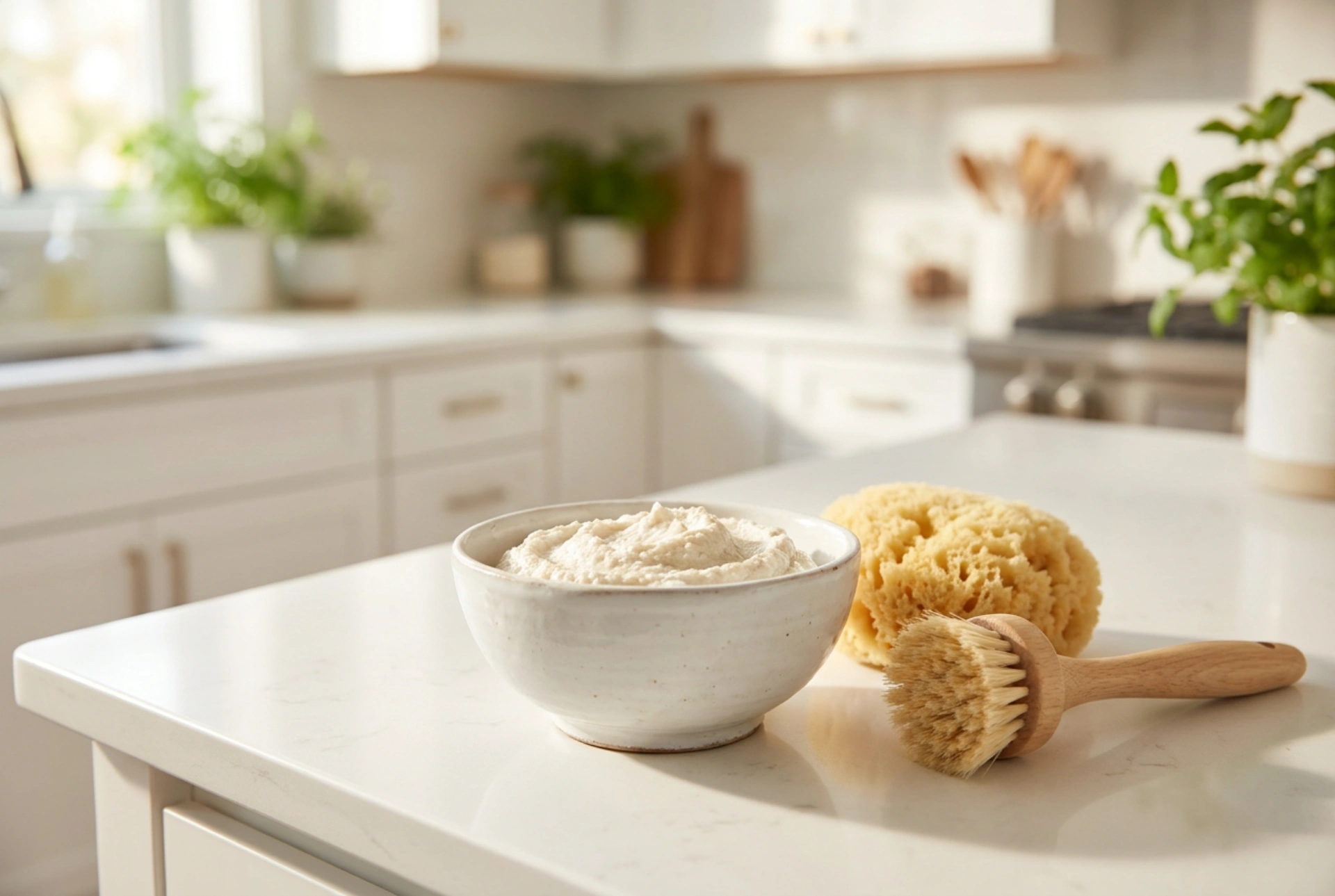
- Step 1: Create a reactive paste. Mix three parts sodium bicarbonate with one part water to form a thick paste. Apply this generously over the dry bottom of the pan.
- Step 2: Provide dwell time. Allow the paste to sit for at least 30 minutes. This gives the alkaline paste time to penetrate the polymerised lipid layer.
- Step 3: Trigger the reaction. Spray or pour white vinegar (acetic acid) or a dissolved citric acid solution directly onto the paste. The resulting effervescence creates micro-bubbles of carbon dioxide that mechanically shear the carbon crust away from the metal surface.
- Step 4: Controlled agitation. Use a non-scratch scouring pad or a copper sponge to work the mixture in tight, circular motions. The crystalline structure of the unreacted sodium bicarbonate acts as a gentle physical abrasive, shearing away the softened carbon without gouging the stainless steel.
The Thermal Shock and Citric Acid Simmer for Stubborn Buildup
When chemical treatments alone are not enough, physical principles of thermal expansion can be leveraged. Different materials expand and contract at different rates when exposed to temperature changes. Heating the pan causes the metal base to expand slightly, which creates microscopic fractures in the brittle, inelastic carbon crust.
To apply this method, submerge the inverted bottom of the pan in a wide, shallow pot filled with a concentrated solution of citric acid and water (approximately 50 grams of citric acid per litre of water). Bring the water to a gentle simmer. The combination of heat, which softens the polymerised oils, and the low pH of the citric acid, which breaks down the mineral bonds holding the crust together, will cause the black flakes to peel away. After simmering for 15 minutes, remove the pan carefully and immediately wipe the base with a damp microfiber cloth. The sudden drop in temperature will help shear off the remaining residue.