

Residual sugars, fats, and cocoa solids from sweet drinks can rapidly compromise your machine's performance, creating stubborn blockages and breeding bacteria. Effectively removing these complex deposits requires a targeted approach combining thermal dissolution, fat emulsification, and protein breakdown.
The Science of Sweet Residues: Why Water Alone Fails
Unlike pure coffee, which leaves behind mostly soluble organic compounds and minor oils, sweet drinks containing chocolate powders, syrups, and milk products introduce a highly complex matrix of residues. To clean them effectively, one must understand their chemical composition. Sucrose and fructose are highly water-soluble, but when exposed to the high heat of steam wands or mixing chambers, they undergo partial caramelisation and dehydration, transforming into a hard, sticky glaze. Plain cold water will not dissolve this hardened glaze efficiently.
Furthermore, milk and cocoa contain substantial quantities of lipids (fats) and proteins. Cocoa butter is hydrophobic, meaning it repels water and clings to plastic and metal surfaces. Milk proteins, specifically casein and whey, denature when exposed to temperatures above 60°C. During denaturation, these proteins unfold and form strong covalent bonds with the metallic surfaces of steam nozzles and internal tubes. If left untreated, this protein-lipid-sugar matrix hardens into a resilient film that harbors bacteria and alters the taste of subsequent beverages.
Thermal Dynamics: The Role of Temperature
Temperature control is critical when cleaning sweet residues. Cocoa butter has a melting point of approximately 34°C to 38°C. Therefore, any cleaning solution must be applied at a temperature of at least 50°C to ensure the fats are in a liquid state, allowing them to be flushed away. However, the water must not be too hot. Introducing boiling water (above 85°C) to milk-soiled components before a preliminary rinse will instantly bake the remaining proteins onto the surfaces, making manual removal extremely difficult.
The ideal approach begins with a lukewarm rinse (around 40°C) to wash away loose sugars and unfixed proteins, followed by a hot wash (55°C to 60°C) paired with a suitable surfactant to emulsify and lift the remaining liquefied fats.
Chemical Dissolution: Selecting the Right Agents
To break down the complex bonds of dried syrups and chocolate, specific chemical agents are required. General household detergents are often insufficient or leave perfumed residues that taint the taste of coffee. Instead, rely on targeted, food-safe compounds:
- Lactic Acid and Citric Acid: These mild organic acids are highly effective at breaking down the mineral scale that often binds with sugar residues. Lactic acid is particularly gentle on the copper, brass, and silicone gaskets found inside high-end machines.
- Oxygen-Based Bleaching Agents: Sodium percarbonate, when dissolved in warm water, releases active oxygen. This oxidative process breaks the chemical bonds of stubborn cocoa tannins and protein stains, lifting them from plastic mixing bowls and whipping chambers without the need for abrasive scrubbing.
- Mild Surfactants: Unscented, neutral surfactants reduce the surface tension of water, allowing it to penetrate hydrophobic fat layers and suspend them in the cleaning solution.
Step-by-Step Maintenance Protocol for Mixing Chambers and Nozzles
To maintain hygiene and prevent blockages, a systematic cleaning routine must be executed. First, isolate the machine from its power source if conducting manual disassembly.
1. Disassembly and Pre-Rinsing
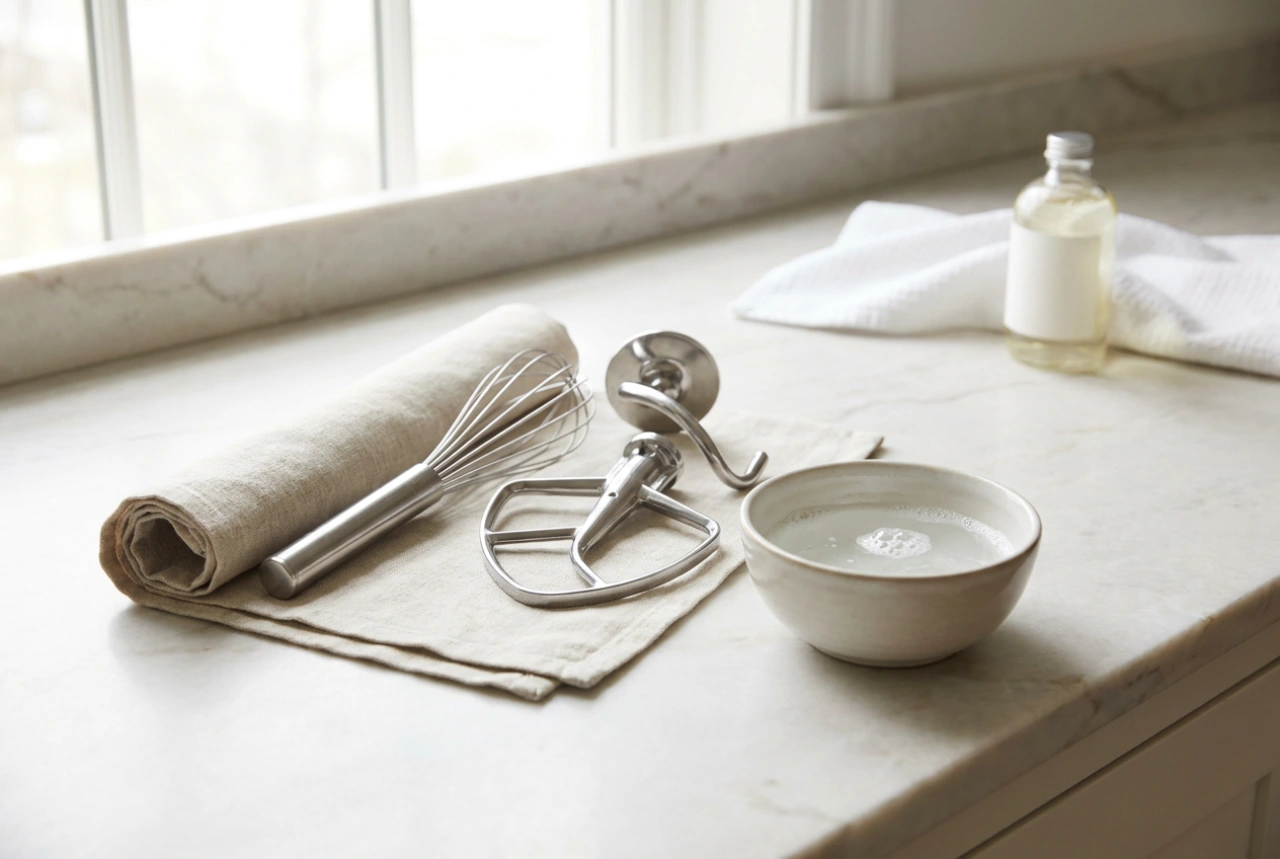
Remove the mixing bowls, frother nozzles, and whipping impellers. Rinse these parts immediately under warm, running tap water (approx. 40°C) to remove the bulk of the loose sugar and cocoa solids. Never let these parts dry with sweet residue inside them.
2. Active Soaking
Submerge the disassembled components in a solution of warm water (50°C) and an oxygen-based cleaning agent. Allow them to soak for 15 to 20 minutes. The active oxygen will break down the protein-sugar matrix, while the warm temperature melts any residual cocoa fats.
3. Mechanical Cleansing
Using a soft-bristled cylindrical brush, gently clean the narrow orifices of the nozzles and steam paths. Avoid using metal needles or abrasive scouring pads, as these can scratch the smooth internal plastic or stainless steel surfaces, creating micro-grooves where bacteria and sugar crystals will cling even more tenaciously in the future.
4. System Flushing
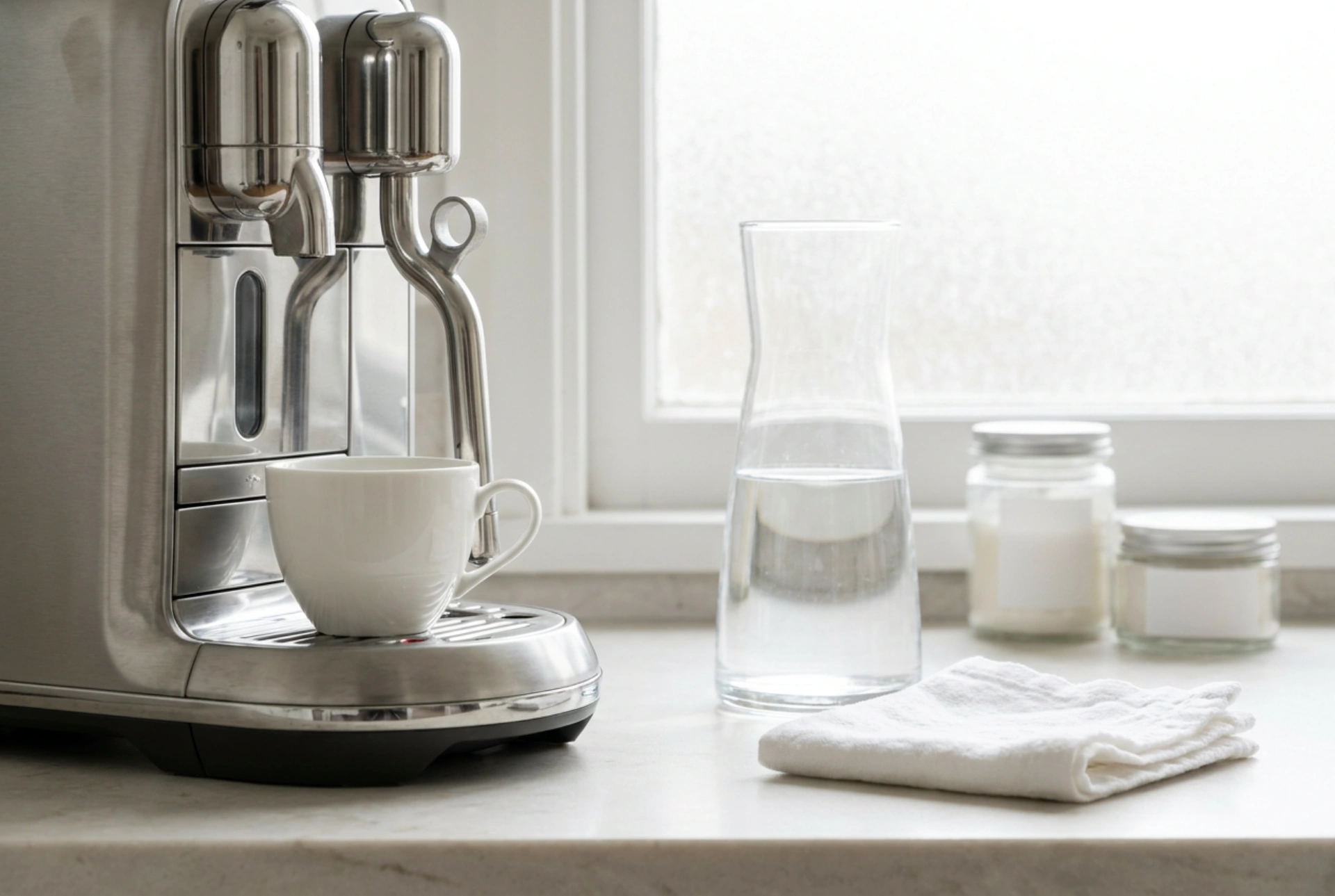
Reassemble the components and run a dedicated rinse cycle. If the machine features an automated cleaning programme for milk or chocolate, initiate it using a liquid cleaner containing lactic acid to clear the internal lines that cannot be manually brushed.