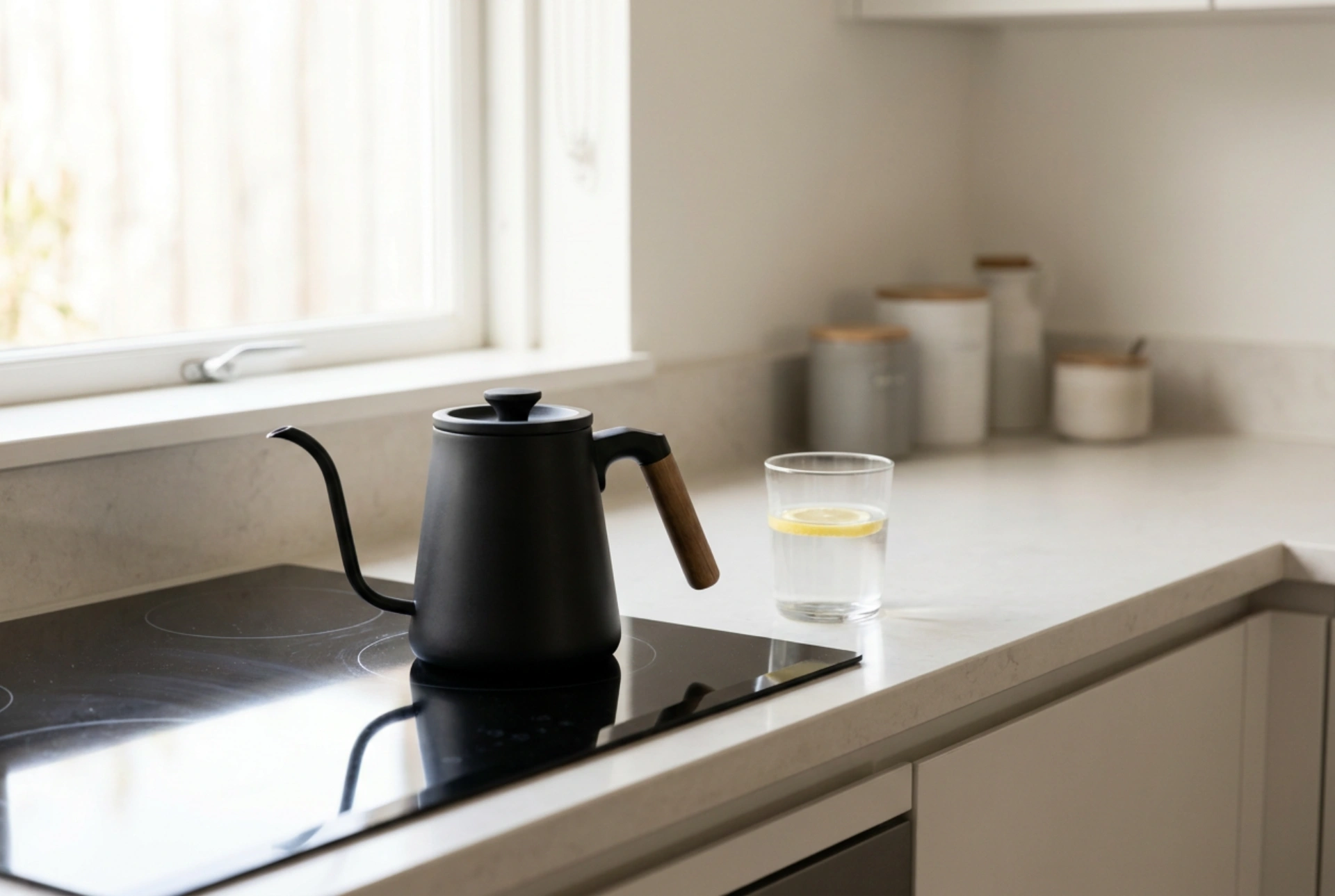


Removing limescale from a black induction kettle requires a careful balance between chemical dissolving power and surface preservation. While the stainless steel interior demands an acidic solution to break down calcium deposits, the delicate matte black exterior coating can easily be ruined by harsh scrubbing or acid runs.
The Chemistry of Limescale and Induction Heating
Limescale is primarily composed of calcium carbonate, a compound that precipitates out of tap water when heated. Hard water contains dissolved calcium and magnesium hydrogen carbonates. When heat is applied, these soluble minerals undergo thermal decomposition, transforming into insoluble carbonates that bond to the hot metallic surfaces of your kettle.
In an induction kettle, this process is highly concentrated. Induction hobs use electromagnetic fields to excite iron atoms directly in the ferromagnetic base of the vessel. Because the heat is generated directly within the bottom plate rather than transferred from an external flame or element, this base plate reaches extreme temperatures very rapidly. This intense localized heat gradient accelerates the precipitation of minerals, leading to a thick, stubborn layer of scale forming precisely where the kettle meets the hob surface inside.
Interior Descaling: The Citric Acid Method
To dissolve calcium carbonate, you need an acid that is strong enough to break ionic bonds but gentle enough not to corrode the stainless steel interior or degrade silicone seals. Citric acid is the ideal chemical agent for this task. Unlike acetic acid (found in vinegar), citric acid is odorless, highly effective at room temperature, and less aggressive towards elastomeric gaskets.
- Preparation: Dissolve 2 tablespoons of crystalline citric acid in 500 ml of lukewarm water. Stir thoroughly until the crystals are completely dissolved to ensure a homogenous concentration.
- Application: Pour the solution into the kettle, ensuring all visible limescale is fully submerged. Do not fill the kettle to the brim, as the reaction with carbonates can cause foaming.
- Thermal activation: Place the kettle on the induction hob and heat the solution gently. Do not bring it to a rolling boil; heating it to approximately 60 degrees Celsius is sufficient to accelerate the chemical reaction without causing violent boiling or releasing hot acidic vapors.
- Reaction time: Turn off the heat and let the mixture sit for 15 to 30 minutes. You will observe tiny bubbles of carbon dioxide rising, indicating that the acid is actively converting the solid calcium carbonate into soluble calcium citrate.
- Rinsing: Empty the solution and rinse the interior thoroughly with cold water. Wipe the inside with a soft cloth to remove any loosened residue, then rinse once more.
Protecting the Matte Black Exterior
The exterior of a modern black kettle is typically finished with a powder-coated layer or a heat-resistant lacquer. This polymer-based coating is vulnerable to physical abrasion and chemical attack. If acidic descaling solutions run down the spout and dry on the black finish, they can leave permanent, unsightly white streaks or chemically etch the surface, stripping its matte appearance.
To clean the exterior without damage, never use abrasive scouring pads, steel wool, or cream cleansers containing micro-particles. These physical abrasives scratch the polymeric matrix of the paint, creating microscopic grooves that scatter light unevenly and ruin the uniform matte aesthetic. Instead, use a soft, damp microfiber cloth. If grease or fingerprints are present, apply a single drop of a neutral, non-ionic surfactant (such as standard dishwashing liquid) directly to the damp cloth. Wipe the surface gently in circular motions, then dry immediately with a clean, dry cloth to prevent water spots from forming.
Daily Practices to Prevent Minerals from Settling
Minimizing the frequency of descaling preserves both the heating efficiency of your induction kettle and the integrity of its materials. Implement these professional habits to keep scale at bay:
- Never leave standing water: Empty the kettle completely after each use. When water cools and evaporates inside the kettle, it leaves behind a concentrated mineral film that hardens over time.
- Use softened or filtered water: Utilizing water from a carbon or ion-exchange filter significantly reduces the concentration of temporary hardness minerals, preventing rapid scale build-up.
- External spill management: If any acidic descaling solution drips onto the exterior during pouring, neutralize it immediately by wiping the area with a wet cloth soaked in clean water, followed by a dry microfiber towel.