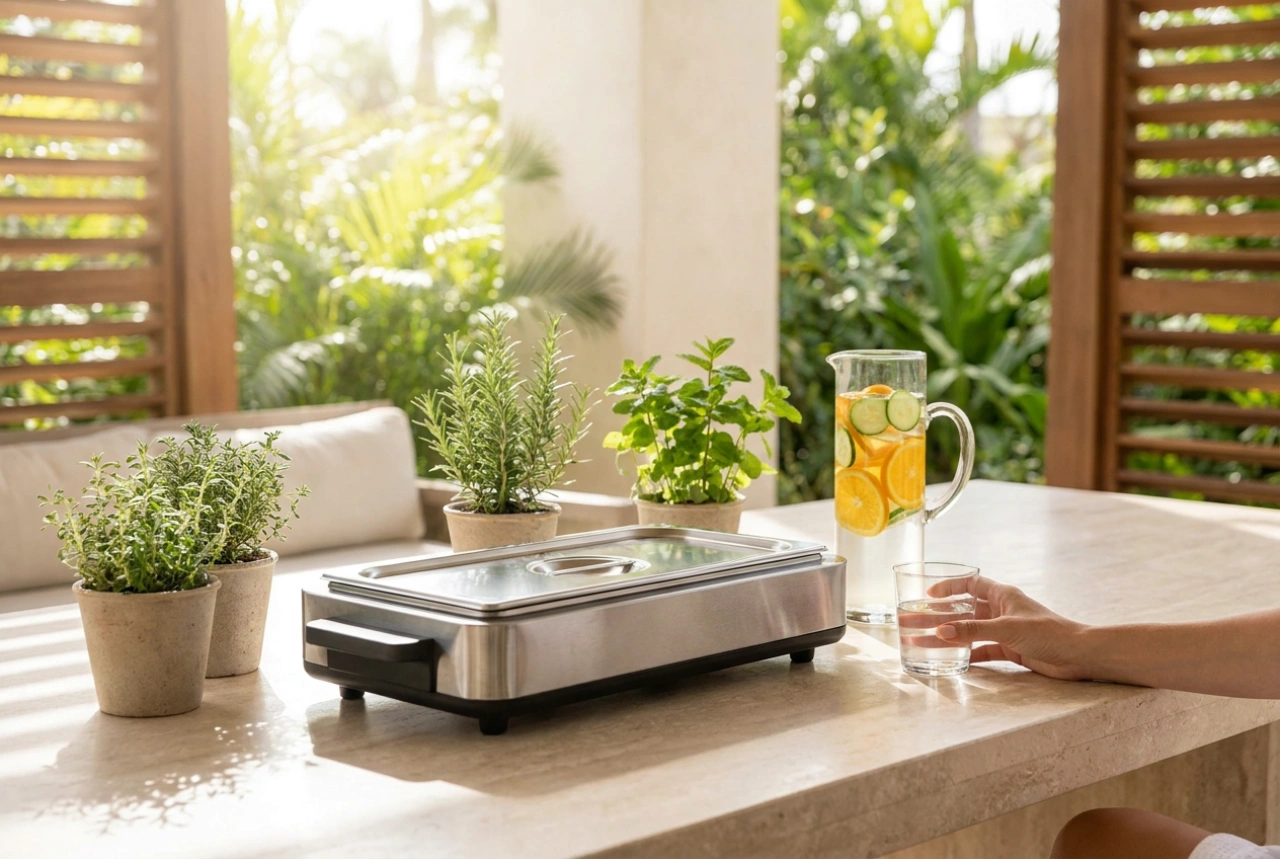


The electric baking pan—historically known as a prodiŴ—is a compact, self-contained countertop cooking vessel that offers a highly efficient alternative to traditional ovens for specific culinary tasks. By utilizing a localized heating element built directly into its lid, it creates a high-density thermal chamber ideal for baking and roasting with minimal energy wastage.
Thermodynamic Efficiency and Heat Transfer Mechanism
Traditional ovens require heating a large volume of air, which leads to significant energy loss and longer preheating times. The electric baking pan solves this through spatial minimization. The heating element, typically embedded in the heavy lid, transfers heat downward primarily via thermal radiation and convection within a tightly sealed, low-volume metal cylinder. Because the vessel is made of highly conductive metals like aluminium or thin steel alloys, the heat is rapidly distributed along the walls, creating a uniform thermal envelope. The lack of active ventilation prevents the escape of moisture, meaning food bakes in its own steam, resulting in exceptionally moist interiors and crisp, caramelised crusts without the need for auxiliary steam injection.
When to Choose an Electric Pan Over a Small Oven
While a miniature countertop oven resembles a scaled-down traditional oven, it suffers from the same issues of air leakage and uneven heat distribution due to exposed heating coils. An electric baking pan is superior in several specific scenarios:
- Yeast doughs and dense cakes: The immediate, intense top-down heat combined with trapped moisture promotes a rapid initial rise before the crust sets.
- Roasting small portions of meat: The tight seal retains natural fats and juices, preventing the meat from drying out—a common issue in small, highly ventilated ovens.
- Energy conservation: Running a 400-600 watt electric pan uses a fraction of the electricity required to preheat and run a 2000-watt standard oven.
Mastering Thermal Control and Baker's Techniques
Most traditional electric baking pans operate on a single temperature setting, relying on steady-state thermal equilibrium. To master this tool, one must understand heat distribution techniques. Placing a metal ring insert in the centre of the pan converts it into a Bundt-style mould, which facilitates heat transfer to the very centre of thick batters, preventing undercooked middles. Since there is no active thermostat adjustment, timing and heat conservation are critical. Avoid lifting the lid during the first two-thirds of the baking process; removing the lid instantly collapses the thermal pocket and releases the trapped steam required for dough expansion. If the top of the food browns too quickly, a simple sheet of parchment paper placed directly over the food shields it from direct radiant heat.
Chemical Maintenance of Aluminium and Steel Vessels
To maintain the reflective and thermal properties of the pan, proper material care is essential. Many of these vessels are constructed from high-grade aluminium, which is highly reactive to alkaline substances. Using strong detergents, dishwasher tablets, or highly alkaline cleaning agents will strip the protective oxide layer, leading to dark grey discoloration and a pitted surface that compromises heat conduction. Instead, clean the cooled vessel using mild, neutral-pH dish soaps and warm water. For stubborn, carbonised food residues, utilize the science of mild acids: boil a solution of water and citric acid or white vinegar within the vessel to loosen the bonds of burnt organic matter without etching the metal surface. Always dry the pan immediately to prevent galvanic corrosion.