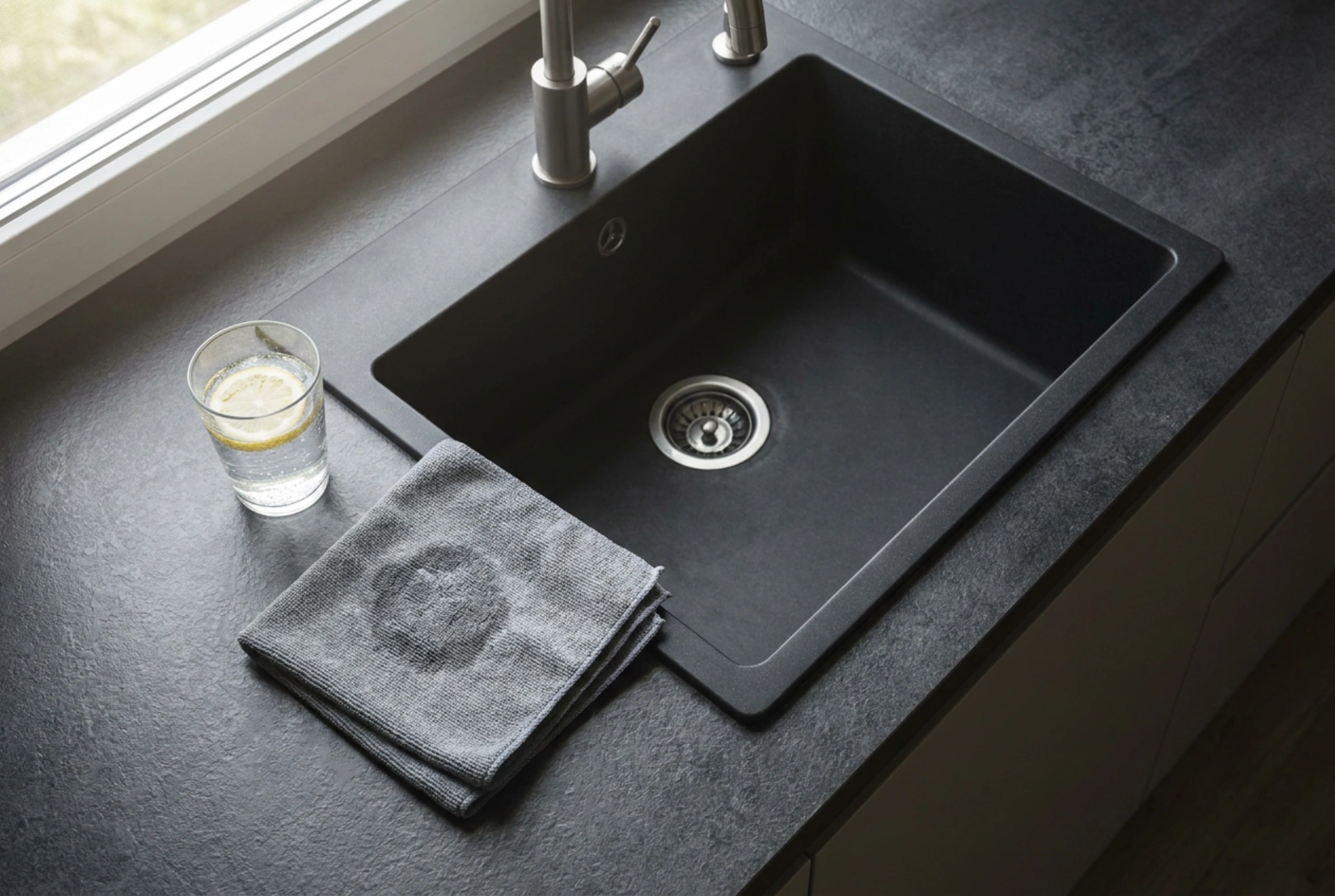


Granite composite sinks are highly durable, but their textured surfaces are prone to trapping calcium carbonate deposits and organic pigments like coffee tannins. Restoring their original matte appearance requires understanding the chemistry of composite materials and using targeted pH solutions rather than aggressive abrasives.
Understanding the Material: Why Sinks Stain
Modern granite sinks are actually composite materials, typically made of roughly 80% natural quartz or granite aggregate bonded with 20% acrylic resin. While this structure is incredibly tough, the surface is microscopically textured. Limescale, or calcium carbonate, precipitates from hard tap water and clings to these microscopic ridges. Once a thin layer of limescale forms, it acts like a sponge, absorbing organic dyes from coffee, tea, and red wine. To clean the sink effectively, you must address both the inorganic mineral deposits and the organic pigments bonded to them. Using harsh abrasives can scratch the acrylic binder, creating even deeper grooves that trap grime faster in the future.
Dissolving Limescale with Weak Acids
Limescale is basic in nature, meaning it reacts readily with acids. However, strong mineral acids can degrade the acrylic resins in the sink. The safest and most effective method is using mild organic acids, such as citric acid or diluted acetic acid (white vinegar).
- Citric Acid Solution: Dissolve two tablespoons of citric acid powder in 500 ml of warm water. Warm water increases the kinetic energy of the molecules, speeding up the chemical reaction.
- Application: Spray the solution generously over the limescale build-up. For vertical surfaces, saturate a clean cotton cloth or paper towel with the solution and press it against the affected areas to ensure prolonged contact time.
- Reaction Time: Allow the acid to sit for 15 to 20 minutes. The acid breaks the chemical bonds of the calcium carbonate, converting it into soluble calcium citrate, which can be easily rinsed away with cold water.
Targeting Coffee and Tea Tannins
Coffee and tea stains are caused by tannins, which are complex organic polyphenols. These compounds bind tightly to the mineral deposits or directly to the composite surface. To remove them, you need an oxidising agent or a mild, non-abrasive alkaline cleaner.
Sodium bicarbonate (baking soda) is an excellent, mildly alkaline agent (pH around 8.1) that gently lifts organic stains without scratching the surface. Mix baking soda with a small amount of water to form a smooth paste. Apply the paste directly to the coffee stains and rub gently in circular motions using a soft microfibre cloth. The mechanical action, combined with the mild alkalinity, breaks down the acidic tannin compounds.
For stubborn, deep-set coffee stains, oxygen bleach (sodium percarbonate) is highly recommended. When mixed with hot water, sodium percarbonate releases hydrogen peroxide, a powerful oxidiser that breaks the double bonds of pigment molecules, rendering them colourless and water-soluble. Avoid chlorine-based bleach, as prolonged exposure can dry out and discolour the acrylic binder of your composite sink.
The Hydrophobic Barrier: Sealing with Mineral Oil
Once the sink is chemically clean and free of mineral deposits, you can prevent future staining by creating a hydrophobic barrier. This process, often called oiling or sealing, fills the microscopic pores of the composite material, forcing water and organic liquids to bead up and slide off rather than dry in place.
- Dry the Surface: Ensure the sink is completely dry. Any remaining moisture will trap water underneath the oil barrier, reducing its effectiveness.
- Apply the Oil: Pour a few drops of pure food-grade mineral oil or paraffin oil onto a dry microfibre cloth. Avoid vegetable oils like olive or sunflower oil, as they can go rancid and sticky over time.
- Buffing: Rub the oil thoroughly into the entire surface of the sink basin. Let it penetrate for 10 minutes, then buff the surface with a clean, dry cloth to remove any excess residue. The result is a deep, rich colour and a protective shield that resists coffee and limescale adhesion for several weeks.