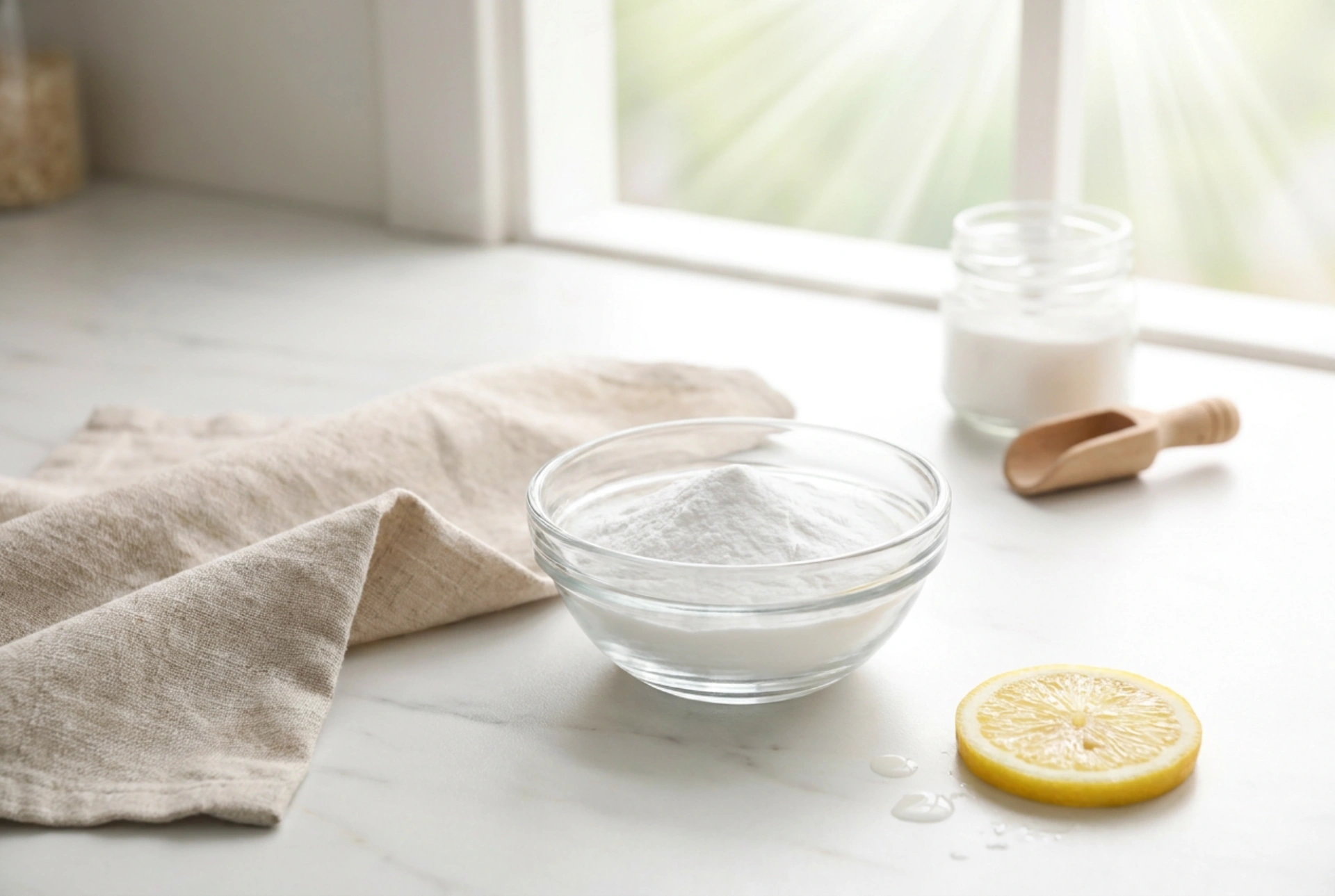


Cleaning baked-on grease from oven interiors does not require harsh commercial chemicals; instead, you can leverage the chemical properties of sodium bicarbonate to dissolve stubborn organic deposits safely. Understanding the science of alkaline hydrolysis allows you to restore your oven's enamel surfaces using simple pantry ingredients and structured application methods.
The Science of Saponification: Why Baking Soda Dissolves Grease
Baked-on oven grease consists of polymerised fats. When oils are subjected to high heat over time, they undergo oxidation and polymerisation, transforming from liquid lipids into a tough, varnished layer bound tightly to the oven's enamel coating. To break this bond without scraping and damaging the enamel, you must alter the chemical structure of the grease.
Sodium bicarbonate (commonly known as baking soda) is a mild alkali with a pH of approximately 8.3. When mixed with water, it releases hydroxide ions. These ions attack the ester bonds within the polymerised fat molecules. This process, known as saponification, converts insoluble fatty acids into water-soluble sodium salts (essentially a crude form of soap). Additionally, the crystalline structure of undissolved baking soda provides a gentle physical abrasive. It is hard enough to dislodge loosened soil but softer than the oven’s silicate-based enamel, ensuring clean surfaces without micro-scratches.
Mixing and Applying the Active Paste
To initiate the saponification process, you must create a medium that allows the sodium bicarbonate to penetrate the grime. Water acts as the carrier and solvent, enabling the ions to migrate into the grease layer.
- The Ratio: Mix three parts sodium bicarbonate with one part water to form a thick, spreadable paste with a consistency similar to toothpaste. If the paste is too runny, it will slide off the vertical oven walls; if it is too dry, the chemical reaction cannot occur.
- Application Strategy: Remove all oven racks and thermometer probes. Apply the paste evenly over the greasy surfaces using a silicone spatula or a gloved hand. Focus heavily on areas with dark, carbonised buildup.
- Safety Zones: Strictly avoid applying the paste directly onto heating elements, thermostat sensors, or fan openings. Introducing an alkaline paste to electrical components can cause corrosion or short circuits when the oven is powered back on.
The Crucial Element: Contact Time
Chemical reactions require time, especially when dealing with dense, multi-layered polymerised grease. Simply applying and immediately wiping baking soda will yield poor results. For optimal degradation of the grease matrix, leave the paste on the oven walls for at least twelve hours, or overnight.
During this dwell time, the alkaline solution slowly diffuses deeper into the carbonised crust, breaking molecular bonds layer by layer. If the paste dries out completely, the reaction halts. To prevent this in dry environments, you can lightly mist the paste with water from a spray bottle after a few hours to keep the chemical process active.
Acidic Neutralisation and the Lifting Effect
Once the baking soda has softened the grease, the next phase utilizes a classic acid-base reaction to physically lift the residue from the surface. Spraying a mild acid, such as diluted acetic acid (household white vinegar), onto the remaining baking soda paste triggers an energetic chemical reaction.
The acetic acid reacts with the sodium bicarbonate to produce sodium acetate, water, and carbon dioxide gas. The rapid release of carbon dioxide creates a vigorous foaming action. This effervescence provides localized mechanical agitation, physically breaking apart the softened crust from the underlying enamel. It also neutralises any remaining alkaline residue, ensuring that no chalky white film is left behind on the oven surfaces.
Extraction and Enamel Protection
The final step is the physical removal of the emulsified soil. Use a damp microfiber cloth to wipe away the foam and dissolved grease. Because microfiber has a high density of microscopic polyester and polyamide fibres, it mechanically grabs the emulsified particles rather than just smearing them across the smooth enamel.
Avoid using steel scouring pads or stiff wire brushes. Oven interiors are lined with a porcelain enamel glaze, which is essentially a form of glass fused to metal. High-hardness metal scourers create microscopic scratches in this glaze. These scratches not only dull the appearance of your oven but also create micro-cavities where future grease can anchor itself even more deeply, making subsequent cleanings significantly harder.