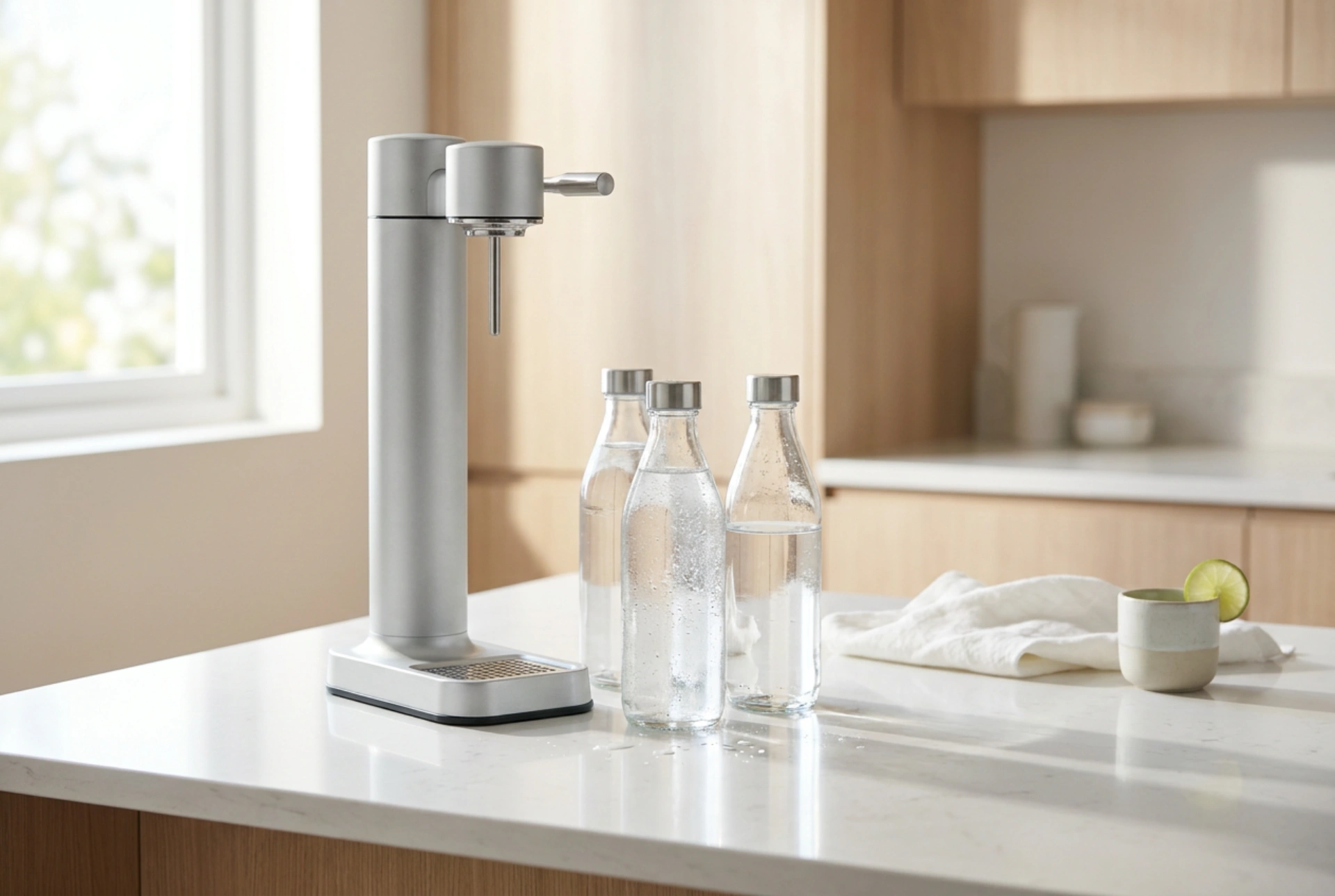


Regular maintenance of a home water carbonator and its reusable bottles is essential to prevent biofilm accumulation and keep the carbonation nozzle free of mineral deposits. Understanding the material science of your bottles and the chemistry of sanitisation ensures both safety and optimal carbonation efficiency.
The Science of Biofilm and Carbonator Contamination
Although a home carbonator typically only comes into contact with pure water, it is not a sterile environment. Every time a bottle is locked into the machine and pressurized, a small amount of back-siphoning can occur when the pressure is released. This microscopic backwash carries trace organic compounds, skin cells from lips, and airborne yeasts into the nozzle area. Over time, these organic residues form a biofilm—a structured community of microorganisms embedded in a self-produced slimy matrix. Biofilms adhere tenaciously to plastic and metal surfaces and are highly resistant to simple rinsing. If left unchecked, they affect the taste of the water and can clog the delicate gas-release valves.
Material Science of Bottles: PET versus Glass
Reusable bottles for carbonators are generally made from either Polyethylene Terephthalate (PET) or borosilicate glass. Understanding their physical limits is crucial during cleaning to prevent catastrophic structural failure under pressure.
The Thermal Vulnerability of PET
PET is a thermoplastic polymer with a glass transition temperature of approximately 70 degrees Celsius. Below this temperature, the polymer chains are locked in a rigid, amorphous state. If you expose a standard PET bottle to boiling or highly hot water (above 50 degrees to 60 degrees Celsius), the polymer chains gain enough thermal energy to slide past one another, causing the bottle to shrink, warp, and lose its precise shape. A deformed PET bottle cannot seal correctly in the carbonator, leading to gas leaks or explosive decompression during carbonation. Therefore, PET bottles must always be washed in lukewarm water below 40 degrees Celsius.
Glass Bottles and Thermal Shock
While glass bottles can easily withstand high sanitising temperatures, they are susceptible to thermal shock. Rapid temperature differentials (such as transferring a glass bottle from cold rinse water directly into hot sterilising water) cause localized thermal expansion, leading to stress fractures. Always allow glass bottles to adjust gradually to temperature changes.
Decontaminating and Descaling the Carbonator
To maintain the machine body and the carbonating nozzle, you must address two distinct issues: calcium carbonate scale and microbial growth. Do not use chlorinated detergents on internal parts as they can degrade the silicone seals.
- Descaling the Nozzle: Tap water contains dissolved calcium and magnesium ions. When carbon dioxide is injected, it temporarily lowers the pH, but as pressure drops, calcium carbonate precipitates onto the tip of the nozzle. To dissolve this mineral scale, submerge the tip of the nozzle in a warm solution of citric acid (2 tablespoons per 250 ml of water) for 10 minutes. Citric acid acts as a chelating agent, binding to the calcium ions and converting them into highly soluble calcium citrate.
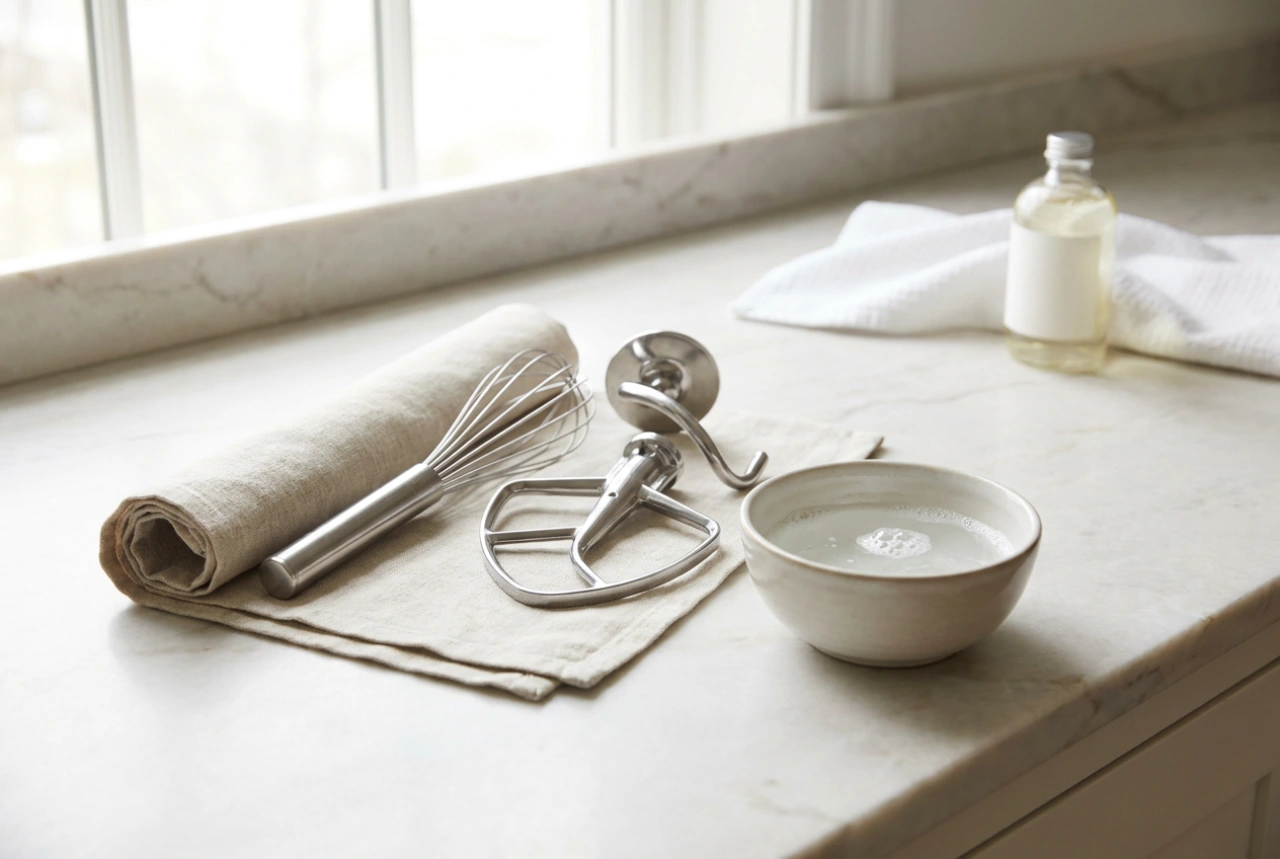
- Sanitising the Exterior: Wipe the housing with a damp microfiber cloth. Pay special attention to the bayonet or screw mount where the bottle attaches, as moisture tends to pool there. Dry this area completely to prevent mold growth.
Effective Bottle Washing Protocols
To clean reusable bottles thoroughly without degrading their structural integrity, use a combination of gentle mechanical action and active oxygen chemistry.
For daily maintenance, use a soft-bristled silicone bottle brush that will not scratch the inner walls of PET bottles. Micro-scratches provide a high-surface-area anchorage point for biofilms and mineral scale. Avoid abrasive nylon brushes or steel wool.
For deep cleaning, fill the bottle with lukewarm water and add one teaspoon of sodium percarbonate (oxygen bleach). As it dissolves, it releases hydrogen peroxide and sodium carbonate. The active oxygen breaks down organic matter and sanitises the bottle interior without leaving a chemical scent. Allow it to react for 15 minutes, then rinse thoroughly. Finally, store the bottles upside down on a drying rack with plenty of airflow to prevent stagnant moisture from harboring anaerobic bacteria.