

Optimizing the limited space of a small refrigerator requires an understanding of thermodynamics and food preservation chemistry rather than just stacking items where they fit.
The Thermodynamics of a Compact Refrigerator
In a standard refrigerator, temperature is not uniform. Cold air is denser than warm air, meaning it sinks to the bottom. In a small compact appliance, this effect is amplified because there is less volume for air to circulate. The area closest to the freezer compartment (usually the top shelf or the very back of the unit) is the coldest zone, while the refrigerator door is the warmest due to frequent exposure to ambient room temperature when opened.
Maintaining proper airflow is the golden rule of small-fridge management. Packing shelves to 100% capacity blocks the vents and halts the convection currents. This leads to localized warm spots where bacteria can multiply, and freezing zones that can ruin delicate produce. Aim for a maximum of 70% capacity to ensure even cooling.
The Top Shelf: Stable and Moderately Cold
The upper shelves have the most consistent temperature fluctuations because they are furthest from the cooling elements (unless the freezer is on top, in which case the shelf directly beneath it is the coldest). This zone is ideal for foods that do not require high thermal stability or intense cooking before consumption.
- Ready-to-eat foods: Leftovers stored in airtight glass containers, deli meats, and pre-packaged meals.
- Dairy products: Yogurt, soft cheeses, and butter. While many people put butter in the door, keeping it on the upper shelf maintains a better texture and prevents premature spoilage from temperature spikes.
- Herbs: Keep fresh herbs fresh by placing them stem-down in a small jar of water on this shelf, loosely covered with a reusable silicone stretch lid.
The Middle and Bottom Shelves: The Cold Zones
As you move down, the temperature drops. The lowest shelf, situated just above the crisper drawer, is the coldest part of the main cabin. This is where you must store raw ingredients that present the highest biological risk.
- Raw meat and fish: Always store these on the bottom shelf. This placement serves a dual purpose: it keeps them at the safest, coldest temperature (ideally around 1 to 3 degrees Celsius) and prevents accidental drips from cross-contaminating other foods below. Always use sealed glass or stainless steel containers for raw proteins.
- Eggs and milk: Despite refrigerator door designs featuring egg cups and deep bottle holders, milk and eggs should reside on the middle or bottom shelf. The frequent opening of the door subjects these highly perishable liquids to rapid temperature fluctuations, accelerating spoilage.
The Crisper Drawer: Managing Humidity
The bottom drawer is designed to control humidity, which is crucial for preserving the cell walls of fresh produce. In small refrigerators, this drawer often lacks a manual humidity slider, but you can manage the microclimate manually.
- High-humidity items (wilting-prone): Leafy greens, broccoli, carrots, and cucumbers lose moisture quickly. Store them in the drawer, loosely wrapped in clean, dry cotton towels to absorb excess condensation while retaining necessary moisture.
- Ethylene producers: Apples, pears, and tomatoes produce ethylene gas, which accelerates ripening and decay in surrounding produce. If space is tight, keep these items out of the crisper drawer entirely, or store them in sealed beeswax wraps to contain the gas.
The Door: Low-Risk and High-Stability
Because the door experiences the most significant temperature swings, use this space exclusively for items containing natural preservatives, high acidity, or low water activity.
- Condiments and sauces: Mustard, ketchup, soy sauce, and high-acid salad dressings are stable enough to withstand the thermal shifts of the door.
- Preserves and pickles: Jams, olives, and pickled vegetables thrive in the door shelves due to their high salt, sugar, or vinegar content.
Decanting and Container Strategy
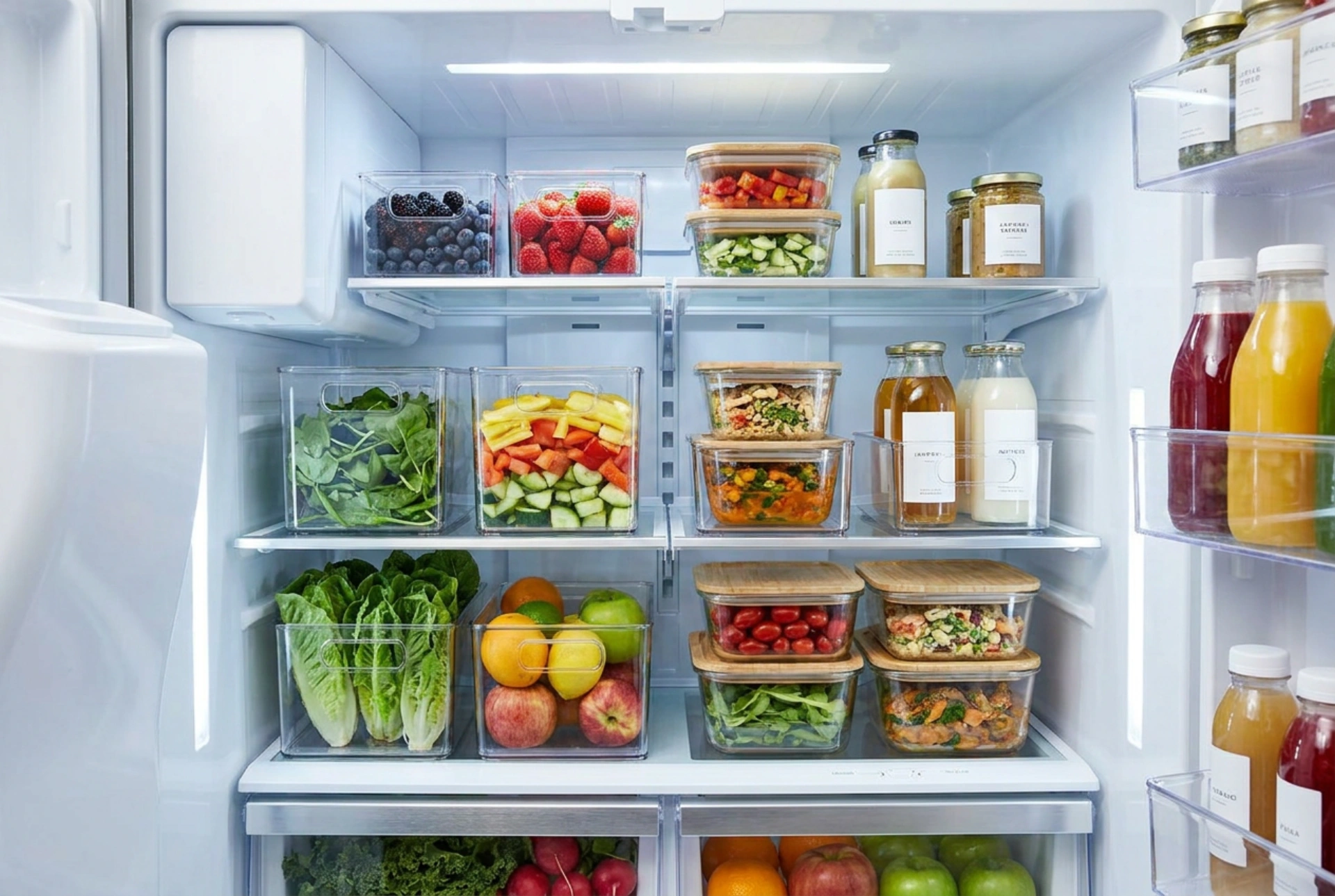
To maximize a small footprint, abandon original commercial packaging. Round jars and bulky plastic trays waste precious space. Transition to square or rectangular borosilicate glass containers. Square shapes utilize corners efficiently, and glass conducts cold much better than plastic, helping food chill faster after the door is closed. Label containers with dry-erase markers to track storage dates and prevent food waste.