

Limescale buildup inside a kettle reduces heating efficiency and can release unsightly mineral flakes into your hot drinks. Descaling with citric acid is a highly effective, natural chemical process, but improper rinsing can leave an unpleasant metallic or sour aftertaste in your next brew.
The Chemistry of Limescale and Citric Acid
Limescale consists primarily of calcium carbonate, which deposits on the heating element and walls of your kettle as water is boiled. Citric acid, a weak organic acid, reacts with insoluble calcium carbonate to convert it into soluble calcium citrate and carbon dioxide gas. This chemical reaction breaks down the hard crust without the need for harsh scrubbing. However, because citric acid is non-volatile, any microscopic residue left on the internal heating elements or plastic components will remain behind after the water is poured out, interacting with subsequent boils and altering the taste of the water.
The Correct Step-by-Step Descaling Ratio
To achieve a perfect clean without oversaturating the appliance, you must use the correct concentration of citric acid. Using too much acid makes the solution difficult to rinse out and can temporarily affect the passivation layer of stainless steel kettles, leading to a temporary metallic taste.
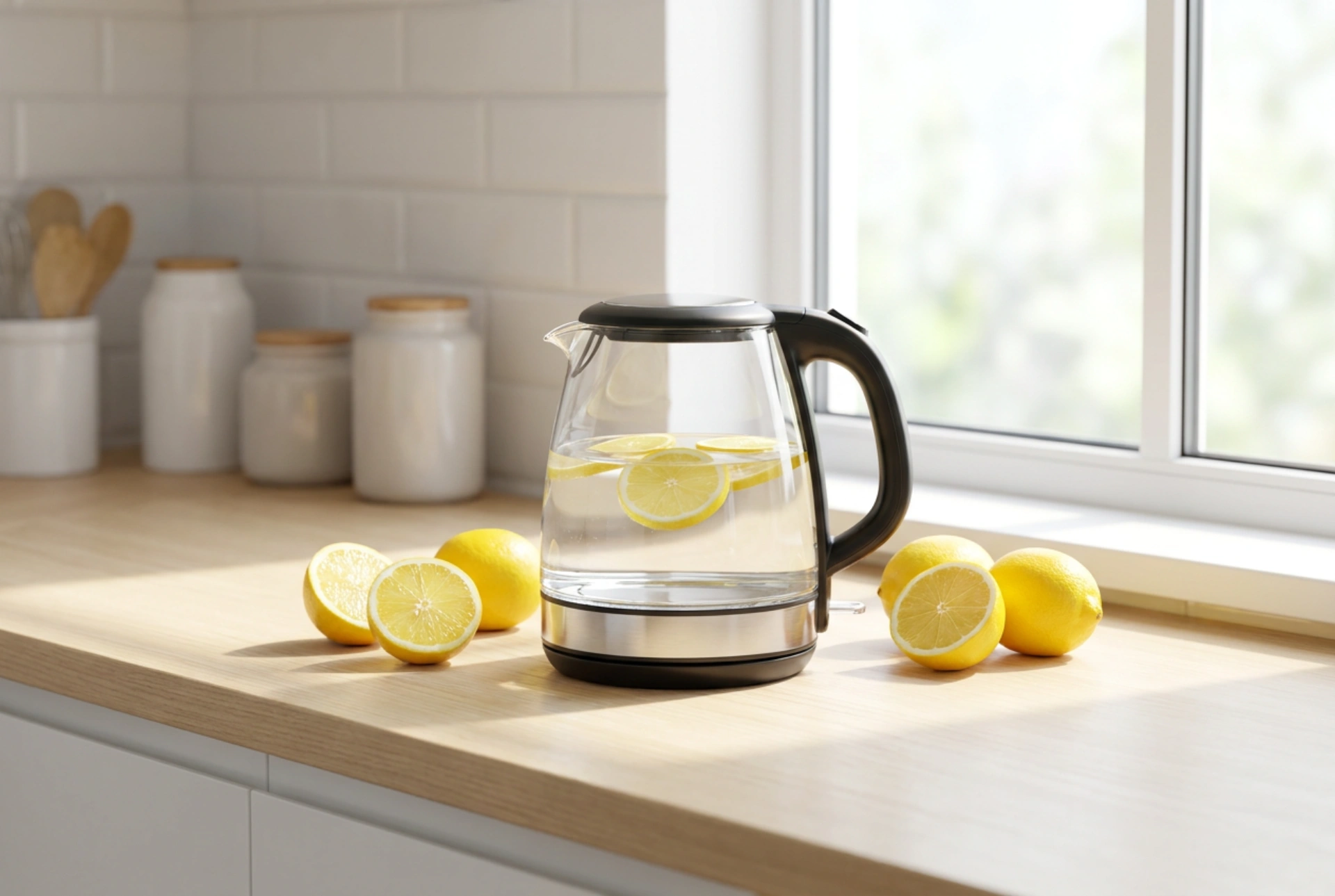
- Prepare the solution: Fill the kettle halfway with cold tap water (approximately 500 ml to 750 ml). Add exactly one to two tablespoons of pure citric acid powder. Do not exceed this ratio.
- Heat the mixture: Bring the water to a gentle simmer. Do not let it boil vigorously for an extended period, as the acid can spit and damage the kettle's exterior or automatic shut-off sensors.
- Let it react: Switch off the kettle and let the solution sit for 15 to 20 minutes. The residual heat will allow the acid to fully dissolve the remaining calcium carbonate structure.
Eliminating the Metallic Aftertaste: The Neutralization Process
The secret to preventing a metallic or acidic aftertaste lies in thorough rinsing and neutralizing the internal surfaces. Stainless steel relies on a microscopic chromium oxide passivation layer to remain inert. High concentrations of hot acid can temporarily disturb this layer, causing minor iron migration into the water.
1. The Initial Flush
Pour out the warm citric acid solution immediately after the reaction time. Rinse the kettle thoroughly with cold tap water at least three times, swirling the water vigorously to remove all loosened mineral sediment from the bottom corners.
2. The Dilution Boil
Fill the kettle to its maximum capacity with fresh, clean water. Do not add any cleaning agents. Boil this water completely and discard it immediately. This process dilutes and flushes away any residual dissolved calcium citrate that adhered to the heating element.
3. The Neutralization Step
If you still detect a metallic taste, it means the passivation layer needs to stabilize or there are trace acid molecules trapped in the plastic or silicone seals. Fill the kettle again, add half a teaspoon of sodium bicarbonate (baking soda) to neutralize any remaining acid traces, bring it to a boil, and discard. Follow with one final rinse of pure water.
Preventative Maintenance and Frequency
To avoid having to use highly concentrated acid solutions in the future, descale your kettle every four to six weeks depending on the hardness of your local water supply. Regular maintenance ensures that only a minimal amount of citric acid is required each time, keeping the protective metal oxide layer intact and your boiling water tasting perfectly neutral.