

The stubborn black layer on the underside of your pans is a mix of carbonized food residues, polymerized cooking oils, and direct heat exposure that binds molecularly to the metal surface.
Understanding the Chemistry of Carbonized Grease
When oils and fats spill over the sides of a pan during cooking, they are subjected to continuous, direct heat from the stovetop burner. This process causes polymerization, where simple fat molecules link together to form a tough, plastic-like varnish. Over time, further heating burns off the hydrogen and oxygen atoms within this layer, leaving behind a highly resilient, carbon-rich crust. To break this bond, you must use chemical reactions that either hydrolyze the esters in the polymerized grease or physically disrupt the crystalline structure of the carbon without damaging the underlying metal.
The Thermal Shock and Acid De-bonding Method
This technique leverages thermal expansion and chemical acidity to release the crust from stainless steel or cast iron. Do not use this method on aluminum, as acids can pit the surface.
- Step 1: Heat the empty pan. Place the dry pan on the stovetop over medium heat for 2 to 3 minutes. Metals expand slightly when heated, creating micro-fissures in the brittle carbon layer.
- Step 2: Apply the acidic paste. Mix equal parts of citric acid powder and warm water to form a thick slurry. Carefully apply this paste to the hot underside using a silicone spatula. The sudden temperature drop, combined with the hydrogen ions in the citric acid, breaks the ester bonds in the polymerized grease.
- Step 3: Mechanical agitation. Let the paste sit for 15 minutes. Use a non-scratch scrub sponge in firm, circular motions. The mechanical action lifts the softened carbon particles from the metal pores.
- Step 4: Rinse and dry. Wash the surface with warm water and dry immediately with a microfiber cloth to prevent water spots.
The Alkaline Saponification Process for Heavy Buildup
For thick, stubborn black deposits, an alkaline agent like sodium bicarbonate (baking soda) works by converting insoluble fatty acids into water-soluble soaps through saponification.
Why Sodium Bicarbonate Works
Sodium bicarbonate is a mild base with a pH of around 8.1. When mixed with water, it releases hydroxide ions that slowly attack the ester linkages in the baked-on grease. Additionally, its crystal structure acts as a gentle, water-soluble abrasive that crumbles under pressure, cleaning the surface without leaving deep scratches on stainless steel or copper.
Application Protocol
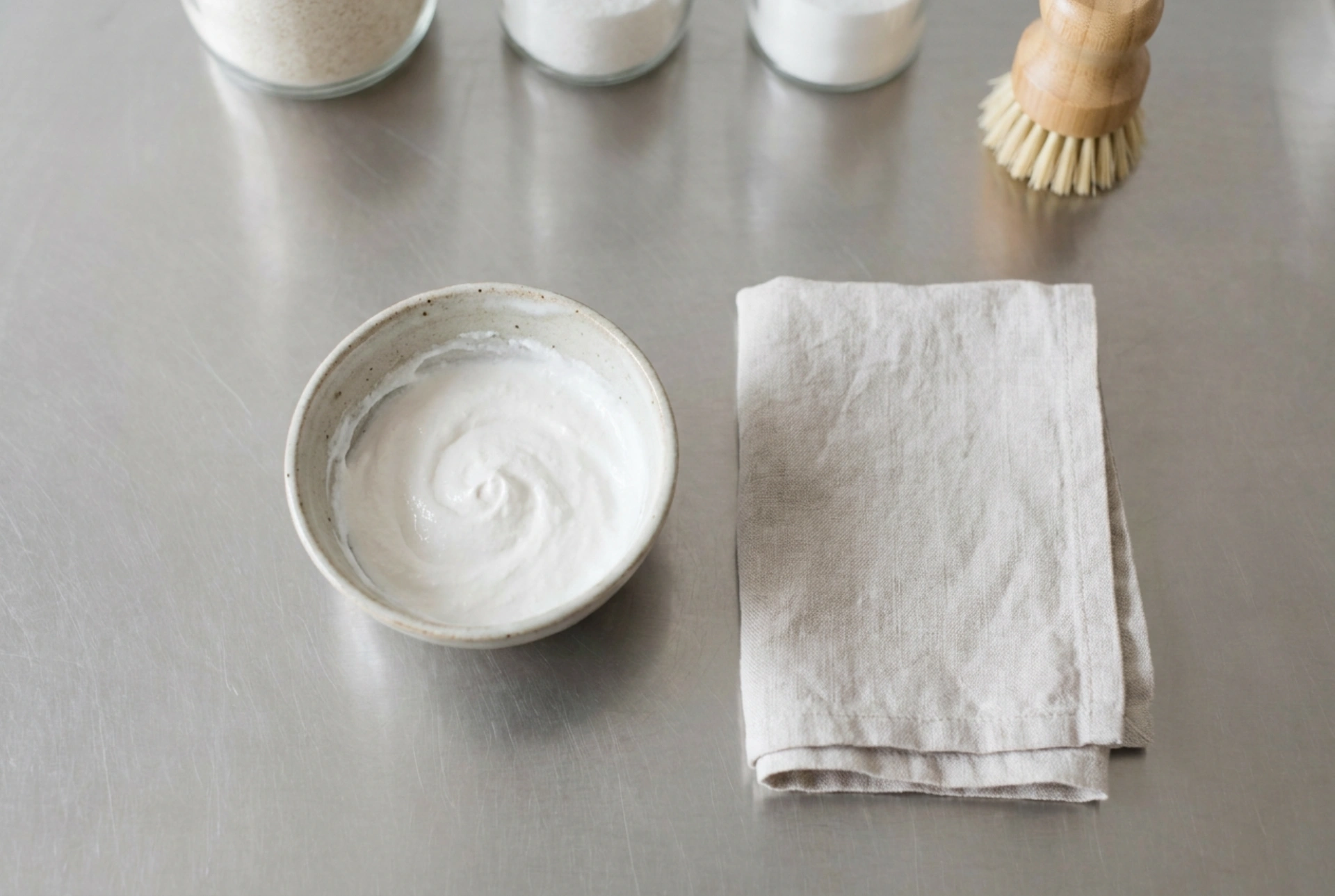
Moisten the bottom of the pan with a small amount of warm water, then sprinkle a thick, generous layer of sodium bicarbonate directly over the carbon deposits. Spritz the powder with water to create a wet paste, and cover the entire bottom with plastic wrap. This prevents the paste from drying out, keeping the chemical reaction active. Leave it to work for at least 4 hours, or overnight for extreme buildup. After waiting, remove the wrap and scrub using a stiff-bristled brush in tight, concentric circles, focusing on the outermost edges of the pan where heat concentrates.
Preventative Maintenance and Heat Control
Preventing the formation of carbon deposits is significantly easier than removing them. Always wipe the exterior base of your cookware with a damp cloth before placing it on the stove to remove invisible oil residues. Furthermore, match the burner size to the pan base; flames or induction zones that extend beyond the bottom will overheat the side walls, instantly caramelizing any grease splashes and starting the carbonization cycle anew.