

Battery-operated humidifiers offer targeted, localized moisture control where traditional corded units cannot reach, making them ideal for personal spaces, travel, and specific microclimates.
The physics of localized humidification
Standard household humidifiers are designed to condition entire rooms by circulating large volumes of moisture through natural convection or powerful fans. Battery-operated models, however, operate on a localized scale. They utilize small ultrasonic transducers that vibrate at high frequencies to split water into microscopic droplets, creating a cool mist. Because their power source is limited, their effective range is typically confined to a radius of one to two meters. Understanding this spatial limitation is key to maximizing their efficiency; they are designed to humidify the immediate breathing zone rather than the entire cubic volume of a room.
Optimal scenarios for portable moisture
Battery-powered humidifiers excel in environments where electrical outlets are inaccessible or where space is highly constrained. Key scenarios include:
- Office desks and cubicles: Centralized heating, ventilation, and air conditioning (HVAC) systems often strip moisture from office air, leading to dry eyes and irritated sinuses. A small desktop humidifier targets your personal workspace without affecting your colleagues or overloaded electrical power strips.
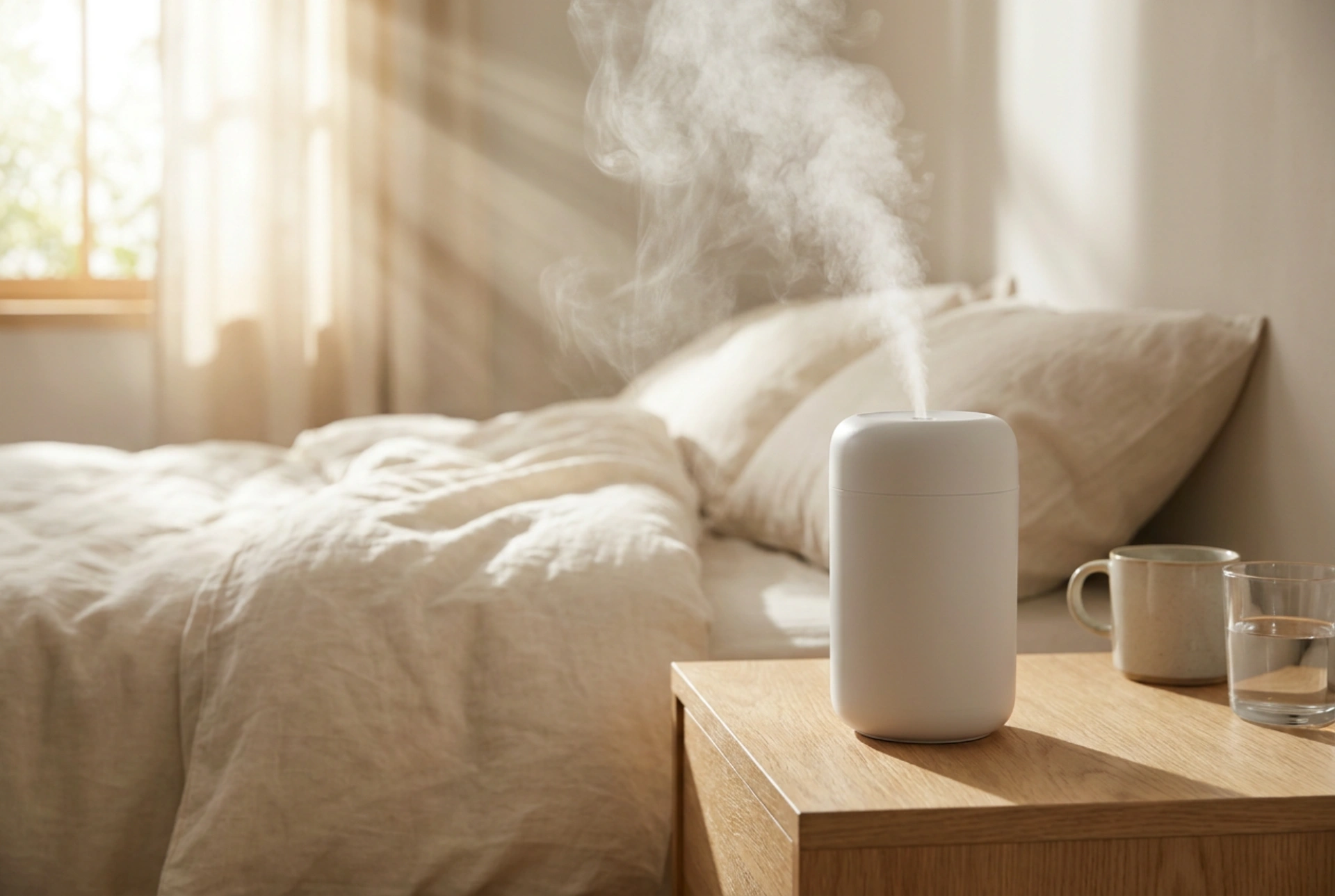
- Bedside tables: Placing a compact unit within arm's reach of your pillow ensures that the moisture-rich air envelope directly covers your breathing zone throughout the night, mitigating the drying effects of bedroom radiators.
- Vehicles: The air conditioning and heating systems in cars quickly deplete cabin humidity. A battery-powered unit fitting into a cup holder can rapidly restore comfort during long commutes.
- Travel and hotel stays: Hotel rooms are notoriously dry due to constant climate control. A portable humidifier fits easily into luggage and runs independently of foreign plug configurations.
Water chemistry and device longevity
Because battery-operated humidifiers use small, sensitive ultrasonic plates, they are highly susceptible to mineral buildup. Tap water contains dissolved minerals such as calcium and magnesium. When the ultrasonic plate vibrates, it aerosolizes these minerals along with the water, creating a fine white dust that settles on surfaces. More importantly, these minerals quickly crystallize on the transducer plate, reducing its vibration frequency and eventually causing mechanical failure. To prevent this, always use distilled or demineralized water. This simple chemical precaution ensures a clean mist and extends the operational lifespan of the compact transducer.
Managing battery efficiency and runtime
To get the most out of a cordless humidifier, operational habits must align with battery limitations. Most portable units feature two output modes: continuous and intermittent. The continuous mode provides a steady stream of mist but depletes the battery rapidly, often within three to four hours. The intermittent mode cycles the transducer on and off at set intervals (for example, three seconds of mist followed by three seconds of rest). This simple mechanical pause reduces energy consumption by nearly half, doubling the runtime and allowing the device to operate through an entire sleeping cycle on a single charge.
Maintenance and hygiene protocols
Standing water in a small, sealed reservoir is a prime breeding ground for bacteria and mold. Because these devices do not boil water to create steam, any biological contaminants in the tank will be dispersed directly into the air. Clean the water tank every two to three days using a simple solution of isopropyl alcohol or white vinegar mixed with water. Allow the solution to sit for ten minutes to dissolve any microscopic scale, then rinse thoroughly and dry. Never store a battery-powered humidifier with water in the reservoir, especially when packing it for travel.