

Using a portable humidifier in your car can significantly improve cabin air quality, provided you understand when it is beneficial and how to prevent bacterial growth.
The Science of Cabin Air and When to Humidify
Car interiors are highly enclosed environments where the air conditioning or heating systems constantly cycle air, rapidly stripping away moisture. During winter, heating cold outdoor air lowers its relative humidity drastically. In summer, the cooling coils of an air conditioner condense moisture out of the air. This dry microclimate leads to dry mucous membranes, throat irritation, and contact lens discomfort.
A car humidifier makes sense during long drives when the relative humidity drops below 30%. However, it should only be used in conjunction with active ventilation. Without proper airflow, localized moisture can condense on cold glass surfaces and penetrate upholstery, creating a breeding ground for mold and mildew. Keep the humidifier output moderate and ensure the vehicle's ventilation system is set to fresh air mode rather than continuous recirculation.
Water Chemistry and Mineral Build-Up
The type of water you put into a portable humidifier dictates its performance and safety. Most compact car humidifiers use ultrasonic technology, where a small metal diaphragm vibrates at ultrasonic frequencies to split water into tiny droplets. If you use tap water, these vibrations also aerosolize the dissolved minerals, primarily calcium and magnesium carbonate.
This results in a fine, white mineral dust settling across your dashboard, electronics, and windshield, which can impair visibility and damage sensitive components. Furthermore, standing water is an ideal environment for biofilms to form. Breathing in aerosolized bacteria or mold spores can cause respiratory irritation. Therefore, always use distilled or demineralized water in a car humidifier.
Step-by-Step Cleaning and Descaling Protocol
Regular maintenance is essential to keep the device sanitary. A car humidifier requires a thorough cleaning every three to five days of active use, alongside a daily water change.
- Empty and Rinse: Turn off the device and unplug it from the USB port or 12V outlet. Empty any remaining water from the reservoir immediately. Never let water sit in the chamber when the vehicle is parked overnight.
- Descaling the Transducer: The ultrasonic plate is highly sensitive. To dissolve mineral scale, fill the reservoir with a 1:1 solution of warm water and white vinegar (acetic acid). Let it sit for 15 minutes to break down calcium deposits. Do not scrub the metal plate with abrasive materials.
- Detailing the Components: Dip a soft cotton swab into the vinegar solution and gently wipe the ultrasonic transducer plate and the tight corners of the water tank. Rinse thoroughly with distilled water to remove all vinegar residue.
- Sanitizing: To eliminate bacteria without harsh chemical fumes, wipe the interior surfaces with a soft cloth dampened with a weak hydrogen peroxide solution. Avoid using chlorine bleach, as breathing in its residual fumes in a confined car interior is hazardous.
- Drying: Allow all parts to air dry completely before reassembling the unit and plugging it back into the car's power source.
Strategic Placement and Safety
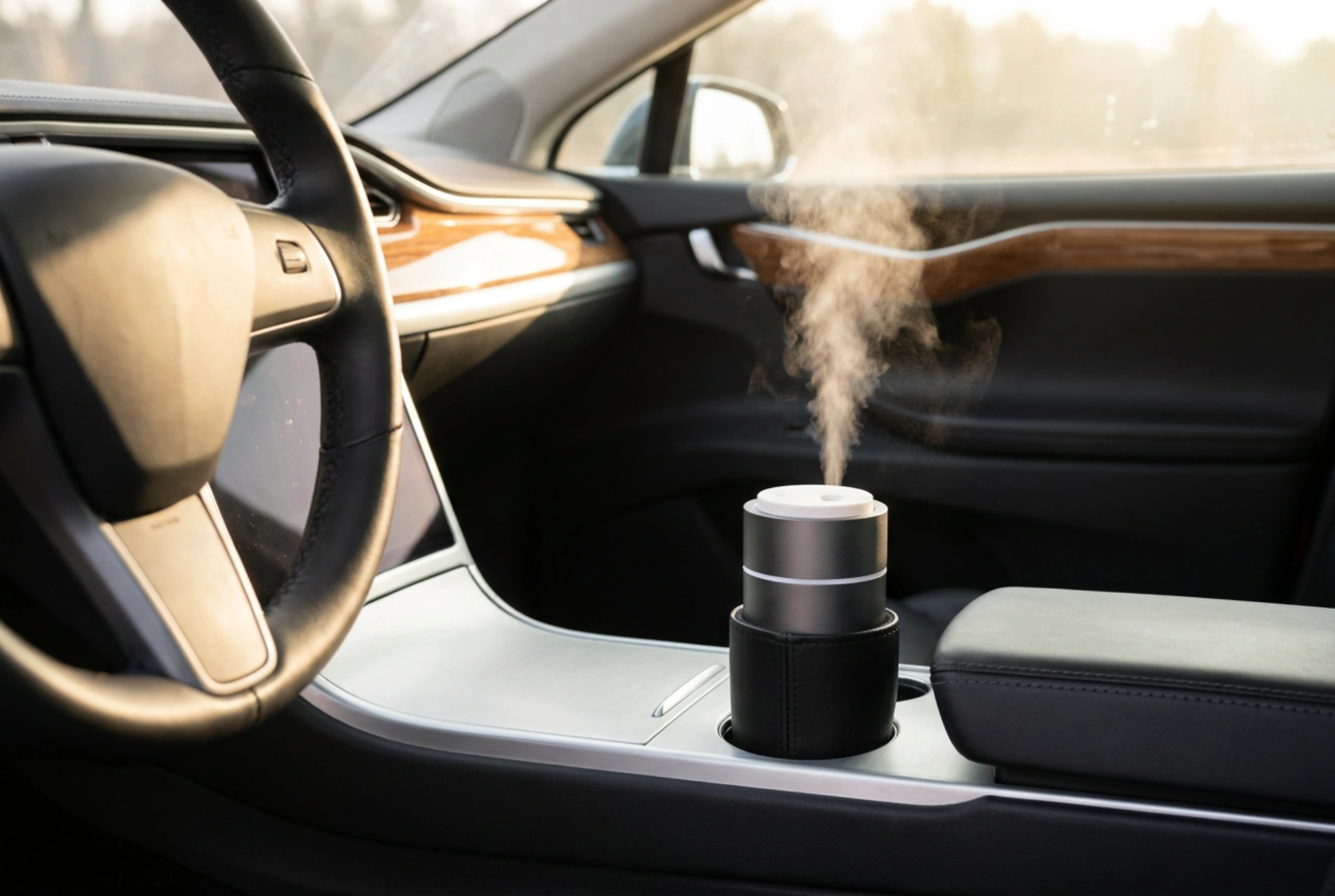
Placement of the device determines its efficiency. Position the humidifier in a stable cup holder where it cannot tip over during sudden braking or cornering. Ensure the mist output is directed away from electronic displays, the instrument cluster, and windshield glass to prevent condensation and electrical shorts. Never operate or adjust the device while driving; set your humidity levels before starting the engine.