

Drip coffee makers accumulate stubborn polymerised coffee oils and mineral scale over time, which directly degrade the flavour of your brew and compromise heating efficiency.
The Chemistry of Coffee Residue
As coffee beans are roasted, they release essential oils (lipids) that are highly flavourful but chemically unstable. When these oils are exposed to heat and oxygen during the brewing process, they undergo oxidation and polymerisation. This reaction turns the liquid lipids into a sticky, insoluble varnish that coats the glass carafe, the plastic filter basket, and the internal heating element. Standard dish soaps often fail to break down these polymerised bonds, requiring a targeted chemical approach to dissolve the organic compounds without damaging the appliance components.
Dissolving Carbonised Lipids with Oxygen Bleach
To break down the stubborn organic matrix of coffee oils, sodium percarbonate (commonly known as oxygen bleach) is highly effective. Unlike chlorine-based cleaners, sodium percarbonate breaks down into sodium carbonate and hydrogen peroxide when mixed with warm water. The active oxygen releases bubbles that physically lift the baked-on oils from the glass and plastic surfaces.
- Prepare the Solution: Dissolve one tablespoon of sodium percarbonate powder in one litre of hot water (approximately 60°C).
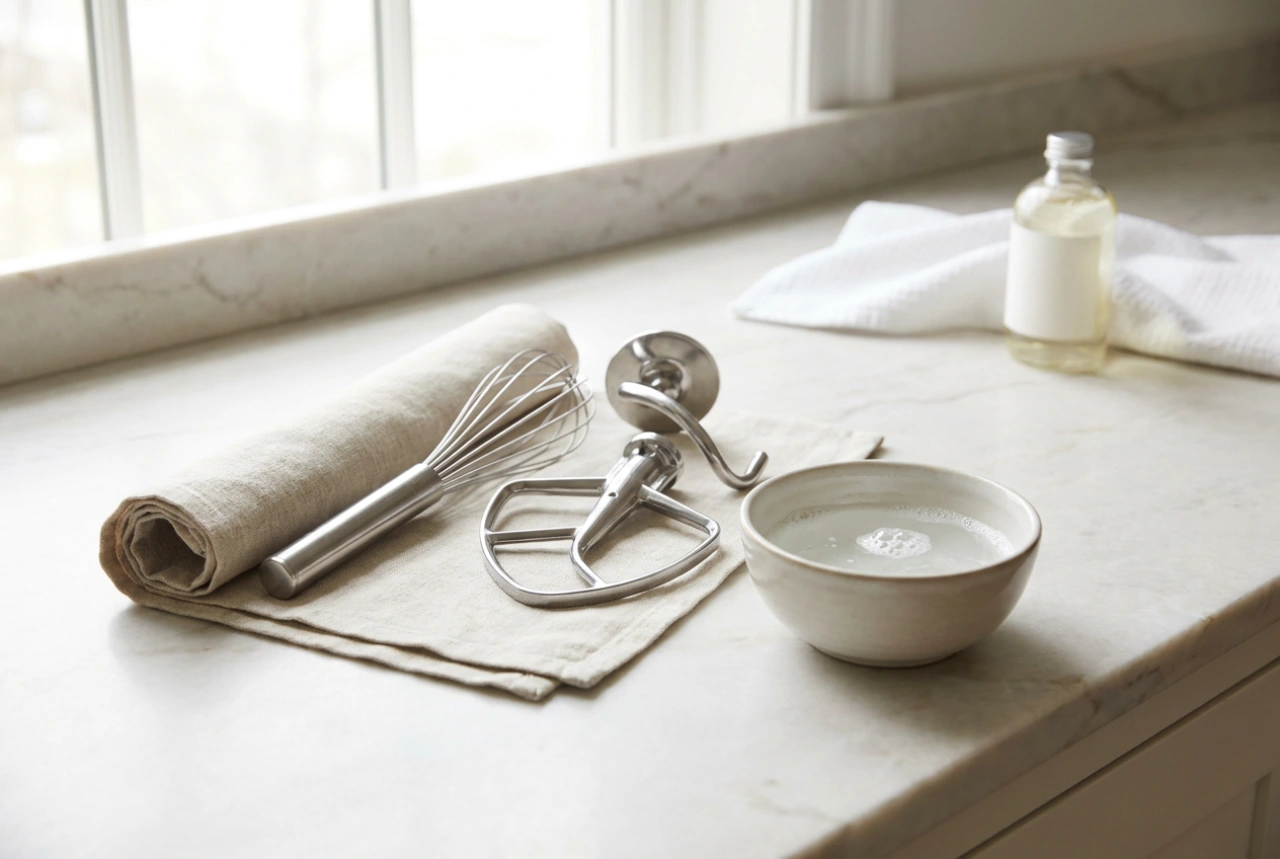
- Soak the Components: Remove the filter basket and glass carafe, then submerge them fully in the solution. Let them soak for 20 minutes as the effervescent action loosens the residue.
- Agitate and Rinse: Use a soft microfiber cloth to wipe away the softened oils. Avoid abrasive nylon scouring pads on plastic, as they create micro-scratches that harbour future organic buildup and bacteria. Rinse thoroughly with clean water.
Descaling the Internal Thermal Block
While oxygen bleach addresses the visible organic oils in the carafe and basket, the internal copper or aluminium heating tubes accumulate calcium carbonate (scale) from tap water. This scale acts as an insulator, slowing water heating and causing the pump to sputter. To dissolve calcium carbonate, a mild organic acid is required.
Applying Citric Acid
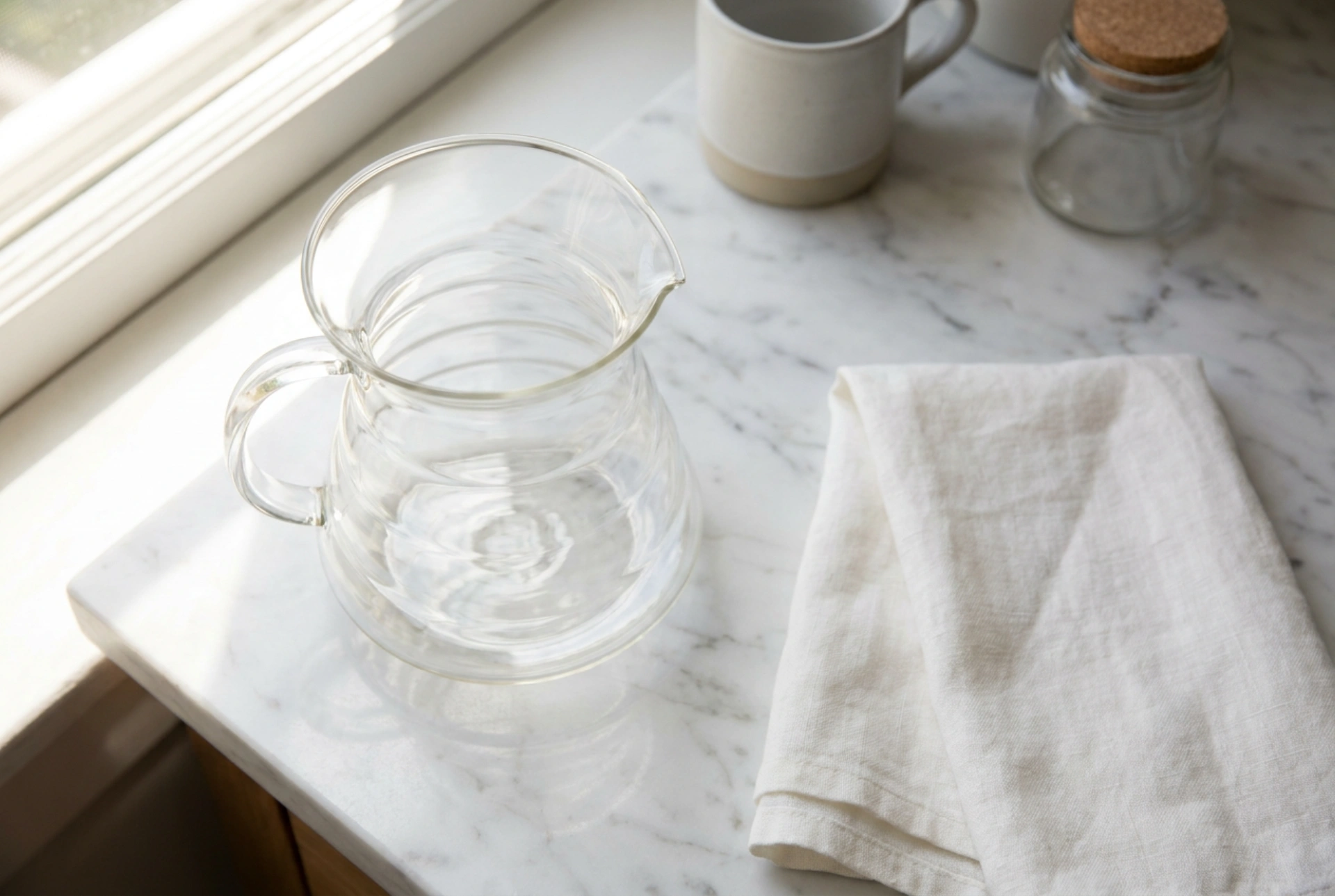
Citric acid is highly effective for descaling household appliances because it chelates metal ions, making the scale water-soluble and easy to flush out. Dissolve two tablespoons of food-grade citric acid powder into one litre of lukewarm water, stirring until completely clear.
The Flushing Procedure
- Pour the citric acid solution into the water reservoir of your empty drip coffee maker.
- Switch the appliance on and allow half of the solution to brew into the carafe, then turn the machine off.
- Let the acidic solution sit inside the internal thermal block for 15 minutes. This dwell time allows the acid to chemically dissolve the calcium carbonate deposits.
- Turn the machine back on to finish the brewing cycle.
- Run two subsequent cycles using only clean, cold water to thoroughly flush out any remaining acid residue.
Maintaining the Seal and Prevention
To prevent rapid re-accumulation of oxidised oils, always empty the coffee grounds immediately after the brewing cycle completes. Leaving warm, wet grounds in the filter basket creates a humid environment that accelerates oil polymerisation and mould growth. A weekly flush with hot water immediately after brewing will help keep the internal lines clear of light oil deposits.